The Philippines continues to bake under a relentless heatwave as the Philippine Atmospheric, Geophysical and Astronomical Services Administration (PAGASA) recorded the highest heat index in the second quarter of this year. The “danger” category being reached across several regions in Luzon. Where the agricultural sector is beginning to feel the burn. This is prompting the provincial governments to intensify their efforts for preparedness.
Heat Index Hits Record Highs
PAGASA reported a heat index of 48°C on April 25 at 5:00 PM. This “feels-like” temperature affected parts of Northern Luzon and Visayas. In Metro Manila it consistently hovered between 44°C and 46°C over the past five days.
According to the latest 5-day computed index and 2-day forecast, the following areas in Luzon are under the highest alert:
- Tuguegarao City, Cagayan: 48°C
- Metro Manila (NAIA/Pasay): 45°C
- San Mateo, Rizal: 46°C
- Dagupan City, Pangasinan: 47°C
- Casiguran, Aurora: 44°C
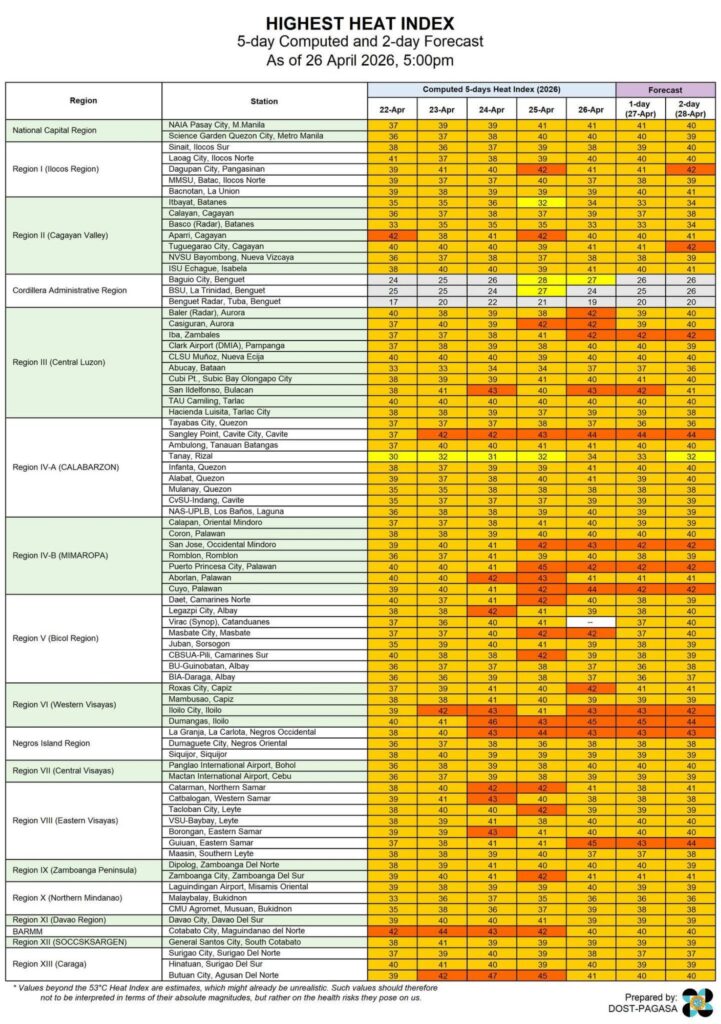
PAGASA warns that these conditions are expected to persist for the next 48 hours, with little to no cloud cover expected to shield the archipelago from the sun’s peak intensity.
Agricultural Crisis in Rizal Province
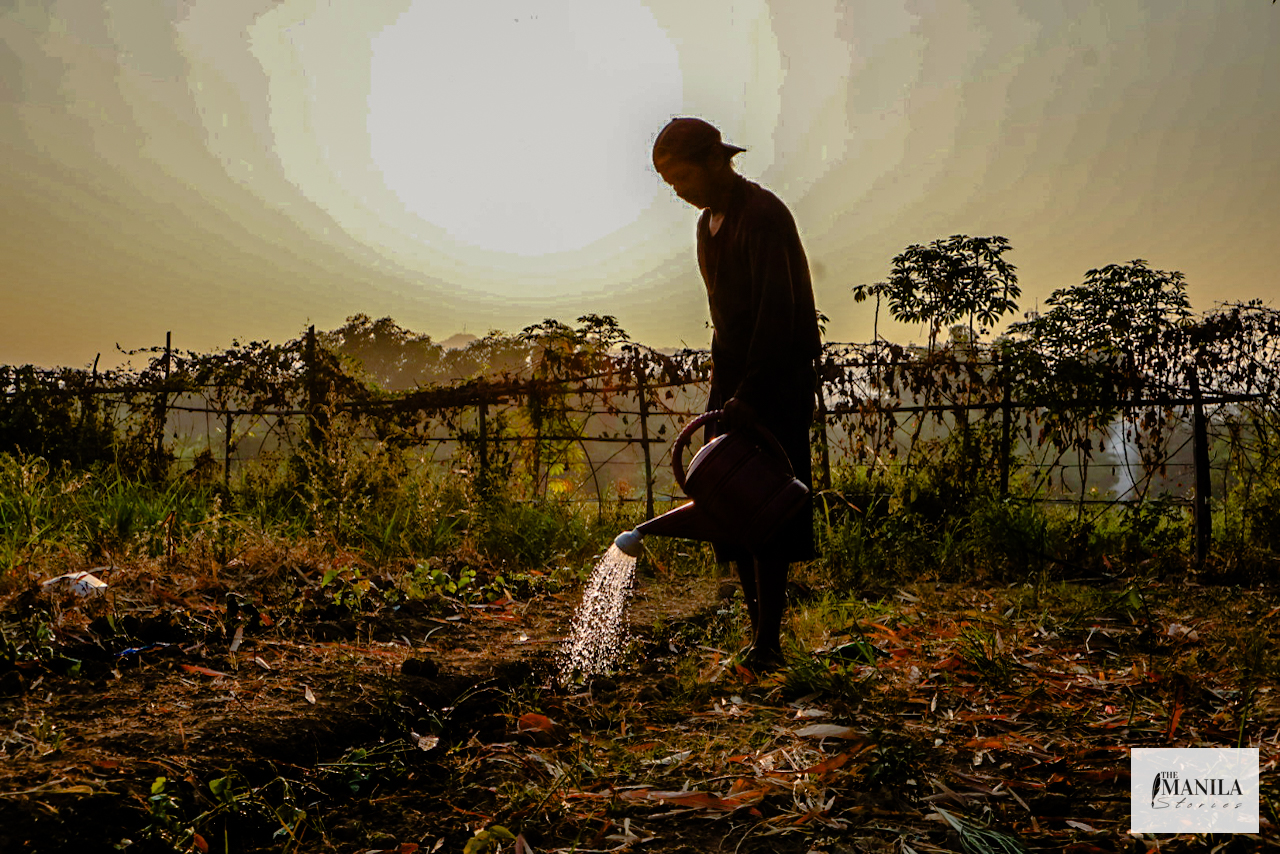
The heat has proven particularly devastating for the province of Rizal. The agricultural town of San Mateo reported a significant crop wilting. The farmers of Barangay Santa Ana, San Mateo, are struggling to keep their leafy vegetables and rice paddies alive as small irrigation dikes begins to dry up under the sun.
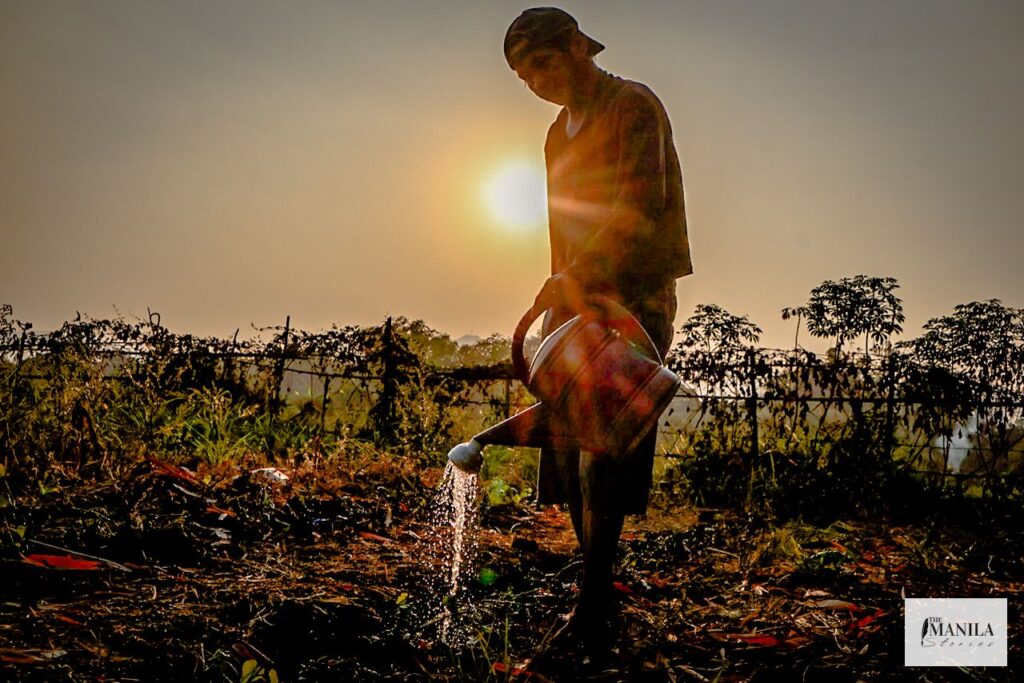
Farmers in Santa Ana have resorted to manual watering using pots and pails, but experts suggest this is no longer enough. “Using a water pot to manually water plants in this 46-degree heat is like a drop in the ocean,” said a local agricultural consultant. “The evaporation rate is so high that the water disappears before it reaches the deep roots. Manual labor also puts the farmers themselves at extreme risk of heat exhaustion.”
Provincial Government Intervention
To combat the drying fields, the Rizal Provincial Government has launched an emergency dry-season subsidy program. Governor’s Office representatives confirmed that they are deploying mobile water tankers to provide supplemental irrigation to high-priority farms in San Mateo and neighboring towns.
Key government actions include:
- Installation of Shallow Tube Wells: The LGU is fast-tracking the installation of solar-powered pumps to tap into groundwater levels.
- Water Rationing for Crops: Scheduled water releases from local reservoirs are being managed to ensure that every farming cluster gets a share.
- Distribution of Drought-Resistant Seeds: For the next cropping cycle, the LGU is providing seeds that require less water.
- DOH Issues Health Warning for Farmers and Public
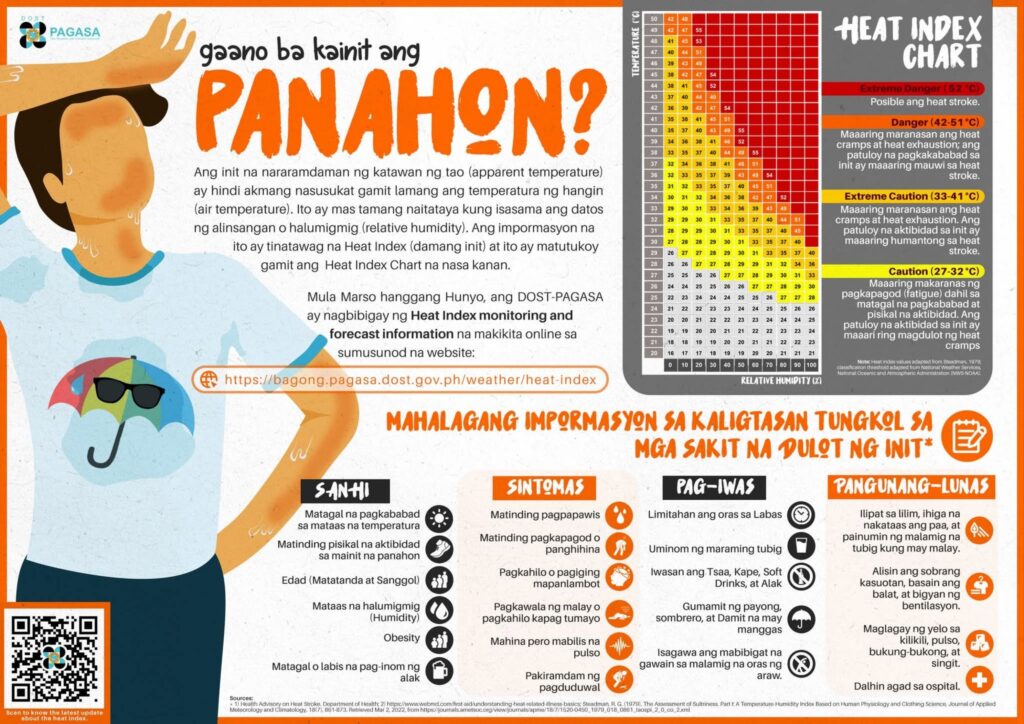
As the heat index climbs, the Department of Health (DOH) has issued a public health advisory, specifically targeting those who work outdoors. Health officials emphasize that the most dangerous window is between 10:00 AM and 4:00 PM, when the sun is at its zenith and UV radiation is strongest.
“We are urging our farmers in Rizal and across the country to avoid tilling the fields during peak heat hours,” the DOH stated. “Subjecting the body to these temperatures while performing physical labor is a direct trigger for heat stroke, which can be fatal.”
The DOH reminds the public to:
Drink plenty of water even if you don’t feel thirsty.
Wear lightweight, light-colored clothing.
Limit outdoor activities during the 10:00 AM – 4:00 PM window.
Watch out for symptoms of heat exhaustion: dizziness, excessive sweating, and nausea.
For more information on managing heat-related illnesses, the public may visit the DOH’s official advisory at https://bit.ly/DOHPhPublicHealthAdvisory.
For the latest updates on the heat index in your specific area, PAGASA encourages citizens to monitor their daily tracker at https://www.pagasa.dost.gov.ph/weather/heat-index.