

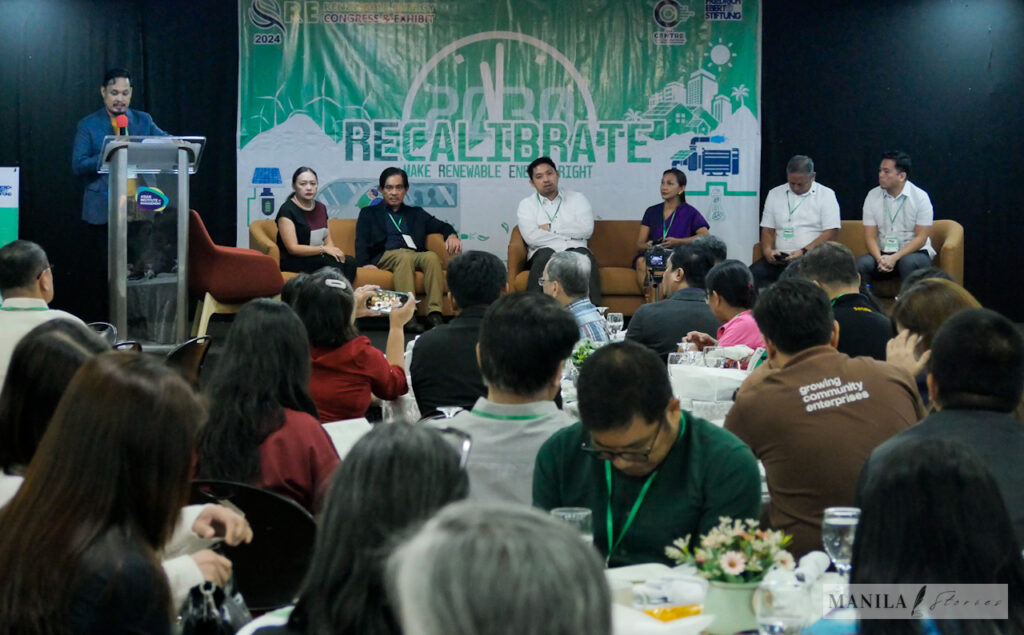
The 2030 deadline for the UN’s Sustainable Development Goals (SDGs) is looming. The Philippines, along with much of Southeast Asia, finds itself lagging in its renewable energy (RE) targets. The 7th Renewable Energy Congress took place from December 12 to 13. It was held at the AIM Conference Center in Makati City. The event highlighted this critical challenge. It focused on the theme “RE-calibrate, Make Renewable Energy Right.”
The Philippines enacted the Renewable Energy Act in 2008. It set a 35% RE target in its National Renewable Energy Program (NREP). Yet, the Philippines currently boasts only a 29.7% RE share in its power generation mix. While installed RE capacity has increased by 10% (800 MW) since 2020, this has only translated to a negligible 0.7% increase in the overall RE share. Coal still dominates at 43.9% of the total installed capacity of 28,291 MW.
The congress underscored the urgent need to address the persistent gap between ambition and reality. While numerous policies aiming to boost RE deployment exist, implementation challenges and complicated processes hinder progress, particularly for smaller players. There was no significant improvement in access to clean and sustainable energy. This lack of progress was a major concern, especially for vulnerable groups such as women, farmers, and indigenous communities.
The event highlighted successful examples. The Mindanao Development Authority’s presentation suggested a 50% RE share is achievable in Mindanao. The “Greening the Grid” study indicated a similar nationwide target is feasible. Yet, the congress emphasized the need to move beyond simply increasing numbers and focus on a just energy transition.
The overarching goal of energy sufficiency and climate resilience in a low-carbon economy requires a recalibration of strategies. This includes revisiting financing mechanisms, energy technologies, and stakeholder engagement across all levels – from households to utility-scale projects. It is crucial to track RE percentages. We must also monitor the quality of life improvements for those affected by the energy transition.

The congress brought together government, private sector, and civil society representatives. They gathered to discuss enhancing finance within Southeast Asia. They also aimed to enhance local and regional policies. Additionally, knowledge exchange was a key topic. The focus was on developing RE in the energy sector. It also included work in the transportation and agricultural sectors. The goal was to ensure a just transition that doesn’t leave anyone behind. Importantly, the congress urged a move beyond a simplistic “green is good” approach. They acknowledged potential social and ecological risks even with RE projects. We must focus again on inclusive policies. Empowering local governments, women, workers, and small and medium-sized enterprises is essential. These efforts are crucial to achieving the ambitious yet necessary RE targets.