
A team of researchers from the University of the Philippines‑Diliman College of Science has created a new way to make silver nanoparticles. The method uses gamma radiation and a seaweed‑derived polymer called ι‑carrageenan. It avoids the harsh chemicals that are common in today’s production processes. The result is a greener, safer material that can fight bacteria.
The scientists include Mon Bryan Gili, Wendell Manuel, and Dr. Marienette Vega from the Materials Science and Engineering Program. Dr. Marlon Conato from the Institute of Chemistry also took part. The project was completed with help from Rakshith Gowda Shankaregowda and Dr. Manh‑Huong Phan of the University of South Florida. Their work appears in the journal Radiation Physics and Chemistry.
Silver nanoparticles are known for their strong antibacterial activity. They are used in wound dressings, coatings, and water filters. Traditional production relies on strong reducing agents and stabilizers. Those chemicals can be toxic. They also create hazardous waste. Disposal can harm the environment and human health.
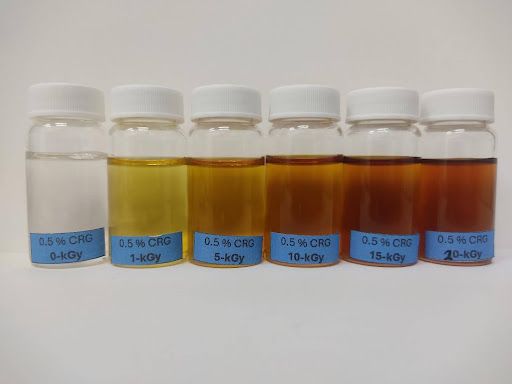
The new approach replaces all chemicals with gamma rays. The radiation splits water molecules in the solution. This creates reactive species that turn silver ions into metallic silver. At the same time, ι‑carrageenan from red seaweed wraps each particle. The polymer stops the particles from clumping. It also keeps them stable in water.
“In simple terms, we let radiation do the ‘work’ of forming the particles, while the seaweed extract keeps them stable and safe,” Gili explained. “We then tested how effective these particles are against common bacteria.” The tests showed strong inhibition of Staphylococcus aureus and Escherichia coli. The particles killed the bacteria faster than many standard antibiotics.
Because the nanoparticles form under radiation, they are sterilized as they appear. This is a major benefit for medical use. It means the product does not need an extra sterilization step. “Overall, this means fewer processing steps, less chemical waste, and a safer product for both people and the environment,” Gili added.
The team hopes the method will help reduce reliance on conventional antibiotics. Antibiotic resistance is a growing global problem. Silver nanoparticles can act as an alternative or supplement to current drugs. Their broad‑spectrum activity makes them useful in many settings.
The researchers plan to improve the long‑term stability of the particles. They also want to test the material in real‑world products such as bandages and food packaging. “The next steps include improving their long‑term stability, testing them in real‑world products, and evaluating their safety for human use,” Gili said.
If the technology proves safe, it could be produced locally in the Philippines. The country has abundant seaweed resources. It also has a strong nuclear science community. “Ultimately, we hope this technology can lead to affordable, locally produced antibacterial materials using Philippine natural resources and nuclear science expertise,” Gili added.
The study highlights how radiation technology can be repurposed for sustainable health solutions. It demonstrates a clear path from laboratory to market. By removing toxic chemicals, the method cuts costs and reduces environmental impact. It also aligns with global calls for greener manufacturing.
The discovery may inspire other researchers to explore radiation‑driven synthesis of nanomaterials. It could open doors to green production of catalysts, sensors, and energy devices. For now, the focus remains on antibacterial applications.
The UP‑Diliman team welcomes media inquiries. Contact the Science Communications office at media@science.upd.edu.ph or call (+632) 8981‑8500, extension 3805. Follow updates on LinkedIn, Facebook, Twitter, Instagram, and TikTok at the university’s science page.
This breakthrough shows that simple natural substances, combined with advanced physics, can replace hazardous chemicals. It offers a sustainable route to powerful antibacterial tools. The approach could protect health, preserve the environment, and boost local industry—all with a flash of gamma radiation and a hint of seaweed.