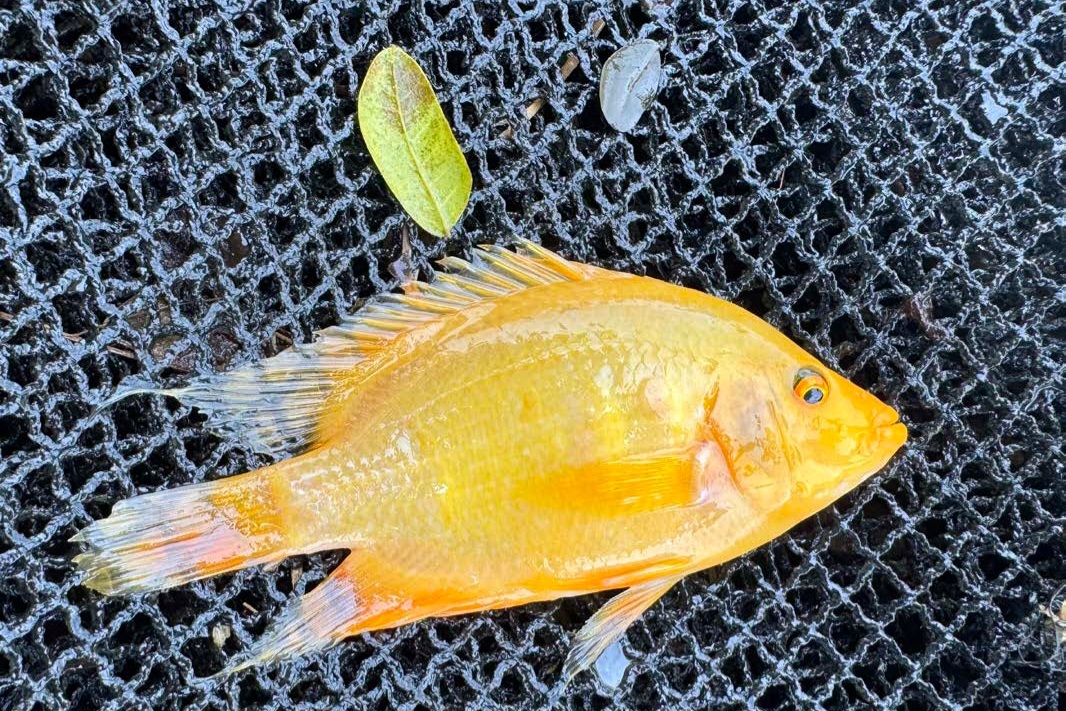
An ornamental aquarium fish is now a major threat to the ecosystem of Lake Sampaloc. The invasive Flowerhorn cichlid is disrupting native biodiversity and posing new public health risks.
Researchers from the Ateneo de Manila University Department of Biology and the Ateneo Aquatic and Fisheries Resources Laboratory studied the spread of this species. They found that these fish are no longer just accidental escapes from the aquarium trade.
Flowerhorn fish first entered the lake during a major typhoon. Fish surveys in 2016 confirmed their presence.
Researchers Hannah Nicole C. Gasmen and Dr. Janice A. Ragaza discovered that the species “are no longer merely escaped ornamental fishes, but have become integrated into local aquaculture through intentional retention and sale, indicating that human activities may continue to reinforce their persistence and spread.”
The Flowerhorn cichlid is highly aggressive. It fights for breeding grounds and feeding sites. This behavior has harmed native species. The Ayungin, a common local fish, is now rarely seen in the lake. The IUCN now lists the Ayungin as a vulnerable species.
The Flowerhorn thrives in poor water conditions. It adapts well to lakes affected by sewage, microplastics, and nutrient runoff. While these conditions hurt other fish, they allow the Flowerhorn to dominate the lake.
There are also serious concerns regarding public health. Previous studies show that Flowerhorns can host a zoonotic parasite called Paracapillaria philippinensis. This parasite can cause intestinal capillariasis in humans. Symptoms include abdominal pain, chronic diarrhea, and malnutrition.
“The species may serve as a possible reservoir of parasites, pathogens, and contaminants, providing a strong foundation for future ecological, parasitological, and aquaculture research aimed at developing evidence-based management strategies for invasive Flowerhorn populations,” Gasmen explains.
To manage the population, researchers suggest a circular economy model. This involves harvesting invasive Flowerhorns and turning them into fish feed. However, the biomass must first be screened for parasites and pollutants to ensure safety.
Experts also suggest using the Aquatic Species Invasiveness Screening Kit (AS-ISK). This tool helps identify the risk levels of non-native fish. It was used effectively in a 2024 study of Lake Naujan led by researcher Allan S. Gilles Jr. Applying this tool to Lake Sampaloc could help authorities manage the invasion more effectively.
The study highlights that invasive species are linked to economic and social issues. Lake Sampaloc is critical to the local community. The survival of its ecosystem depends on finding a balance between environmental health and the livelihoods of those who depend on the water.
“Protecting and sustaining our aquatic ecosystems requires a collaborative approach among communities, research institutions, and policymakers,” Gasmen emphasizes.
The findings were published in the March 2026 issue of World Aquaculture under the title, “Fenced and Feral: Farming and Spread of Flowerhorn (Amphilophus spp.) in Lake Sampaloc, Philippines.”