Scientific research often stays trapped inside laboratories. Dr. David Peralta wants to change that. He is the Editor-in-Chief of ChemMedChem at Wiley-VCH GmbH. He believes scientists must learn to explain their findings to the public.
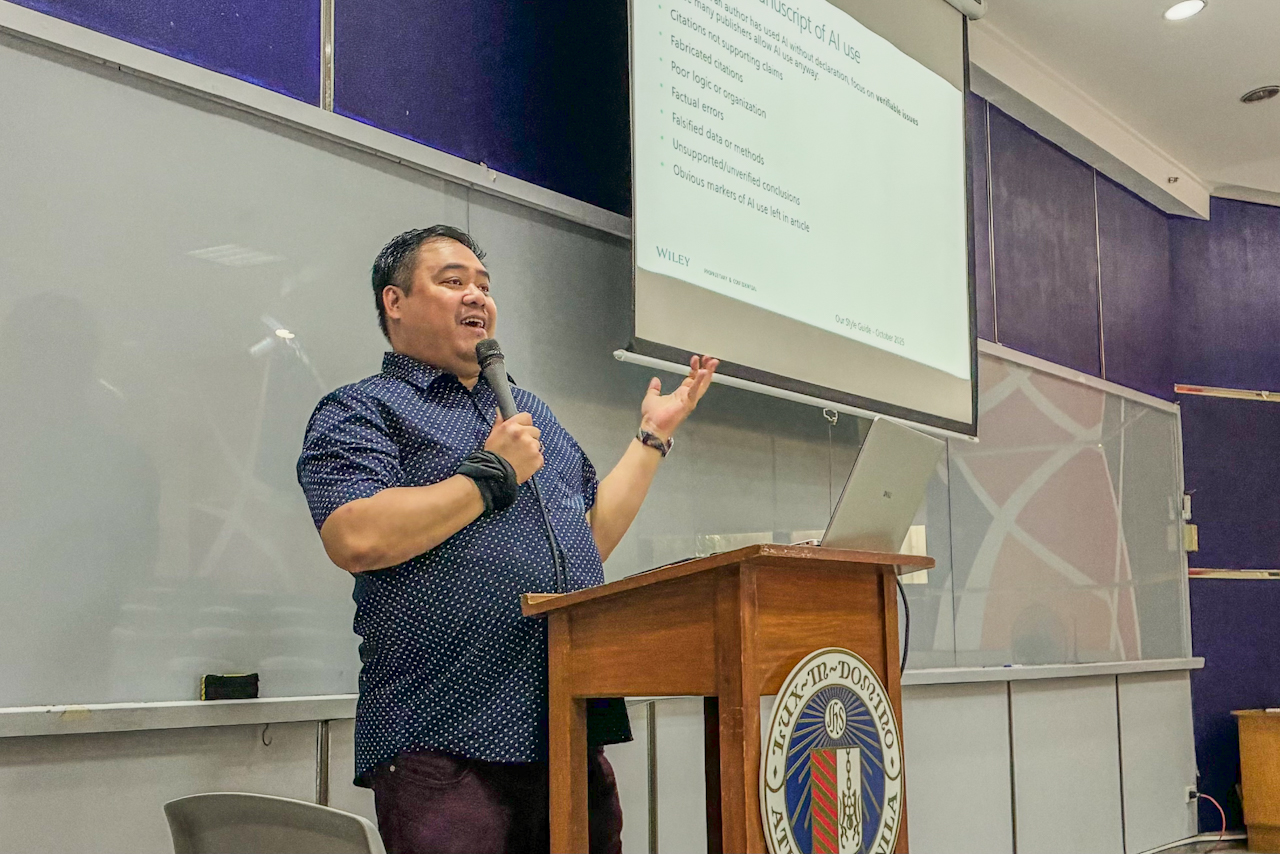
Peralta recently visited Ateneo de Manila University. He led a workshop for researchers. He spoke about scientific publishing and ethics. He also discussed how artificial intelligence is changing academic research.
“Doing the scientific work is important, but so is knowing how to communicate it,” Peralta said. “These days, when people are searching for answers more than ever, we need to be able to explain what we do as scientists to everyone.”
Peralta is a chemist by training. He earned his doctorate in Germany. As a student at Ateneo, he studied both chemistry and German. He found that combining the sciences with the humanities helped his career.
During his doctoral studies, Peralta realized he wanted a different path. He loved science, but he did not want to work in a laboratory forever.
“I realized that I still really love science, but I didn’t necessarily want to stay in a laboratory doing the lab work myself,” he said.
He found his calling in scientific publishing. This role allowed him to stay close to new discoveries. It also allowed him to pursue his interest in writing and teaching.
“I realized that it was a perfect job that I really enjoy because it put me at the forefront of science,” Peralta said. “It combined my love for science, my love for writing and communication, and my love of teaching.”
Peralta believes publishing is a key part of the scientific process. He teaches researchers to treat their findings as compelling stories. He wants to help the next generation gain these skills.
“We do these workshops to help communities and to support the next generation of researchers who will determine and shape the future research landscape,” he added.
His career demonstrates the power of an interdisciplinary education. He combines scientific rigor with humanistic understanding. He encourages modern scientists to look beyond their data. He believes understanding the world is vital for effective communication.
“Interdisciplinary definitely helps,” Peralta said. “To be an effective scientist, you need to learn how to understand people. You need to be aware of social and geopolitical situations that can shape your career, your work, and how your science is applied.”
He stressed the urgency of this mission today.
“Especially today, scientists need to clearly explain what they do, why it matters, and how it impacts the world around them,” he said.
Emerging technologies like artificial intelligence make this communication even more important. Peralta maintains that a research project is not complete when an experiment ends. The work truly matters only when it reaches the people it serves.
Researchers can find more training through Wiley. The publisher offers webinars and online courses. These resources are available through the Wiley Researcher Academy. They help scientists publish their work and grow their professional impact.