

President Ferdinand R. Marcos Jr. announced plans for the Philippines’ first liquid-fueled sounding rocket launch. He highlighted the milestone during his State of the Nation Address on Monday, July 27.
The test launch will take place in Cagayan in 2027. The project aims to advance national launch capabilities and develop local rocket technology expertise.
“Cagayan is both geographically and economically primed to serve as our gateway to space and host the country’s first spaceport. A sounding rocket launch test is slated for next year,” President Marcos said.
The demonstration flight will feature a liquid-fueled rocket built in the Philippines. It will carry a locally developed payload of up to two kilograms to an altitude of at least five kilometers.
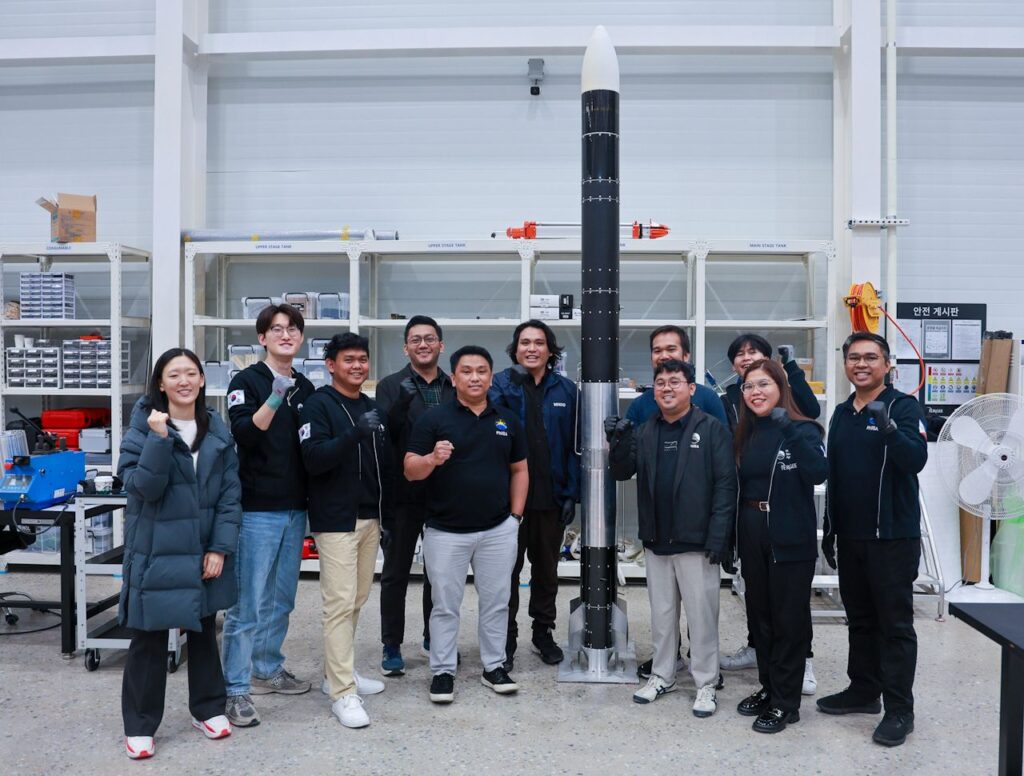
The project is a joint effort. The Philippine Space Agency, the Department of Information and Communications Technology, and the Cagayan Economic Zone Authority are leading the initiative. They are partnering with Ascend International Gateway, Inc. and South Korea’s Perigee Aerospace, Inc.
The collaboration stems from a Memorandum of Understanding signed at the Philippines–Korea Business Forum on March 4, 2026.
“Yes, we are going to launch a rocket into space,” President Marcos said.
The 2027 launch will trigger new interim guidelines for space activities. These rules represent crucial steps toward establishing a permanent Philippine spaceport.
Global demand for launch sites is surging. The Space Foundation’s Global Space Economy Report noted 153 orbital launches in the first half of 2026 alone.
Existing global spaceports are booked years in advance. Experts say the Philippines offers a distinct geographical advantage to help ease this backlog.
“As global launch rates continue to accelerate, existing spaceports cannot serve this increasing demand,” said PhilSA Director General Gay Jane Perez. “With the Pacific Ocean to its east and its proximity to the equator, the Philippines is well positioned for safe and secure rocket launch and recovery operations, helping reduce costs, improve launch efficiency, and create opportunities for future launch services.”
PhilSA is pursuing a Public-Private Partnership to build the spaceport. The strategy ensures long-term commercial sustainability.
Perigee Manila expressed strong confidence in the project. The company plans to boost local talent through technology transfer.
“The Philippines possesses strong potential to become an important participant in the future global space economy,” said Ji Hye “Diana” Kwon, Country Director of Perigee Manila. “The establishment of Perigee Manila reflects our confidence in the country’s growing capabilities and our commitment to building long-term partnerships that create meaningful and sustainable outcomes for the Philippine space industry. Through technology transfer, talent development, and operational collaboration, we aim to contribute to the Philippines’ emergence as a regional space industry leader.”
Perez emphasized the importance of predictable licensing. The country aims to offer reliable timelines for international aerospace companies.
“Our vision is for the Philippines to have a spaceport that serves as a gateway for safe, responsible, and sustainable space access for the region and the world. It will be a commercial-driven, government-enabled spaceport, with predictable timelines for launch licensing and authorization,” Perez said. “Apart from location, launch companies also take into consideration the approval process: whether it is clear, whether the approvals arrive on a schedule they can plan around, and whether the country meets its international obligations. That reliability is where the Philippines intends to compete, and it marks a shift in the country’s role in the regional space economy, from a user of space services to one that helps provide them.”
DICT Secretary Henry R. Aguda stressed the technological benefits. Sovereign launch capabilities will support critical digital infrastructure.
“Space-based technologies are an essential foundation of modern ICT infrastructure,” Aguda said. “Sovereign launch capability will allow the Philippines to independently deploy communications satellites, Earth Observation systems, and navigation assets. This advances the country’s long-term vision of building a secure, resilient, and inclusive digital ecosystem, ensuring that the Philippines remains competitive in the digital age.”
Ascend International Gateway President Ramon C. Garcia Jr. pointed to the nation’s readiness.
“Through the development of the Philippines’ first commercial spaceport and our collaboration with global launch providers, we are building the infrastructure, partnerships, and operational capabilities necessary to position the country as a key participant in the future space economy,” Garcia said. “The combination of CEZA’s enabling framework, the Philippines’ strategic location, and our ready-to-operate facilities creates a compelling platform for future launch activities, international aerospace partnerships, and commercial space investments across Asia.”
CEZA Administrator and CEO Secretary Katrina Ponce Enrile highlighted the broader economic impact.
“For CEZA, this is about far more than establishing a spaceport,” Enrile said. “It is about ensuring that the Philippines is not left behind in one of the world’s fastest-growing frontiers. It is about creating opportunities in aerospace, advanced engineering, scientific research, education, innovation, and high-value investments that will benefit future generations of Filipinos. It is especially meaningful that this opportunity will take root in our Province of Cagayan.”
Selected Filipino engineers will receive advanced training under Phase 2 of the Know-How Transfer and Training Program. They will work directly with Perigee’s Blue Whale sounding rocket platform.
PhilSA also aims to support university rocketry programs across the nation. These academic initiatives will help build a robust domestic space workforce.
“We are encouraged by rocketry activities of universities across the country, which PhilSA intends to support,” Perez said. “These activities demonstrate the increasing momentum and interest in space launch vehicles in the academe and help develop the skills needed for the Philippines to participate in the growing global space industry. They play an important part in building the country’s future space workforce.”