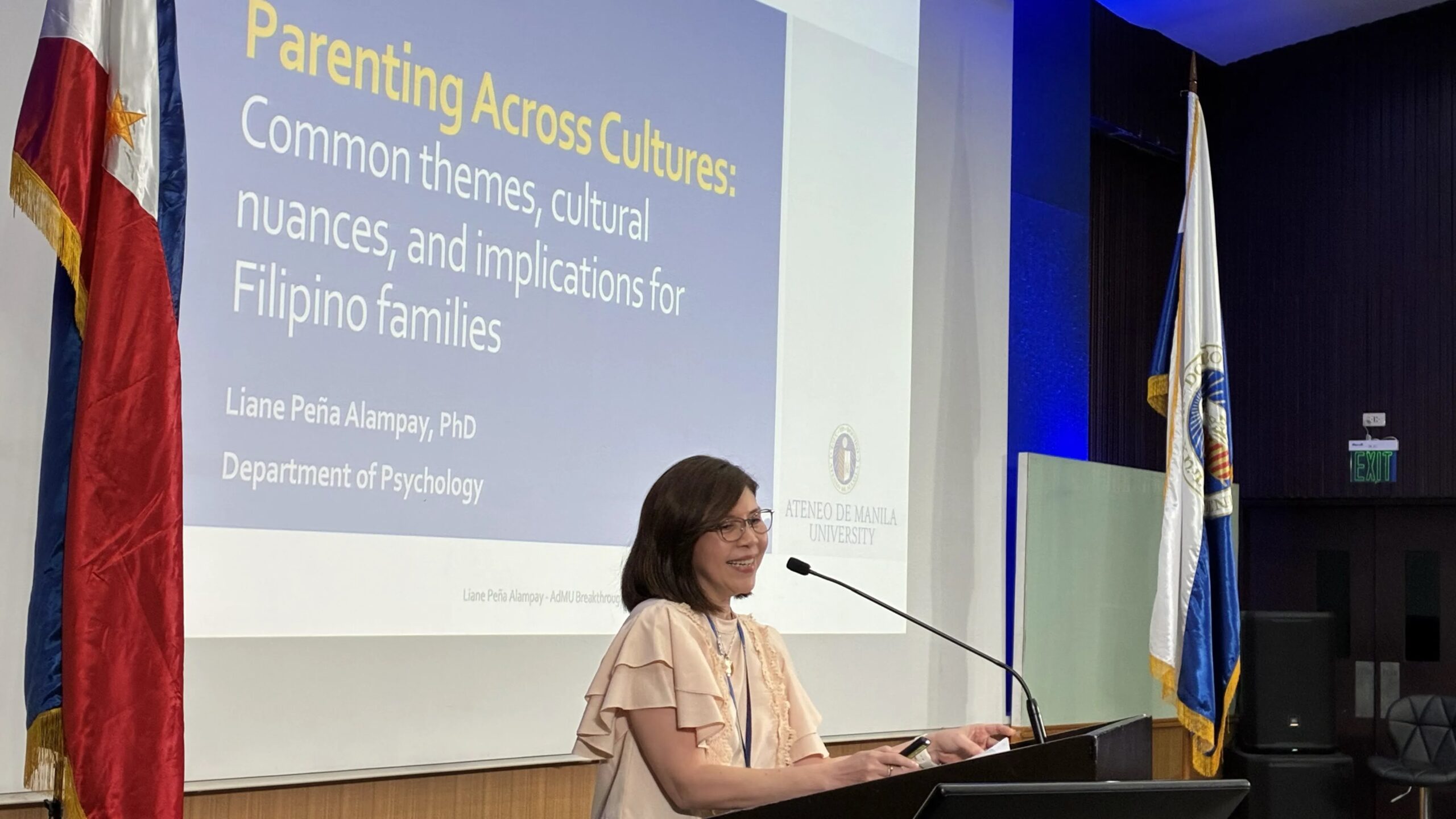
New research challenges a common Filipino parenting belief. Spanking does not make children more disciplined. Frequent physical punishment leads to more anxiety in children. It also leads to greater aggression over time.
Dr. Liane Peña Alampay shared these findings recently. She is a psychology professor at the Ateneo de Manila University. She presented the data during her Ateneo Breakthroughs Lecture. Her talk focused on the family.
Alampay drew her data from a major study. The project is called Parenting Across Cultures. It is the largest multicultural and longitudinal study of its kind in the world. The study spanned fifteen years. It followed 4,500 families in nine different countries.
The participating countries include China and Colombia. They also include Italy, Jordan, and Kenya. The Philippines is part of the study. Sweden, Thailand, and the United States are also included. Alampay serves as the Philippine site lead. She examined how parenting shapes child development. She also studied how culture influences parent-child relationships.
The global study found clear results on physical punishment.
“In no instance does corporal punishment have positive effects,” Alampay said.
Cultural acceptance of spanking did not change the outcome. Cultural norms sometimes weakened the negative effects. However, they never turned physical punishment into a beneficial practice.
Spanking is often viewed as a normal tool in the Philippines. Many people link it directly to good behavior.
“In the Philippine context, corporal punishment is often synonymous with discipline,” Alampay explained. “But I want to correct that; there are many types and forms of discipline. We need to discipline our children, but in ways that are not harsh or inflict pain.”
The study also addressed warm parenting styles. Some people assume that warm parenting is a Western approach. They think it does not suit Filipino families. The research proved this assumption wrong.
Rejection and hostility harmed children across all nine countries. Neglect led to emotional and behavioral difficulties. These problems lasted from age seven to age 14.
In contrast, acceptance protected children. Children who felt valued showed fewer aggressive behaviors. They also avoided antisocial habits. They suffered less from depression and anxiety in relationships.
Alampay noted that preventing school violence starts at home. Rejection at home causes distress. Distress makes young people vulnerable to bullies. It also pushes them toward online groups that encourage violence.
Schools must be safe spaces, according to the psychologist. They need safety beyond cameras and bag searches.
“Of course, we need to make schools safe spaces, not just safe in terms of cameras and bag searches, but safe with a teacher, safe with classmates,” she said.
She called for better parenting support. Children need environments where they feel accepted. They must also learn to trust adults.
The research also looked at parental styles. Filipino parents often report strong authoritarian attitudes. They emphasize strictness and obedience. They demand high respect for authority.
Alampay contrasted this with authoritative parenting. Authoritative parents combine clear rules with warmth. They maintain open communication. They also recognize the perspective of the child.
Close family ties are a Filipino strength. Valuing family responsibilities predicted helpful behavior. Helping at home and supporting siblings mattered. Respecting parents also helped shape positive outcomes.
These traits protected youth against negative parenting. The trait may relate to “utang na loob.” However, it is not identical. Researchers need more study on family obligations.
External pressures also affect parents. Financial hardship strains household stability. Unsafe neighborhoods increase parental stress. These factors raise the risk of harsh parenting.
Researchers are turning data into action. Alampay discussed the Masayang Pamilya program. It is also known as MaPa. It is a Philippine adaptation of a global support intervention. The program promotes positive caregiver-child relationships. It aims to prevent violence in the home. It also enhances the well-being of families.
MaPa teaches caregivers practical skills. It uses model scripts and guided practice. It includes illustrated stories and stress management techniques. A trial showed positive results. It found reductions in child maltreatment. The benefits lasted a full year after the program.
Alampay’s team works with the government. They partner with the Department of Social Welfare and Development. They expand MaPa through family development sessions. These sessions target conditional cash transfer beneficiaries.
Reaching parents requires empathy, not judgment. Most parents want their children to thrive. They simply lack the proper tools.
“We are also products of our history and how we were parented; it is all we know,” Alampay added.
Parents are motivated to change when given support. They want to unlearn past practices. They will adopt new behaviors to foster positive relationships.
The Ateneo Breakthroughs Lecture Series hosts these talks. It brings university research into public conversations. The focus remains on children and family well-being.