
Master woodcarver Pio Fadul stands as a pillar of traditional Philippine craftsmanship. His home of Paete, Laguna, holds a storied artistic legacy. Former President Gloria Macapagal-Arroyo issued Proclamation No. 809 on March 15, 2005. The decree officially declared Paete as the “Carving Capital of the Philippines.” The town derives its very name from paet, the Tagalog word for chisel.
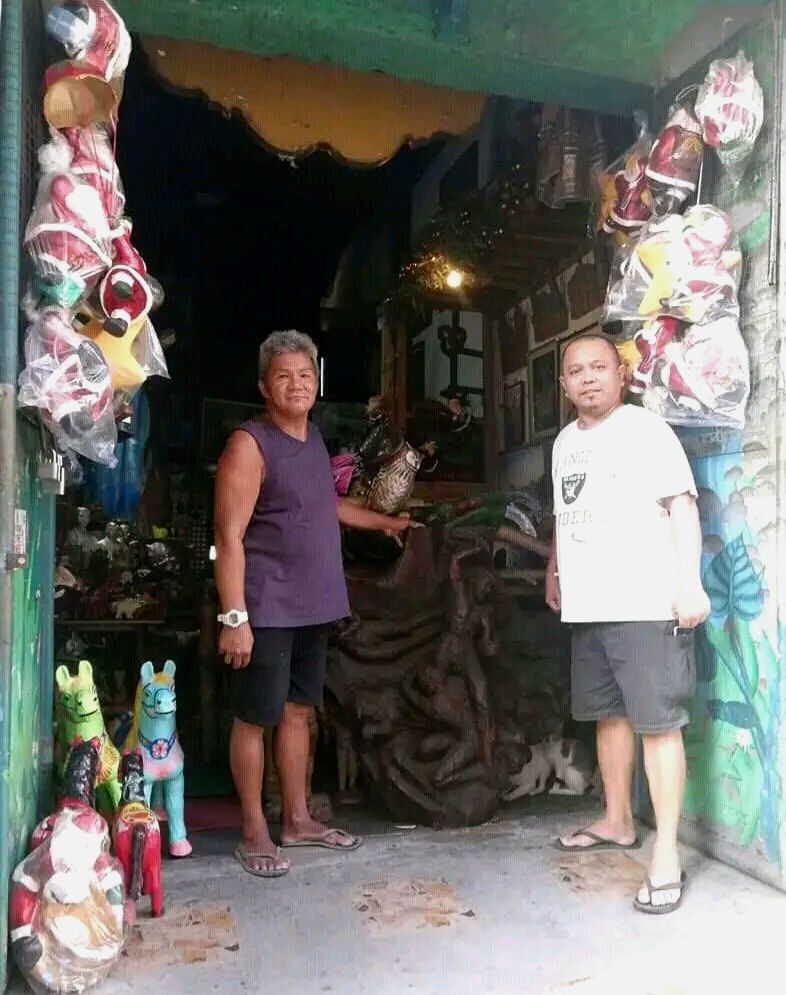
Jade Sanchez sells Fadul’s wood sculptures through Ang Buhay at Hugis sa Paete Woodcrafts and Paper Mache. Sanchez shared high praise for the master craftsman.
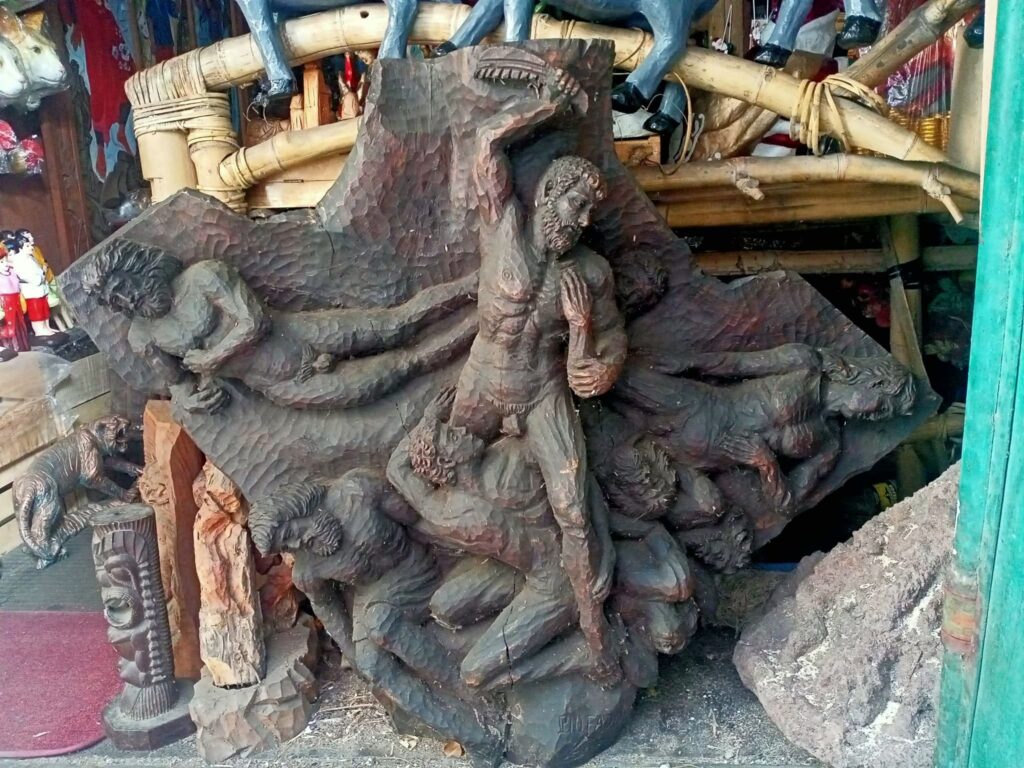
“Pio Fadul is one of the finest carvers in Paete,” Sanchez said. “The mastery of a woodcarver is measured by the proportions of their piece, and this is evident in the Hercules sculpture by Pio Fadul—a work we take great pride in. He carved this piece from Antipolo wood back in 2009.”
Sanchez pointed out what separates Fadul from other artisans.
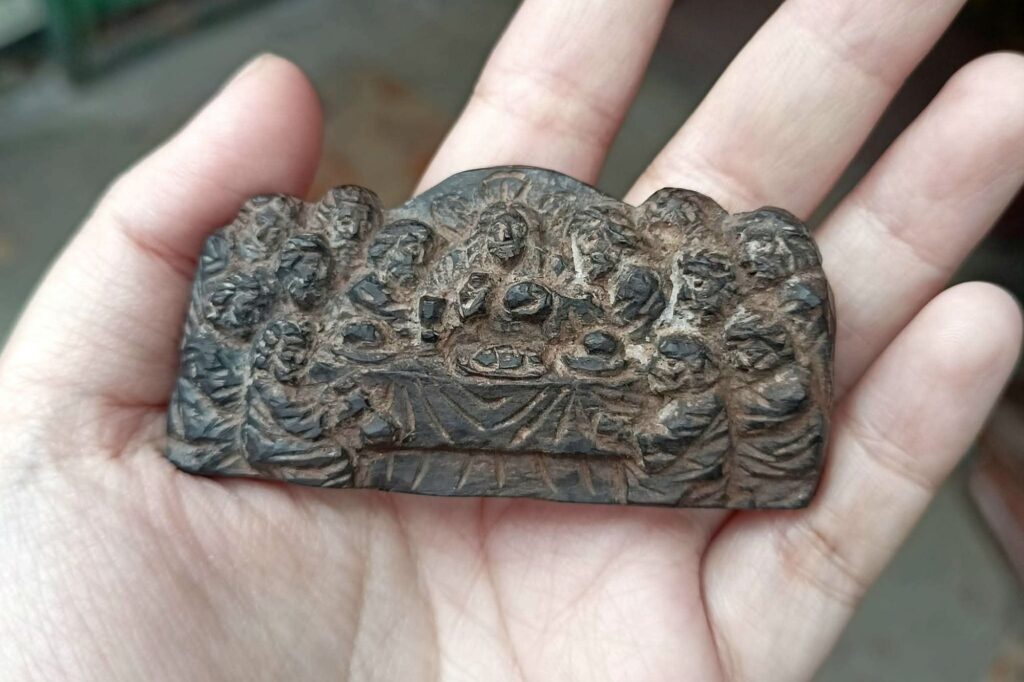
“One of the things that sets him apart from other carvers is his exceptional skill in carving hardwood and stone,” Sanchez said. “This is clearly shown in his Last Supper piece, where the fine details can be appreciated using a magnifying glass. He carved that Last Supper out of Dignum (a type of extremely dense hardwood) in 1992, and it was only as small as a matchbox. It was sold in 2024 after he was featured on I-Witness. We only have two remaining small Dignum carvings by Pio left in our collection: the Holy Trinity (Tatlong Persona) and Christ the King (Kristong Hari).”
Fadul marks his creations with distinct details.
“Pio places his initials, ‘PF,’ on his newer works,” Sanchez explained. “Aside from this mark, his signature rough-finished style is another defining characteristic of his work—even on his earlier pieces that do not bear his signature or initials.”
Religious motifs drive Fadul’s artistic output.
“Pio’s creations primarily revolve around religious themes,” Sanchez noted. “Some of the subjects he frequently carves include God the Father, Christ, La Pieta, Madonna and Child, and Archangels.”
Sanchez detailed the background of Fadul’s client base.
“Since 2024, when Pio was featured on I-Witness, those who became interested in acquiring his pieces were people who watched the documentary,” Sanchez said. “Before that, his patrons generally fell into two groups: art enthusiasts and religious devotees.”
Trouble began when television program Kapuso Mo, Jessica Soho (KMJS) aired its Gabi ng Lagim XIV Halloween special on November 1, 2026. The episode contained a segment titled “Ukit”. The broadcast showcased a Pietà carving made by Fadul. The show framed the carving alongside claims of ghostly shadows and supernatural occurrences.
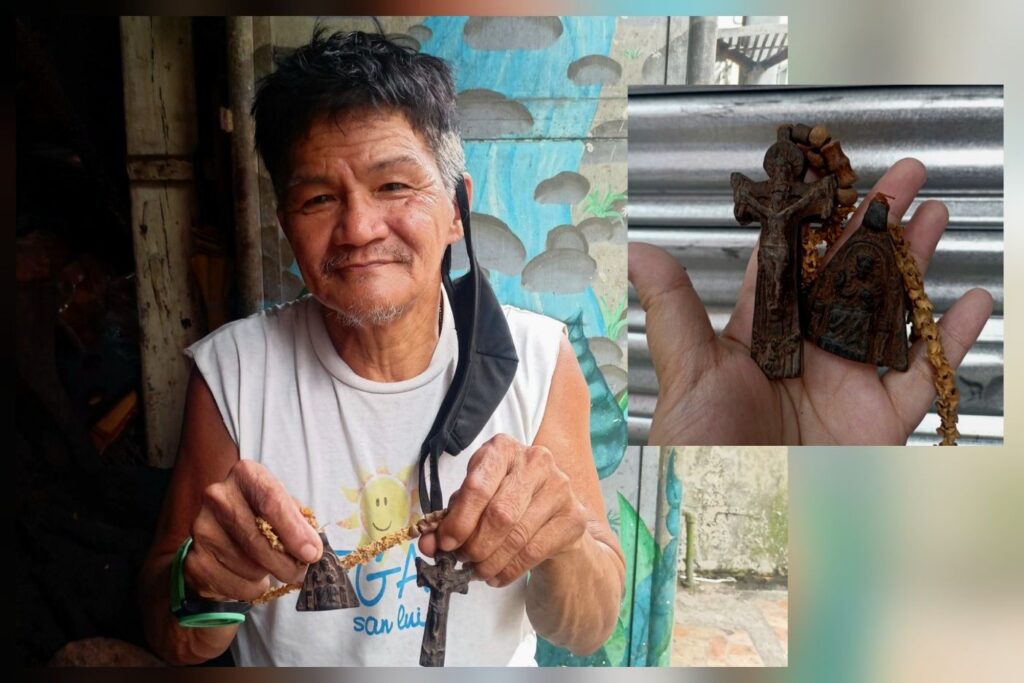
Superstition and curses have no scientific basis. Yet, horror stories on television cause direct damage to the economic survival of local artisans.
Netizens reacted swiftly across online platforms. Social media users condemned the segment as insensitive and misleading. They criticized the program for using sacred heritage craft as a prop for cheap scares. Viewers argued that sensationalism hurts the economic livelihood of Paete’s woodcarvers.
The Municipal Council of Paete took action on November 3, 2026. The council unanimously approved Resolution No. 166, Series of 2026. The resolution demanded a public apology from KMJS and GMA Network. Council members cited Section 16 of the Local Government Code of 1991 to protect the town’s reputation. The council issued a 15-day deadline. It warned of declaring the network and producers persona non grata if they failed to comply.
The Fadul family released an official statement on their Fadul’s Ukitan Facebook page:
“We, the family of Master Woodcarver Pio Fadul, would like to express our gratitude to everyone who continues to support, trust, and value our art and the woodcarving heritage of Paete, Laguna.
We are issuing this clarification regarding the recent segment of Kapuso Mo, Jessica Soho (KMJS) Gabi ng Lagim XIV featuring one of Master Pio Fadul’s works, titled ‘Ukit’.
- Artistry and Craftsmanship Are Free from Evil or Curses: The woodcarvings created by Master Pio Fadul—including the La Pietà featured in the show—are works of faith, art, and passion. They carry no evil, curses, or demonic spirits. The woodcarvings produced in Paete are symbols of clean labor, culture, and deep devotion to God.
- Dismay Over the Horror Framing: We accommodated the KMJS production team in good faith, believing that the feature would highlight the life, mastery, and legacy of Master Pio as a renowned artist. We were saddened and deeply concerned when the episode was framed around paranormal occurrences and horror tropes, which misled viewers and cast a negative light on his creations.
- Clarification on Health Matters: We want to make it clear that the health and personal challenges experienced by Master Pio have purely medical and natural causes. They have no connection whatsoever to any supernatural entities, curses, or the artworks he carves.
- Protecting Paete’s Heritage and Livelihood: Associating Paete’s woodcarvings with haunted objects causes severe harm to our local economy, our fellow artisans, and the town’s pride as the ‘Carving Capital of the Philippines.’ We ask the public to evaluate art based on its aesthetic and cultural value, not through sensationalized stories.
We appreciate the KMJS production team reaching out to our family to listen to our side and resolve the matter. We hope this clarification clears up any misunderstandings and restores respect for Master Pio Fadul’s name, his family, and the whole woodcarving community of Paete.”
The KMJS production team subsequently released an official apology. They clarified that the report focused on one specific carving’s story. They affirmed that the feature did not apply to Fadul’s other works or Paete’s overall woodcarving industry.
The community of Paete continues to showcase its artistic excellence. Master Pio Fadul’s legacy remains a shining symbol of Philippine culture, faith, and unmatched skill.
Photos: Jade Sanchez.