
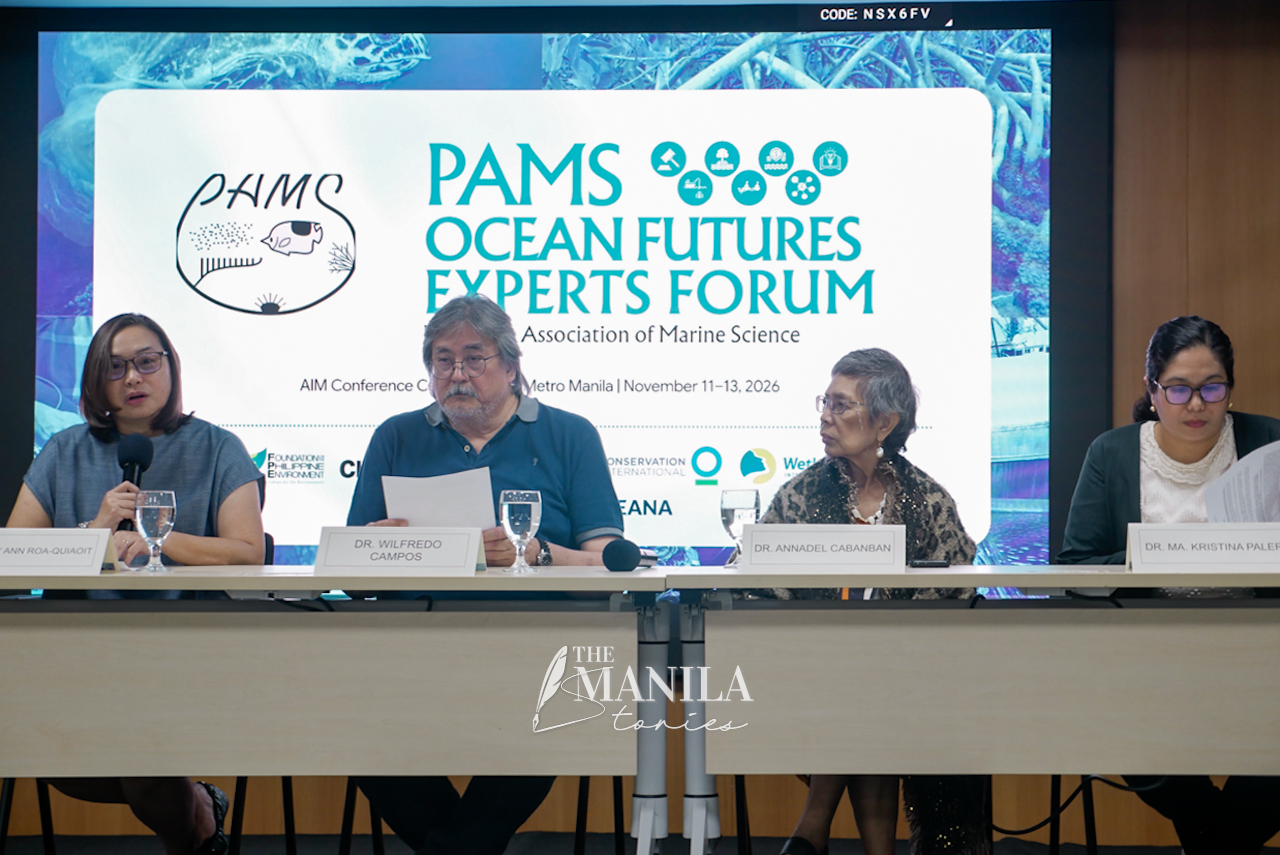
Marine scientists urged the Philippine government on Nov. 13 to protect coastal ecosystems and small-scale fishers.
Experts from the Philippine Association of Marine Science, Inc. issued the call after a two-day forum. The PAMS Ocean Futures Experts Forum gathered scientists, economists, lawyers, and anthropologists from Nov. 11 to Nov. 12.
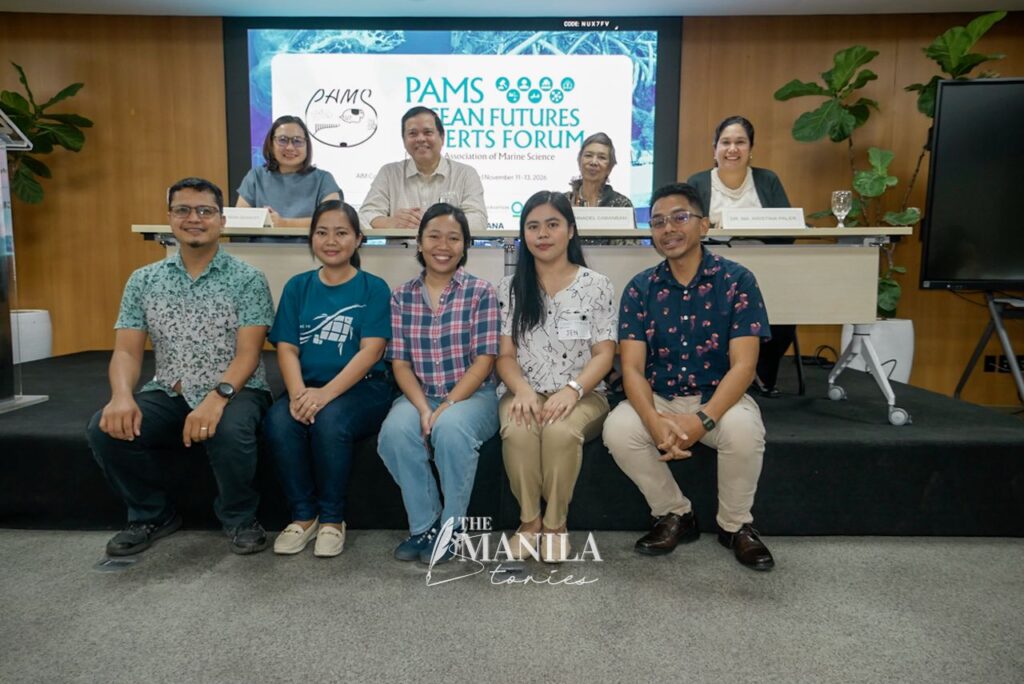
The group outlined steps to protect mangroves, defend municipal fishing zones, and curb plastic pollution.
“Bakit ba mahirap pa rin ang ating mga mangingisda?” (“Why do our fishers remain poor?”) the forum statement asked. “Bakit parang walang nagbabago sa buhay ni Mang Peryong at Manang Linda o lalong lumalala ang kanilang kalagayan sa gitna ng nagbabagong klima at mga hamon sa pamamahala sa bansa?” (“Why does nothing seem to change in the lives of Mang Peryong and Manang Linda, or why are their conditions worsening amid a changing climate and governance challenges in the country?”)
The statement noted that fishers still hold onto hope.
“Ngunit sa kabila nang kanilang pinagdaanan, ang pamilya ni Mang Peryong ay patuloy umaasa sa mas magandang kinabukasan,” (“Yet despite everything they have been through, Mang Peryong’s family continues to hope for a better future,”) the experts wrote.
Around 2.6 million Filipinos rely on fishing-related jobs. Roughly 60% of the population lives within 60 kilometers of the coast.
Protecting Mangrove Greenbelts
Mangroves shield coastal towns from typhoons and storm surges. They also serve as fish nurseries and store carbon. Yet farms, fishponds, and coastal projects continue to destroy these forests.
The forum highlighted the plight of the fictional fisher, Mang Peryong, and his wife, Aling Maria. Their catch shrank as nearby mangroves disappeared. When a storm surge hit their home, they asked, “Paano na kami?” (“What will become of us?”).
To prevent this, experts urged Congress and the president to pass the National Coastal Greenbelt Bill.
They also asked agencies to stop planting bakhaw on seagrass beds and tidal flats. Instead, groups should plant bungalon and pagatpat along seafronts.
The scientists told the Department of Environment and Natural Resources to halt the earth-balling of mangroves. They also urged officials to revoke the memorandum titled “Interim Operational Guidance and Conditions on the Earth-balling and Relocation of Mangroves in Exceptional Circumstances”.
In addition, the Bureau of Fisheries and Aquatic Resources must reclaim 54,000 hectares of abandoned fishponds without lease agreements. Returning these areas to mangrove forests will boost climate resilience across the 7,641 islands.
“The time to act is NOW,” the mangrove experts warned. Failure to act exposes 832 coastal municipalities and 25 coastal cities to deadly storms and billions of pesos in damage.
Defending the 15-Kilometer Fishing Zone
The experts also called on the Supreme Court to uphold the 15-kilometer municipal water boundary.
In October 2023, Mercidar Fishing Corp. asked a Malabon court to void rules banning commercial boats from municipal waters. The lower court ruled for the company. It stated that the 15-kilometer limit lacked scientific proof. The court allowed commercial fishing in waters deeper than seven fathoms, citing the right to a “balanced and healthful ecology”.
The Supreme Court affirmed that ruling in August 2024. Government lawyers, local officials, and fisher groups have since filed motions for reconsideration.
Marine scientists stressed that the 15-kilometer limit is vital. Shallow waters hold coral reefs and small pelagic fish like sardines, mackerel, and anchovies. Allowing commercial ships closer to shore will deplete fish stocks and hurt poor fishers.
“In the end, to protect the resource is to protect the people who depend on the resource,” the fisheries experts said.
Curbing Marine Plastic Pollution
Plastic waste poses another severe threat to Philippine seas. Rivers carry about 356,371 metric tons of plastic into the ocean each year.
Researchers found plastic litter at all 56 surveyed coastal sites from Manila Bay to Pag-asa Island. Scientists also found microplastics in clams, mussels, and rabbitfish.
Many local Materials Recovery Facilities act only as temporary dumps. Meanwhile, the Extended Producer Responsibility Act requires companies to recover 60% of their plastic packaging by Dec. 31, 2026. That target rises to 80% in 2028.
The forum urged agencies to enforce waste laws and fund local recycling hubs. They also called for standardized waste audits across barangays.
Including Local Communities
Finally, the scientists stressed that coastal policy must include Indigenous peoples and local fishers.
“Nararapat na kasama sina Mang Periong at Aling Maria, at mga kapwa nyang katutubo’t lokal sa umpukan ng mga ekspertong tumatalakay sa kinabukasan ng ating mga karagatan,” (“Fisherfolk like Mang Periong & Aling Maria ought to be in experts’ discussions on our ocean futures,”) the group said.
The forum proposed creating the Future Earth Meta-Network Philippines node. This network will link scientists, government agencies, and resource users.
“The Philippines must recognize that healthy coastal ecosystems are not obstacles to development,” the blue carbon statement read. “They are essential infrastructure for a safer, more food-secure, and climate-resilient nation.”
Photos: George Buid, 2026.