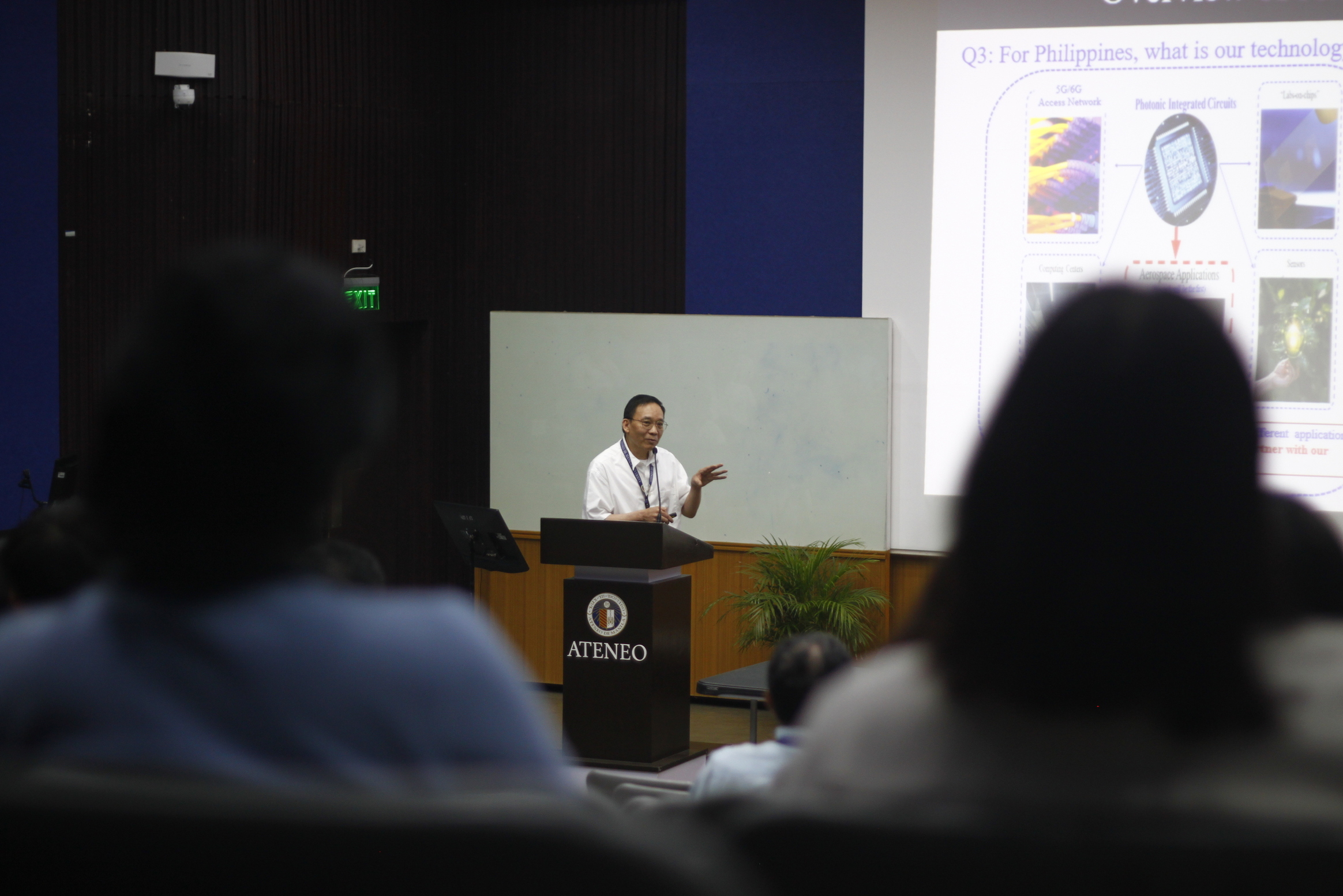
Ateneo de Manila University is becoming a hub for photonics research in the Philippines. Photonics uses light instead of electricity. The university’s Research on Optical and Electronic Systems (ROSES) Laboratory is the country’s first facility that designs Photonic Integrated Circuits (PICs) and trains designers.
The lab was founded in 2017 by physicist Dr. Benjamin B. Dingel. It grew from a volunteer effort into the nation’s leading center for optical sciences. ROSES now has more than 85 scientific publications. It receives support from the Department of Science and Technology‑PCIEERD, the Ateneo Research Institute of Science and Engineering, and several overseas partners.
On 20 February 2026, the lab hosted a Workshop on Advanced Photonics Technologies for Emerging ICT and Sensing Applications. The event took place in Escaler Hall on Ateneo’s Loyola Heights campus. Researchers from Japan, Thailand, Taiwan, and the Philippines attended. The workshop linked the DOST‑PCIEERD e‑Asia Joint Research Program and Japan’s NICT ASEAN IVO JRP. Participants included Waseda University, the National Institute of Information and Communications Technology, Chiang Mai University, the Thai Microelectronics Center, and industry partner Xinyx Design and Consultancy Services.
Dr. Dingel said the lab is “an experimental side, in which we try to be as open as possible to outside collaborations.” He added, “If we continue with our current technology, then we are already left behind. We can never move forward and compete.”
Dr. Filomeno Aguilar Jr., Ateneo’s Assistant Vice President for Research, Creative Work and Innovation, called the lab “a great and important step forward for research in optical science and engineering in the Philippines.” He said it “embodies the Ateneo de Manila University’s long‑standing commitment to build local capability and strengthen research and development in photonics, which has the potential to produce revolutionary change.”
The ROSES Laboratory aims to become a satellite hub for global partnerships. It seeks more collaboration among Philippine universities. While the Philippines leads in PIC design, it still lags in fabrication. Dingel believes that dynamic cooperation will keep the country well‑positioned for future technological leaps.
Ateneo Leads Philippines into Light‑Based Tech