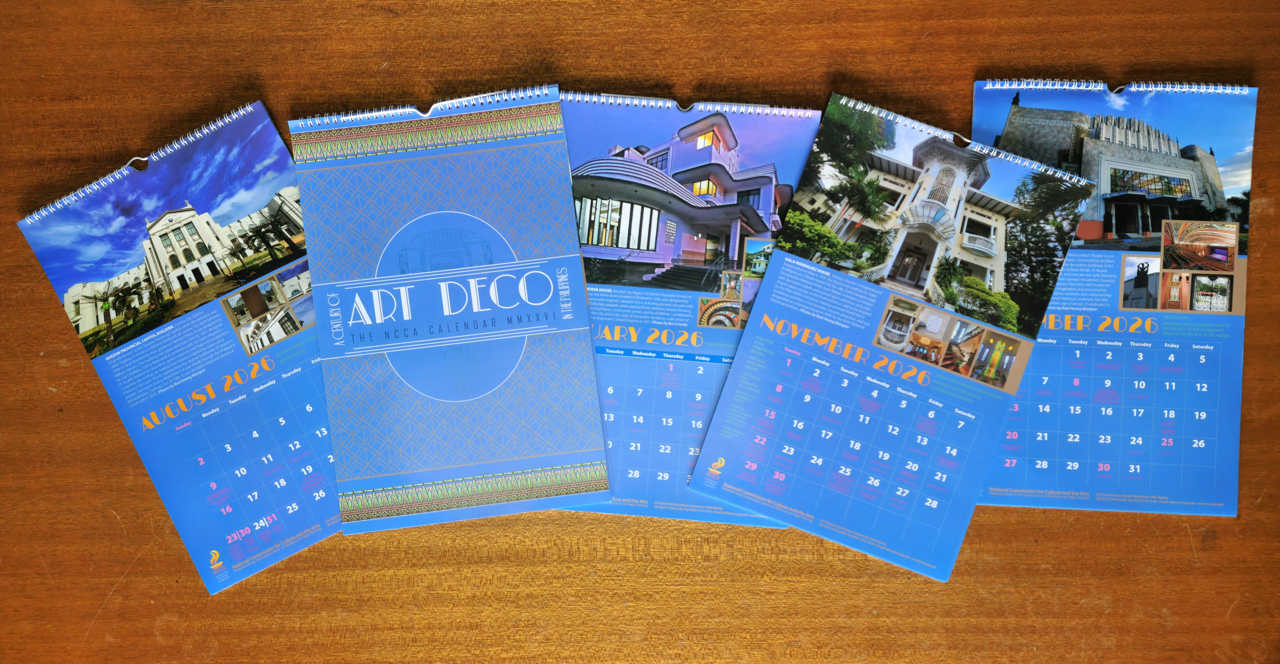
The National Commission for Culture and the Arts (NCCA) is marking a major cultural milestone. It has launched its 2026 calendar, honoring 100 years of Art Deco in the Philippines. This special edition celebrates the lasting influence of Art Deco architecture across the country. It also joins the global tribute to this iconic design movement. Art Deco shaped cityscapes worldwide in the early 20th century. The Philippines was no exception. The style became a symbol of progress and modern life during the American colonial period.
Titled “A Century of Art Deco in the Philippines,” the calendar showcases 12 heritage structures. One building is featured each month. These sites reflect the elegance and bold geometry of Art Deco design. They come from different parts of the archipelago. They include government buildings, schools, homes, and cultural landmarks. Each site tells a story of how Filipinos embraced modernity. They did so through art and architecture.
The calendar was created by Roel Hoang Manipon. He is a journalist, filmmaker, and cultural researcher. Manipon led the project from concept to design. He wrote all the texts. He also took many of the photos. Additional photography came from Mervin Concepcion Vergara, Gerard Rey Lico, Ben Scharlin, Bien Alvarez, Lorraine Sy-Lianteng, Iya Cabrera, and Roezielle Joy Iglesia. Their images capture the clean lines, sunburst motifs, and strong forms that define Art Deco.
In his introduction, Manipon reflects on the style’s significance. “As it marks its hundredth year, Art Deco in the Philippines deserves recognition,” he writes. “It deserves recognition not only for its beauty. It also played a key role in shaping the country’s vision of modernity.”
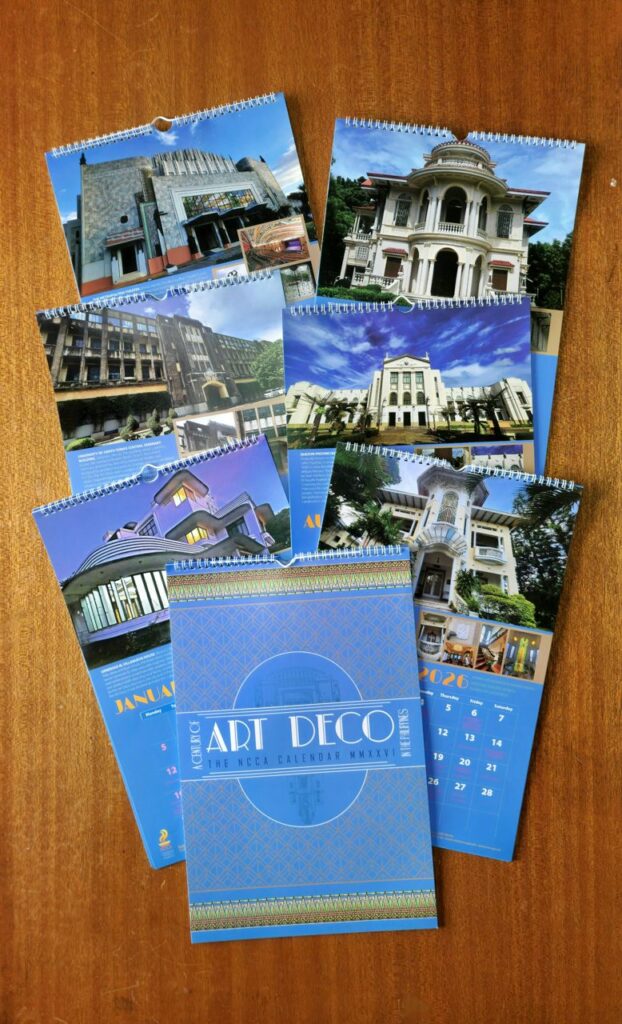
The calendar begins with the Generoso M. Villanueva House. Known as Daku Balay, it stands in Bacolod City, Negros Occidental. This grand residence blends local and modern elements. It is a fine example of residential Art Deco. The First United Building in Binondo, Manila follows. Built in 1928, it is one of the first Art Deco office towers in the country.
Other sites include the Rizal Memorial Coliseum. This sports arena in Malate hosted major events. Its sweeping curves and streamlined look are classic Art Deco. The University of Santo Tomas Central Seminary Building is also featured. It shows how religious institutions adopted the style.
The Far Eastern University campus in Manila is another highlight. Its buildings are masterpieces of Art Deco design. The facade details and symmetry show careful craftsmanship. The Bulacan and Quezon provincial capitol buildings are included too. They represent government’s embrace of modern architecture.
Historic homes like the Molo Mansion in Iloilo City are featured. So is the Old Municipal Hall of Jaro. These buildings show civic pride and artistic flair. The Old Tanauan Municipal Hall now serves as Museo ng Tanauan. It stands as a preserved piece of Batangas’ heritage. The Gala-Rodriguez House in Sariaya, Quezon is a private gem. Its design honors both family and style.
The calendar ends with the Metropolitan Theater in Ermita, Manila. This iconic landmark turns 95 in 2026. It remains a crown jewel of Philippine Art Deco. Its restoration is a symbol of cultural revival.
The 2026 NCCA Calendar is more than a date planner. It is a tool for cultural awareness. It invites Filipinos to see beauty in their built heritage. It calls for the preservation of these historic structures.
For more information, contact the NCCA Public Affairs Office. Email paio@ncca.gov.ph. Call 0945 788 5698. Visit www.ncca.gov.ph. Follow @NCCAOfficial on Facebook.