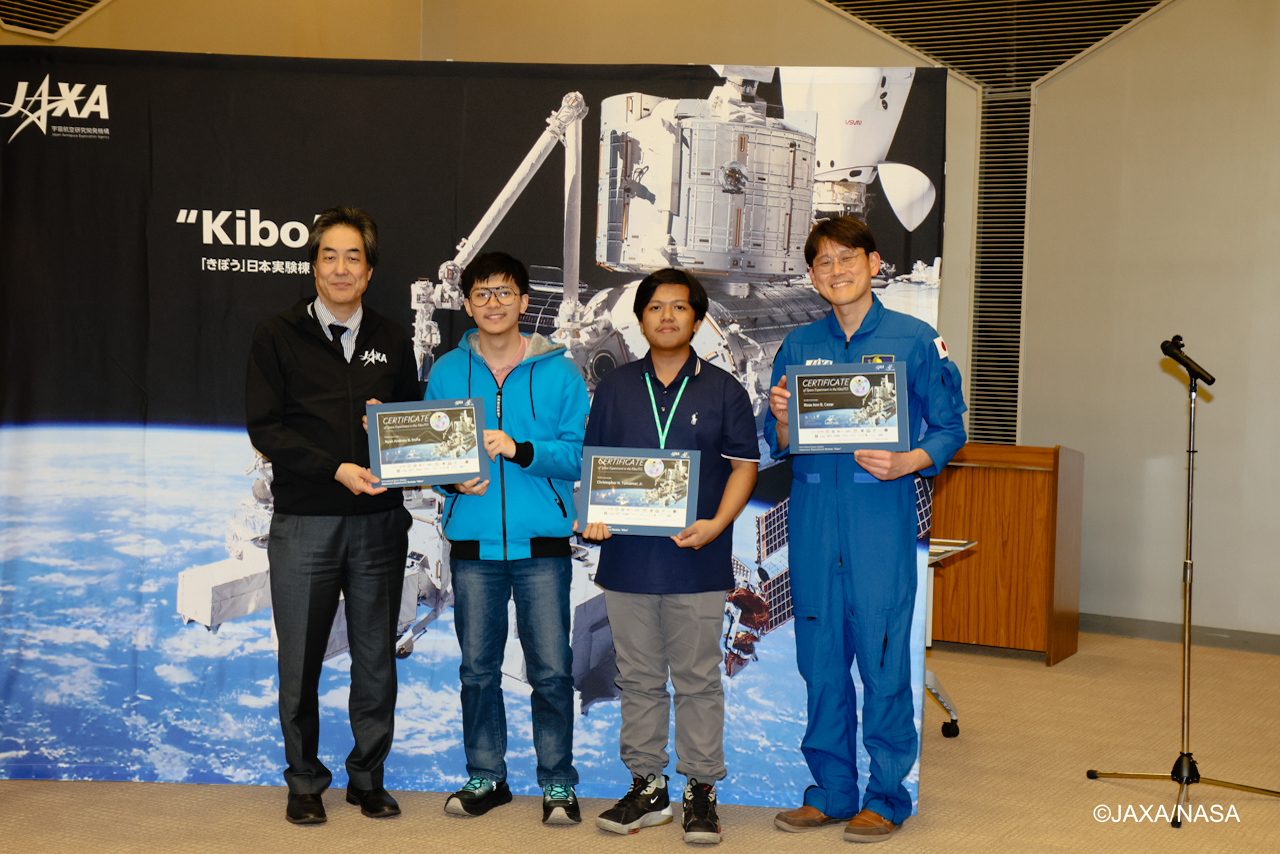
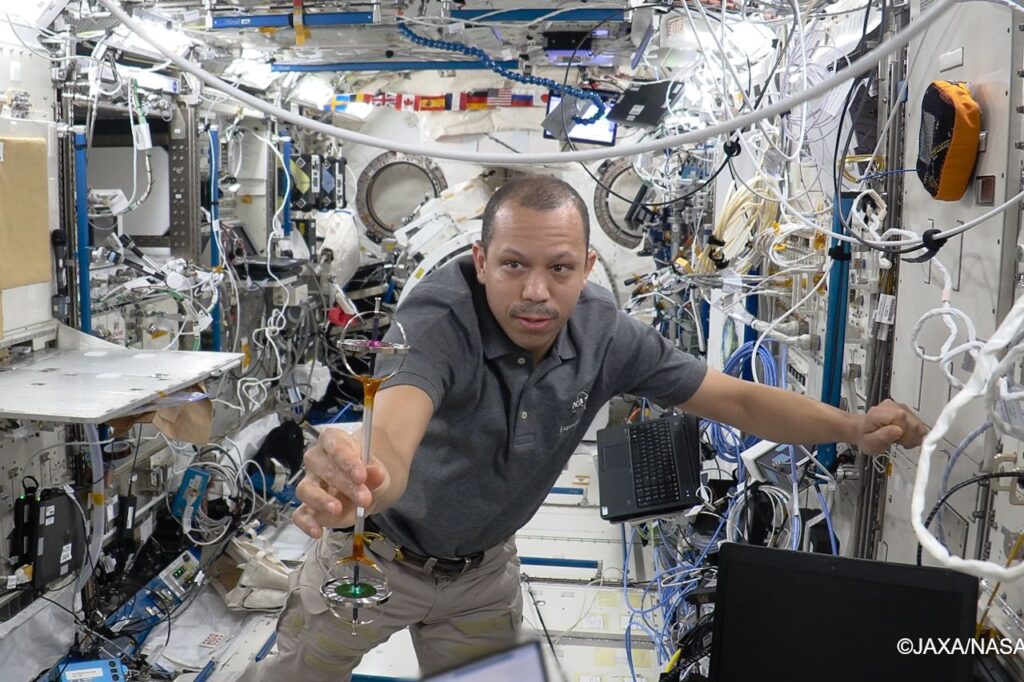
A space experiment designed by Filipino students recently launched into orbit. NASA astronaut Christopher Williams performed the “Double Gyroscope” experiment aboard the International Space Station (ISS) on March 24, 2026.
The project came from three students at the Rizal Technological University. Christopher Tumamac, Ryan Andrew Doña, and Rose Ann Cezar study astrophysics. They designed the experiment for the 2025 Asian Try Zero-G (ATZG) competition.
The Japan Aerospace Exploration Agency (JAXA) organizes this annual contest. It invites young scientists from the Asia-Pacific to create experiments for microgravity.
The Double Gyroscope test helps explain how spacecraft control their direction. The students placed two spinning gyroscopes on a stick. They wanted to see if spinning them in opposite directions would stabilize the system.
Astronaut Williams performed the test inside the station’s Kibo module. Finalists watched the process via a live stream from the JAXA Tsukuba Space Center in Japan.
The Philippine Space Agency (PhilSA) serves as the local organizer. Since 2022, Filipino students have reached the ATZG finals every year. Past projects include experiments on rotation, oloids, and elastic resistance bands.
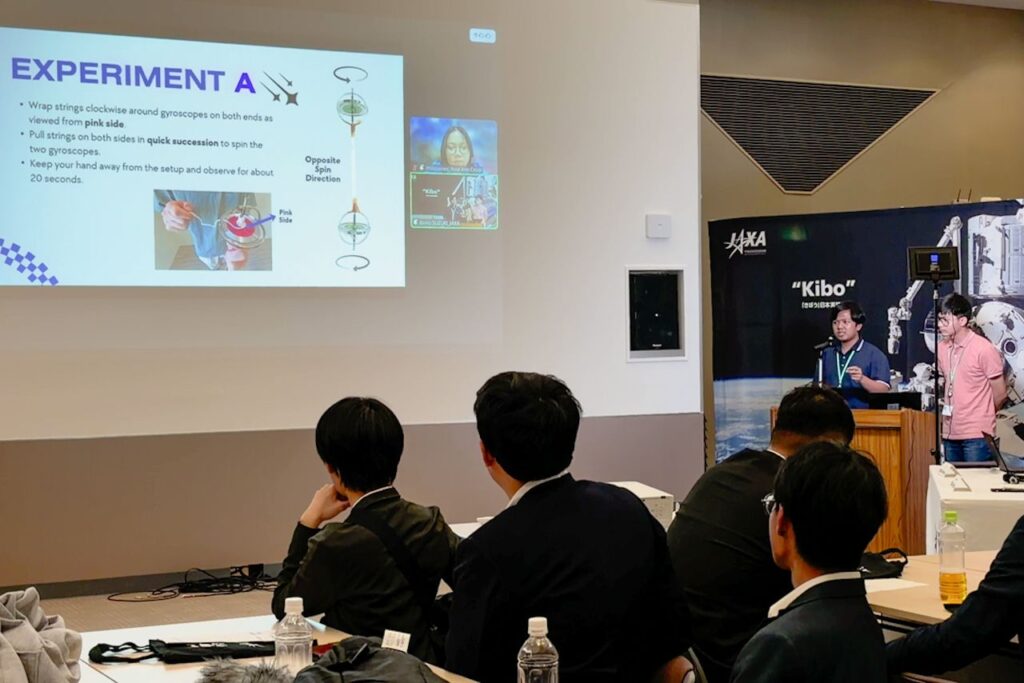
Reflecting on their experience, the team noted the challenges of space science. They said, “conducting experiments in a zero-gravity environment presents unique challenges and opportunities, as weightlessness can affect how objects move despite careful planning.”
The students encouraged others to follow in their footsteps. “We are very thankful for this opportunity given to us by PhilSA and I hope in the next batches of ATZG, more Filipino students will apply so they can also experience proposing an experiment in zero-gravity, see their experiment carried out, and learn a lot,” the team said.
JAXA will present the final results later this year.