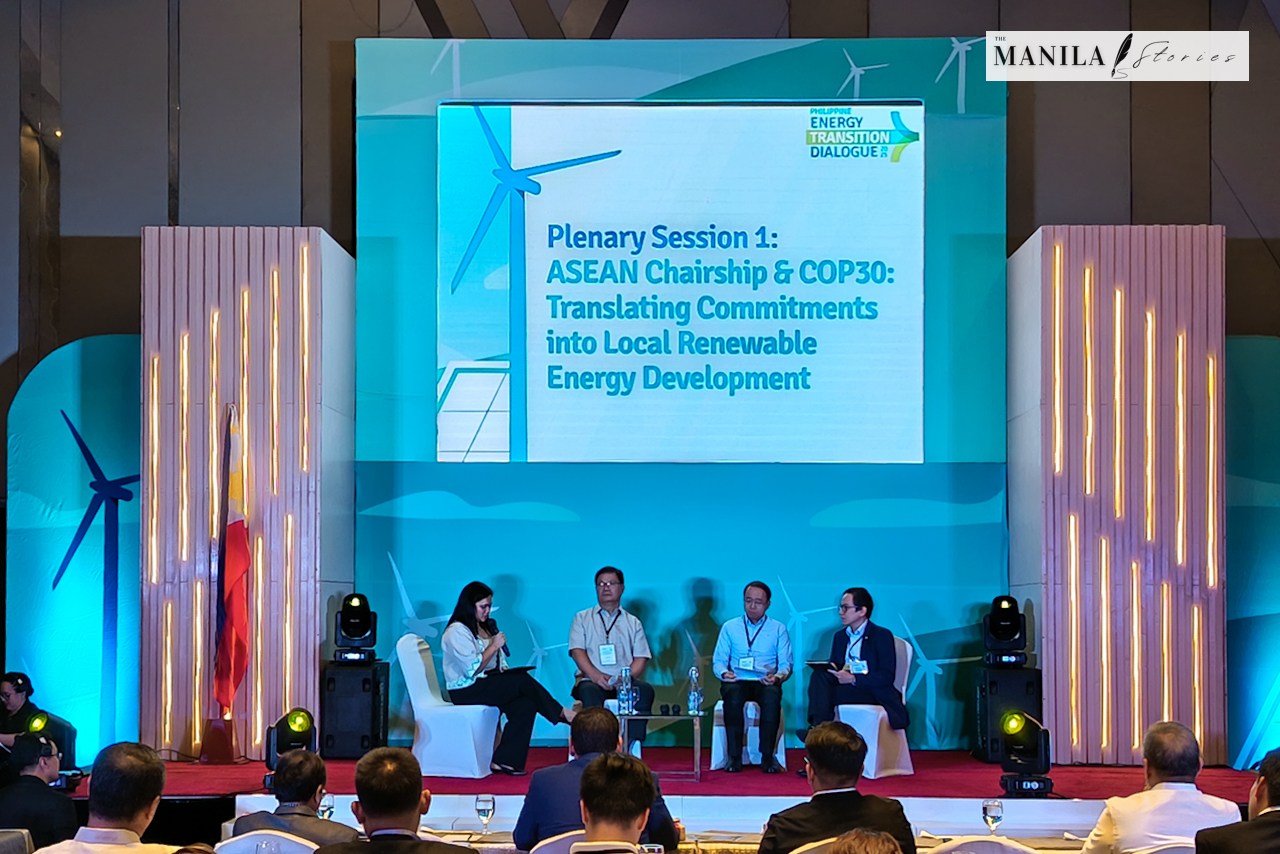
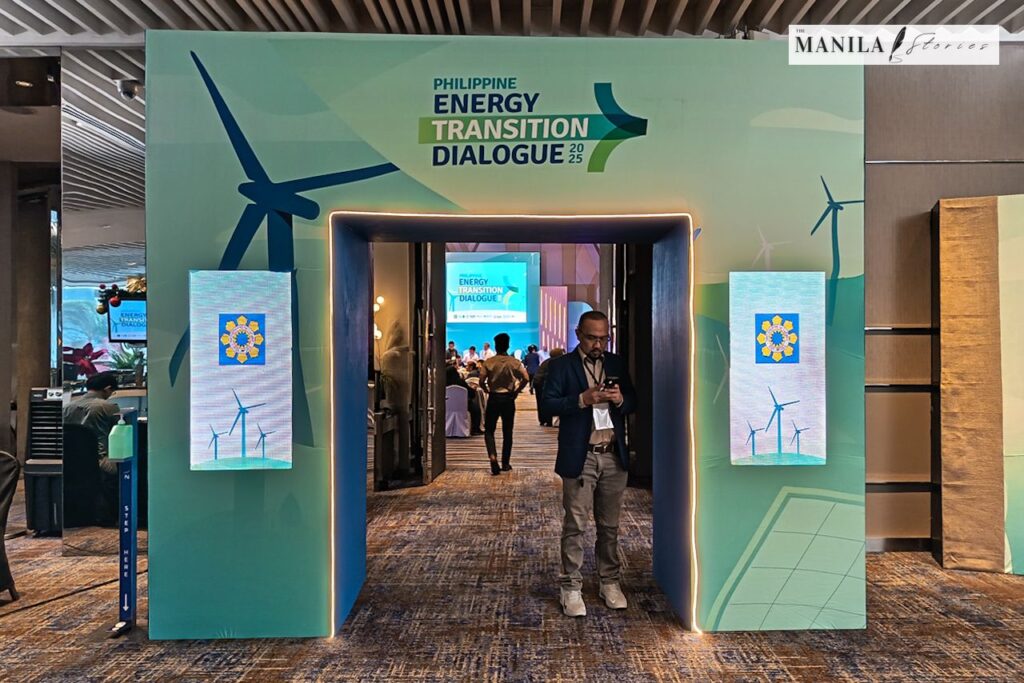
Local governments are stepping up as key drivers of the renewable energy transition in the Philippines. They took center stage at the second installment of the Philippine Energy Transition Dialogue 2025. The dialogue was held on 3 to 4 December in Quezon City. The event gathered over 120 participants from national agencies, local government units (LGUs), and civil society organizations. They discussed how localized energy planning can ensure energy security, affordability, and resilience.
The dialogue’s theme was “Localizing the Energy Transition: Ensuring Energy Security and Resilience through Renewable Development.” It highlighted the growing role of LGUs in shaping clean energy futures for their communities. Undersecretary Mylene Capongcol of the Department of Energy (DOE) emphasized the importance of inclusive and community-led energy systems. “Renewable energy is not only the path to a cleaner and more resilient energy system,” she said. “It is the way forward for inclusive economic development, community empowerment, and a sustainable future.”
She reaffirmed the DOE’s support for local energy initiatives. Key programs such as the Green Energy Auction Program (GEAP) and mobile energy systems (MES) will be expanded. These aim to help LGUs access affordable, reliable, and clean power. The GEAP allows localities to competitively procure renewable energy. The MES provides temporary power solutions, especially in off-grid or disaster-affected areas.
Representatives from Iloilo, Leyte, Eastern Samar, Ilocos Norte, Butuan, and Quezon City shared success stories. They spoke about how their communities adopted solar, wind, and other renewable sources. Mayors and provincial leaders from Guiuan, Paranas, Oras, and Alang-alang also committed to crafting local energy transition plans. During a side event, they signed a joint declaration pledging just and equitable energy transitions in their areas.
Eastern Samar Governor Ralph Vincent Evardone stressed the need for climate resilience. Mayor Annaliza Gonzales-Kwan of Guiuan highlighted community involvement. “When people shape their own energy systems, they gain control over their future,” she said.
Angelo Kairos dela Cruz, Executive Director of the Institute for Climate and Sustainable Cities (ICSC), praised local leadership. “At the heart of this transformation are strong local leaders and champions,” he said. “These localities prove that renewable energy can drive climate resilience, inclusive development, and social equity.” He added, “The future of energy is local.”
Palawan Second District Representative Jose Alvarez delivered a video message. He called for faster permitting and stronger grid systems. “The shift towards greener energy reduces reliance on international fuel markets,” he said. “It protects Filipino households from price shocks.” He urged national and local agencies to align policies and speed up project approvals.
The dialogue also stressed regional cooperation. The Philippines will chair the Association of Southeast Asian Nations (ASEAN) in 2026. This offers the country a unique opportunity. This role allows it to promote renewable energy as a tool for regional stability and shared prosperity. Secretary Robert Borje of the Climate Change Commission (CCC) said the time for action is now. “We must lead by example,” he said.
Frederic Tesfay, Team Lead for Energy Projects at GIZ Philippines, echoed the call. “Technologies are advancing,” he said. “Investment needs are clear. Regional cooperation offers real benefits.” He urged leaders to make smart, long-term decisions. “These will pay off for generations,” he added.
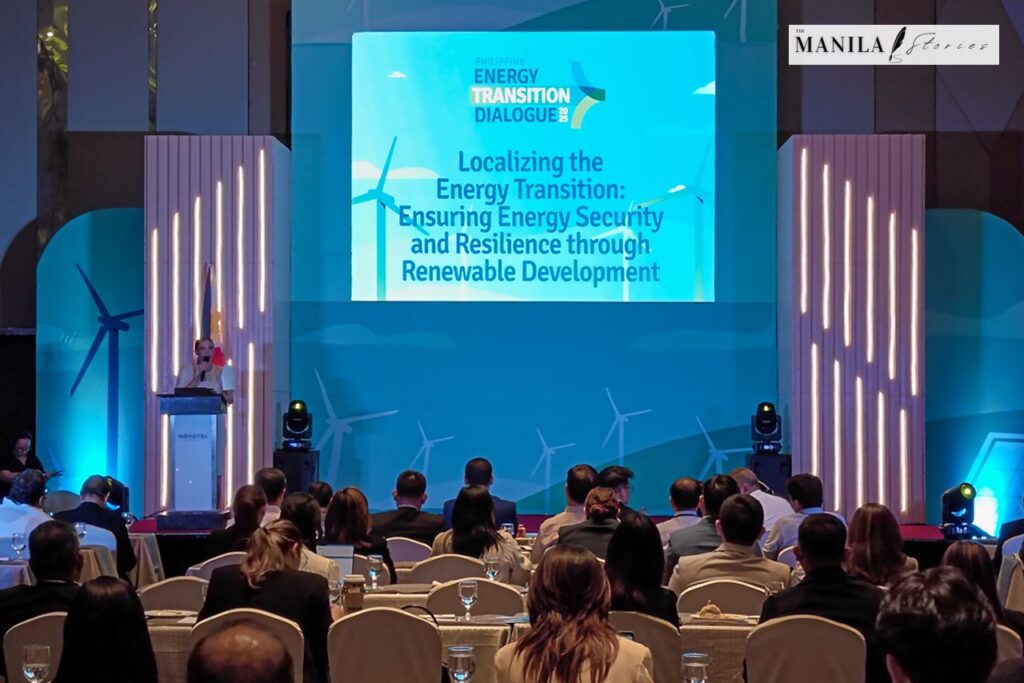
Panel discussions on 3 December covered international cooperation, local governance, and streamlined permitting. Breakout sessions on 4 December explored financing, technology, microgrids, and sector-specific solutions. Agriculture and industry were highlighted as sectors with high potential for clean energy use.
The event was part of the Clean, Affordable, and Secure Energy for Southeast Asia (CASE) initiative. CASE is led by GIZ in partnership with the DOE and ICSC. It aims to accelerate power sector transformation in the region. More information is available at icsc.ngo/ph-etd.
This year’s dialogue reinforces a clear message: Local action is critical. The energy transition must be fair, inclusive, and community-driven. Across the Philippines, change is starting at the local level.