Greenpeace Philippines revealed today that a shocking PHP 1.089 trillion of the government’s climate-tagged expenditure may have been lost to corruption since 2023. This alarming figure includes a staggering ₱ 560 billion potentially siphoned off in 2025 alone. The environmental organization made the announcement during a press conference. They highlighted the devastating impact of corruption on the country’s ability to address the climate crisis.
Greenpeace Philippines’ analysis is based on data from the National Integrated Climate Change Database and Information Exchange System (NICCDIES). It also relies on estimations revealed in Senate inquiries. The data indicates that the Department of Public Works and Highways (DPWH) manages the vast majority of climate-tagged projects. In 2025, the DPWH oversaw PHP 800 billion of the PHP 1 trillion allocated. This accounts for 90% of climate-tagged projects, totaling 24,764 out of 26,874 projects. Disturbingly, Greenpeace estimates that ₱ 560 billion of this DPWH allocation is vulnerable to corruption. Specifically, climate-tagged flood control projects under the DPWH amount to ₱ 248 billion in 2025. A staggering ₱ 173 billion of that is at risk of being lost to corrupt practices.
“A trillion pesos is an obscene amount,” stated Greenpeace campaigner Jefferson Chua. “Greedy officials and contractors are stealing from projects meant to help people cope with climate impacts. This is unacceptable and climate criminal. They cripple our ability to survive the escalating climate crisis.”
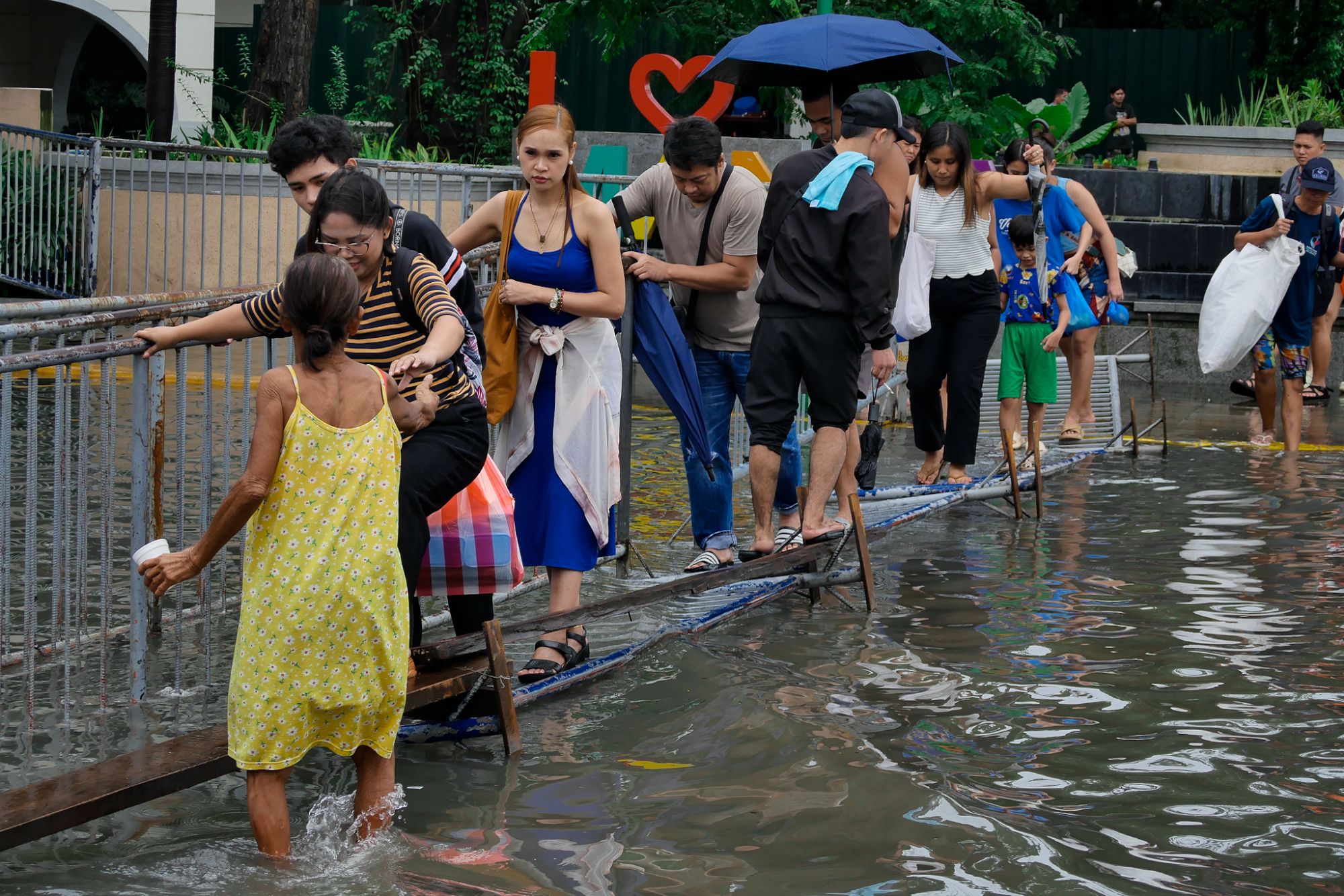
Corruption severely undermines the Philippines’ resilience to climate change. Filipinos are already suffering from increasingly frequent and intense floods, resulting in the loss of lives, homes, and livelihoods. These floods cause significant economic damage to both local and national governments. Flood control projects are vital for protecting communities. However, ongoing investigations reveal that vast sums meant for crucial climate adaptation efforts are being misappropriated. The funds are lining the pockets of the corrupt.
The Philippine government struggles to fund its climate adaptation needs. The Department of Finance reports that climate-related losses and damages cost the Philippines ₱ 506.1 billion between 2010 and 2020. From 2015 to 2022, the government spent almost ₱ 2 trillion on disaster risk reduction and management. Despite these expenditures, adaptation funding remains insufficient. A 2022 World Bank report projects that the Philippines could lose up to 7.6% of its GDP by 2030 and 13.6% by 2040 due to climate change.
“Corruption puts Filipinos in a hopeless situation,” Chua explained. “Not only is our climate financing inadequate, but more than half of what little we have is potentially being stolen. Filipinos are left with scraps from the billions stolen by a few.”
Chua also raised concerns about the government’s reliance on loans and grants to address climate losses. “What assurance do Filipinos have that this money won’t end up in the pockets of the greedy? Each new loan pushes us deeper into debt, while corruption drains the money meant to protect us.”
Greenpeace Philippines emphasizes that corruption is a major obstacle to effective climate action. The country cannot achieve its climate targets if corruption is unchecked. The organization also criticized the government’s overreliance on “gray infrastructure” for climate adaptation, as evidenced by DPWH’s massive budget.
Greenpeace advocates for nature-based and community-led solutions, including:
- Preserving watersheds
- Stopping destructive mining and quarrying projects
- Ending reclamation projects
- Instituting a national ban on single-use plastics to alleviate urban flooding
“Corruption on flood control projects, worsened by the continued operation of fossil fuel companies, is an injustice to Filipino communities,” Chua stated. “Filipinos cannot continue to suffer the double burden of corruption and corporate impunity. The government must exact accountability from corrupt officials and contractors, as well as from fossil fuel companies profiting from climate impacts.”
Greenpeace is calling on the Philippine government to:
- Ensure accountability from corrupt government officials and contractors.
- End corruption and put in place measures to ensure transparency in government.
- Create systems for greater people participation and ensure public access to government information.
- Put in place mechanisms to safeguard climate funds from corruption.
“The greed we’re seeing in this corruption scandal mirrors the greed of fossil fuel corporations that have put us in this climate crisis,” Chua concluded. “President Ferdinand Marcos Jr. must also hold these corporations accountable: make them stop fossil fuel extraction and pay for losses and damages.”