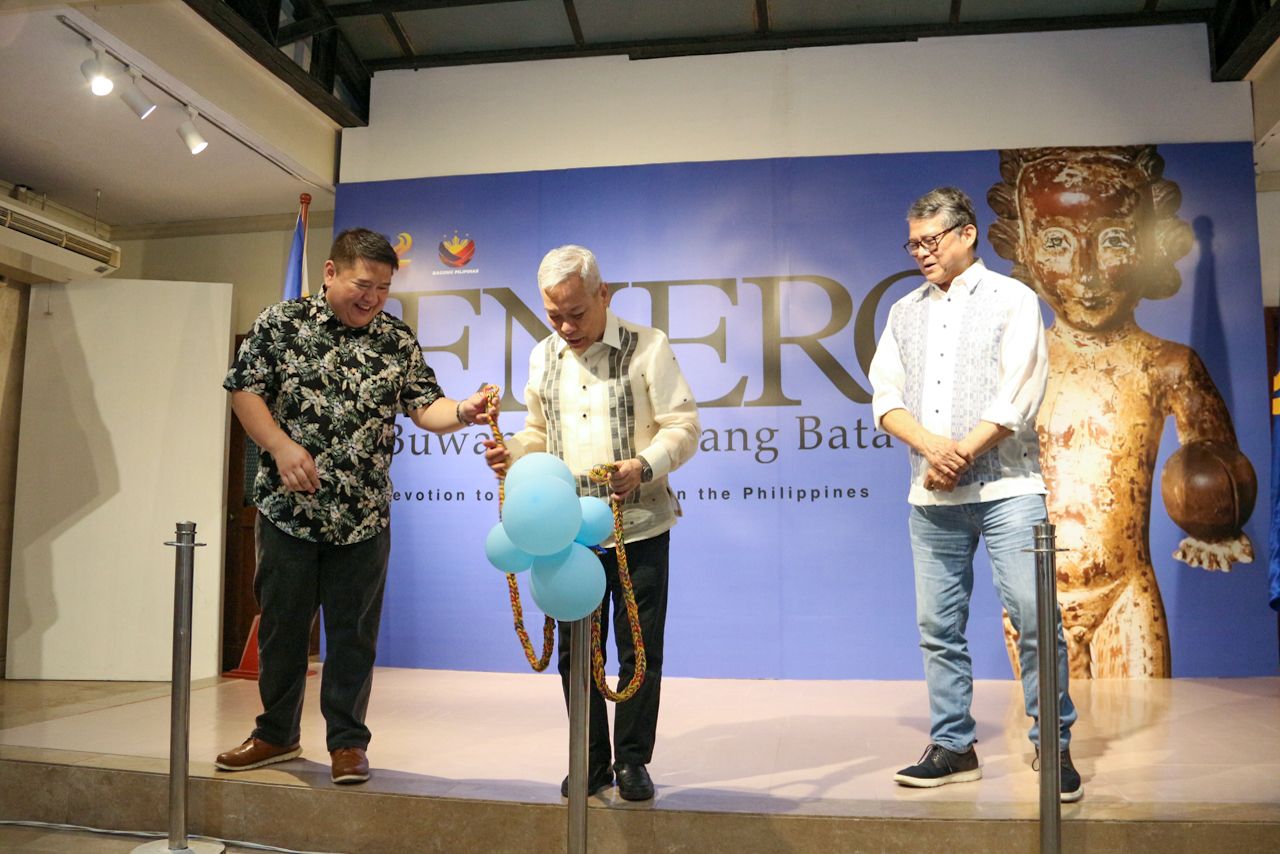
The National Commission for Culture and the Arts (NCCA) opened the Balaang Bata exhibition on January 16, 2026, at its gallery in Intramuros. The event, led by Chairman Eric B. Zerrudo, showcases diverse Santo Niño wooden statues and images from private collections across the Philippines. This display highlights centuries-old devotion to the Holy Child, blending artistry, faith, and cultural traditions passed through generations.
The exhibition features over a hundred pieces, many more than a century old. These statues, carved from native wood, reflect the personal and spiritual journeys of Filipino artisans and families. Some are adorned in gold and velvet, while others remain simple, bearing the marks of everyday devotion. Claude Tayag, Francis Ong, Jayson Maceo, Jun Fulgencio, Anthony Agustin, and Oliver Abusan contributed their treasured works. Their contributions emphasize the vital role of private collections in preserving heritage.
“Intramuros is the perfect home for this exhibit,” said Chairman Zerrudo during the opening. He described Balaang Bata as a way to “begin on the right foot” for 2026 just before National Arts Month. Zerrudo stressed the need for collaboration, saying, “We hope to establish the right network at this time” to protect shared cultural memory.
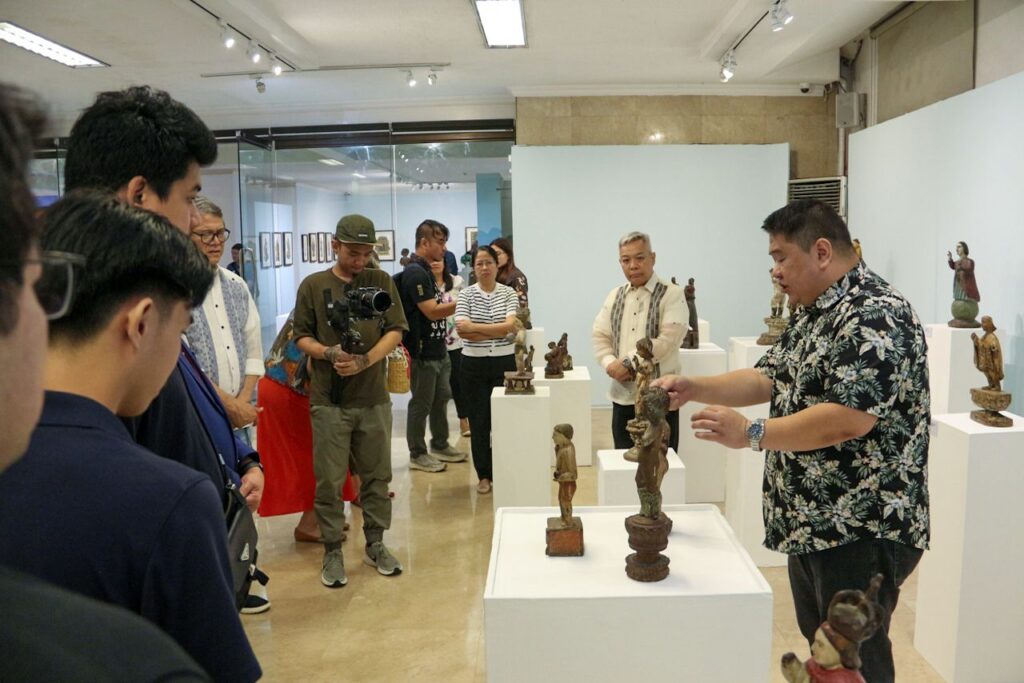
Francis Ong, a key collector, shared his perspective on curation. “We collect to be able to share it back to the community,” he said. “We’re helping build the narrative, the story, because this is the history of our people.” His contributions include both statues and paintings of the Santo Niño, some created by Ong himself.
The exhibition traces the Santo Niño’s journey to the Philippines in 1521. A small wooden image, offered by Spanish missionaries, became a symbol of deep Filipino faith. Over time, artists and families transformed it into a personal, approachable icon. “The Santo Niño is not distant,” an exhibit text explains. “He is playful, tender, and small enough to hold or dress.”
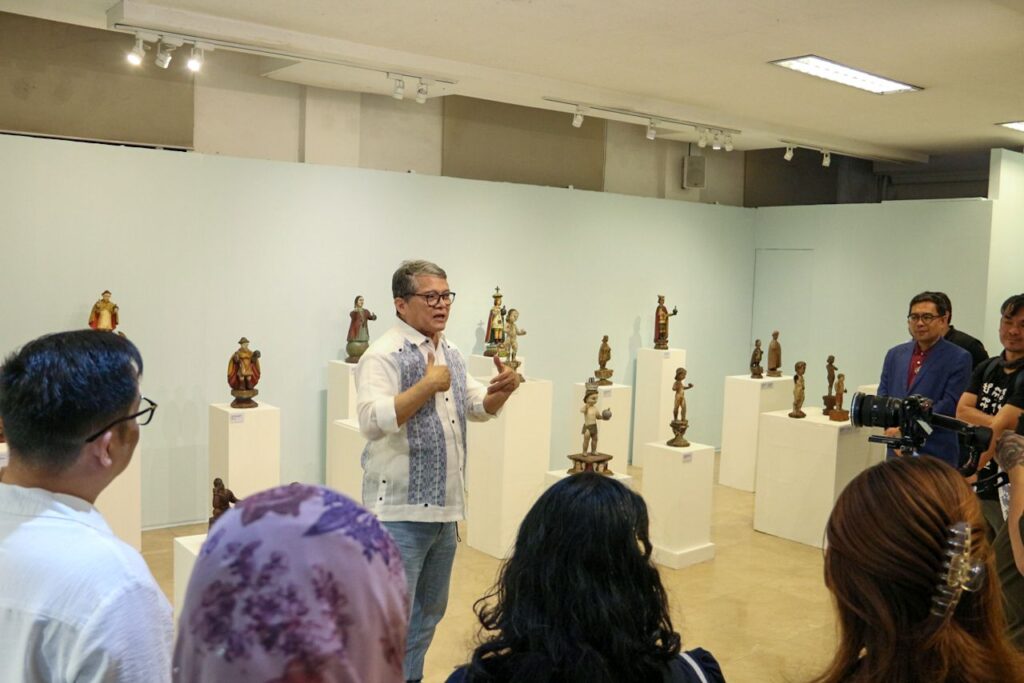
Claude Tayag emphasized the grassroots origins of many displayed works. “Galing ’yan sa mga bahay-bahay,” he said, meaning “They come from homes.” Many pieces were crafted by farmers, fishermen, or local woodworkers. Tayag also shared his own paintings of the Santo Niño, adding a creative voice to the collection.
The devotion to the Holy Child is vivid in Filipino culture. Statues appear in home altars, chapels, and even on transport vehicles. During fiestas like Sinulog, Ati-Atihan, and Dinagyang, this faith becomes a public spectacle. Streets burst into color as dancers chant, “Viva Pit Señor!” while carrying images of the Santo Niño. These festivals, rooted in historical encounters, now highlight resilience and joy.
Balang Bata invites visitors to see the Santo Niño as more than a religious figure. It portrays Him as a companion woven into daily life. “He is a silent witness to prayers in kitchens and fields,” the exhibit notes. His presence is a reminder of continuity, artistry, and the strength of Filipino identity.
The exhibition is open daily from 9 a.m. to 6 p.m. at the NCCA Gallery in Intramuros. For more information, contact Rene S. Napeñas at pais@ncca.gov.ph or 0945 788 5698. Visit the NCCA website or Facebook page for updates.