
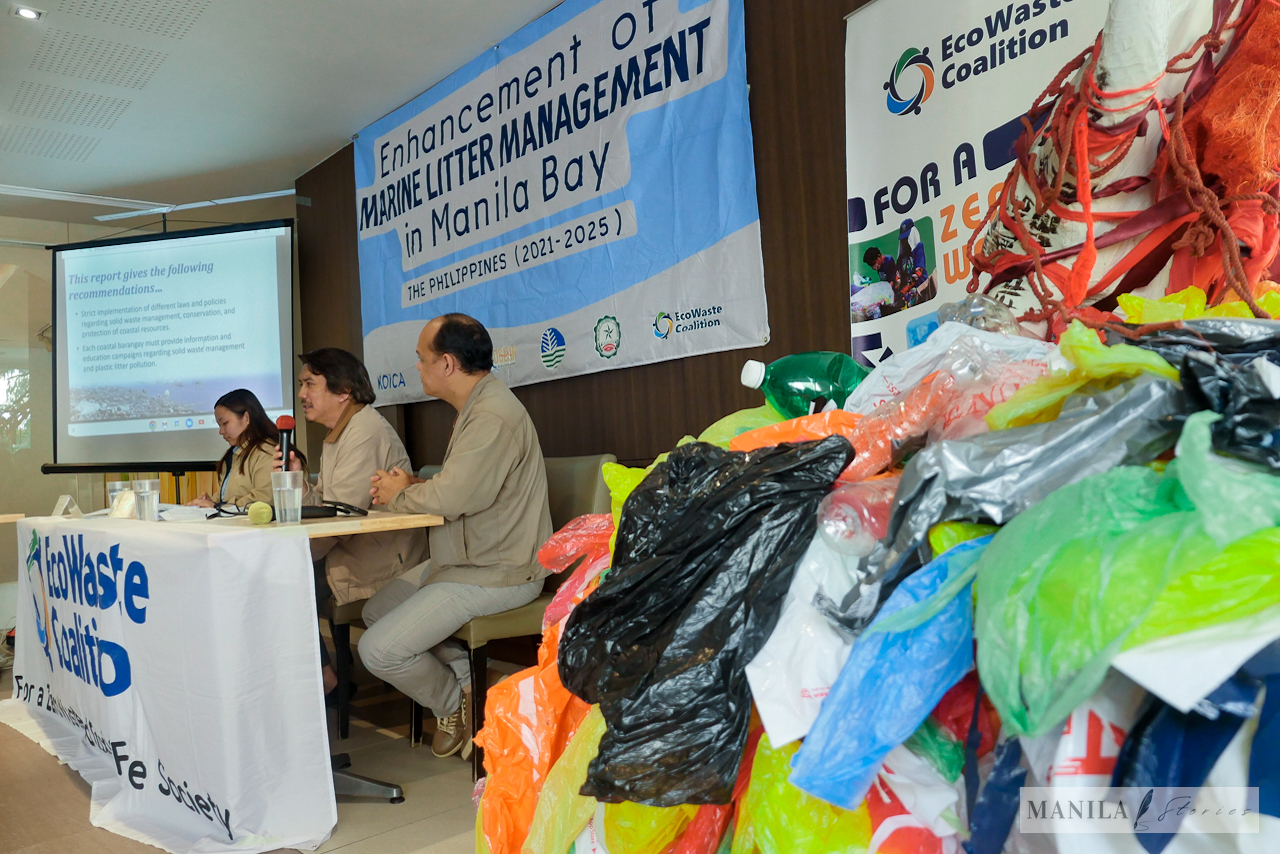

The EcoWaste Coalition and De La Salle University-Dasmariñas (DLSU-D) have made remarkable progress. They have unveiled the findings of their 2024 Marine Litter Monitoring Survey Report. The report was presented during a press conference in Quezon City. It highlights a significant reduction in marine litter. It also shows a decrease in total collected waste in Manila Bay.
A total of 10 project sites were surveyed around Manila Bay. The survey included locations in Cavite (Silangan, Rosario; Timalan, Naic; Sahud Ulan, Tanza; Capipisa, Tanza; and Julugan, Tanza), National Capital Region (San Dionisio, Paranaque; and Tanza, Navotas), and Bataan (Cabcaben, Mariveles; Agwawan Beach, Brgy. Simsiman, Mariveles; and Bantan, Orion). The study revealed a 36% decrease in the volume of marine litter. It also found a 42% reduction in the total weight of collected waste from 2023 to 2024.
While these figures signal hope in the effort to clean up Manila Bay, plastics remain a pressing concern. Accounting for 91% of the total collected waste, hard and film plastics dominate marine debris. A 16% increase in litter counts was also observed during the wet season. This increase emphasized the need for continuous waste management efforts.
Wes Lipana, Project Officer for the EcoWaste Coalition’s Enhancement of Marine Litter Management project, states, “These findings show the progress we’ve made. However, they also highlight the urgent need for stricter waste management practices. We have made significant strides in reducing litter. Yet, the continuing dominance of plastics in our waste indicates the need for collective action—both from government bodies and the public.”
This report provides valuable insights into the current state of marine debris in the region. However, the results are limited to the specific areas covered by the survey. The study serves as a reminder of the progress made in marine pollution and waste management in Manila Bay. However, much work remains. The report importantly shows how collective efforts reduce marine litter. This inspires hope for a cleaner and healthier future for Manila Bay and its surrounding communities.