The Philippines saw lower inflation in 2025 compared to the previous year. The annual average inflation rate dropped to 1.7 percent. This is down from 3.2 percent in 2024. The Philippine Statistics Authority (PSA) reported the data. It shows a steady cooling of overall price levels.
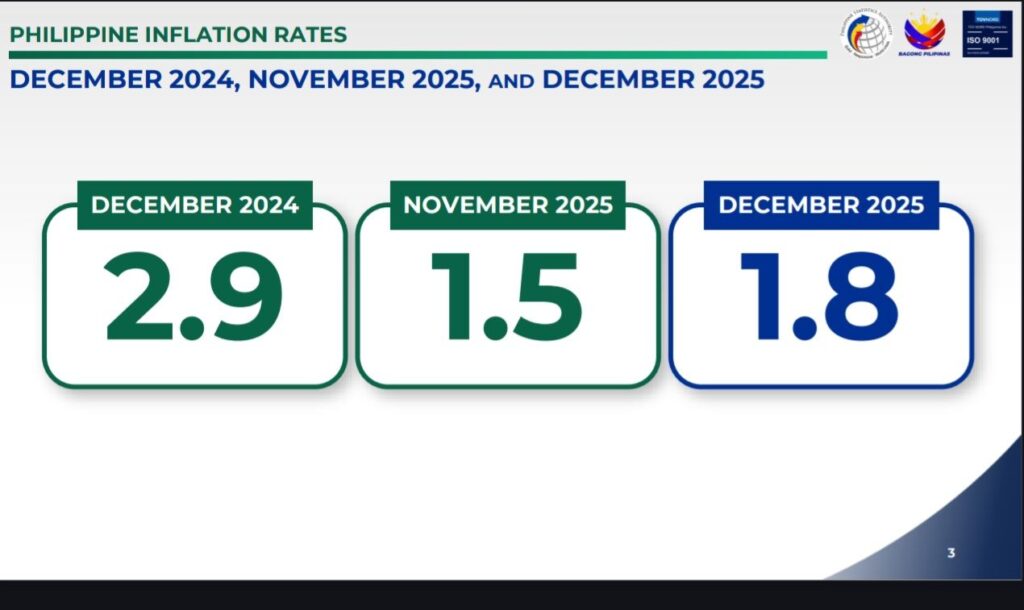
In December 2025, inflation rose to 1.8 percent. This is slightly higher than November’s 1.5 percent. But it is much lower than December 2024’s 2.9 percent. The drop reflects weaker price pressures across many sectors.
The main driver behind December’s uptick was food. Prices for food and non-alcoholic beverages rose 1.4 percent. This is up from just 0.1 percent in November. Clothing and footwear also rose faster. Their prices increased by 2.2 percent. This is up from 1.8 percent the month before.
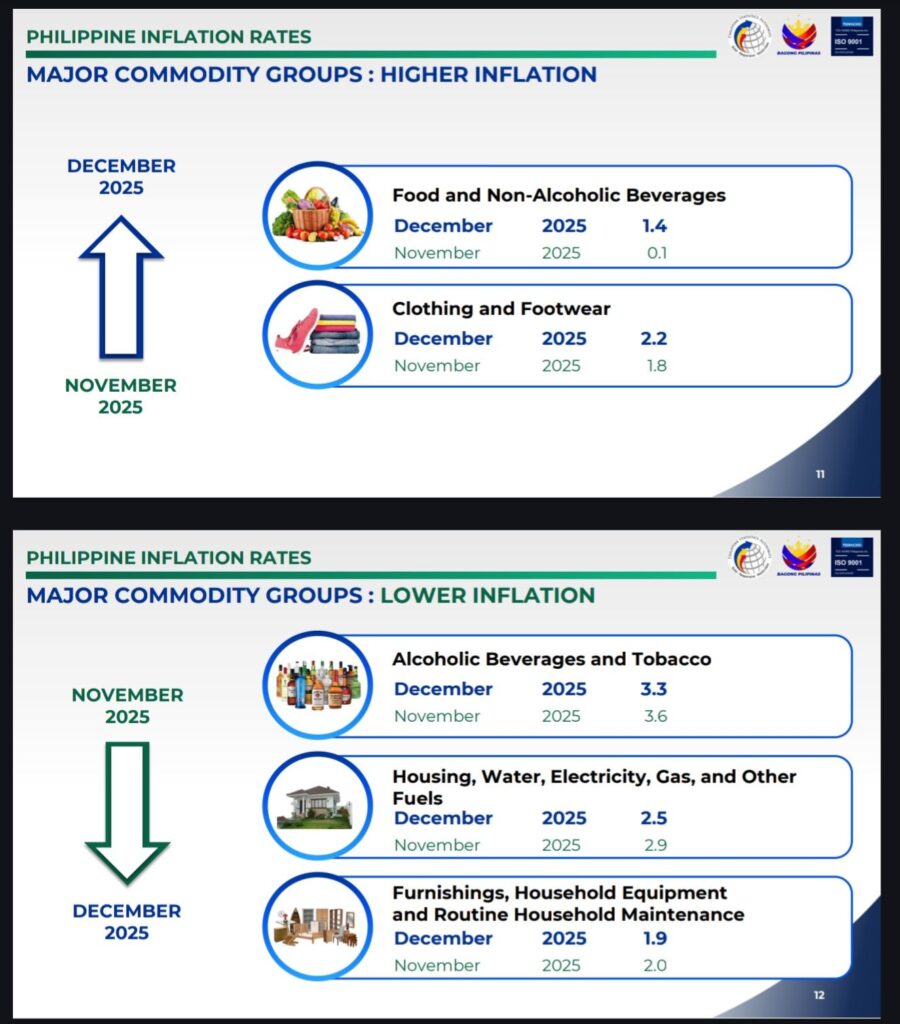
Still, many sectors saw slower price increases. Alcoholic beverages and tobacco rose 3.3 percent. This is down from 3.6 percent. Housing, water, electricity, and gas rose 2.5 percent. That’s lower than November’s 2.9 percent. Furnishings and household goods rose 1.9 percent. This is down from 2.0 percent.
Transport costs slowed sharply. They rose just 0.3 percent. This is down from 1.7 percent. Recreation and culture rose 2.0 percent. This is slightly lower than 2.1 percent. Restaurant prices rose 2.4 percent. This is down from 2.6 percent. Personal care items rose 2.2 percent. That’s lower than November’s 2.4 percent.
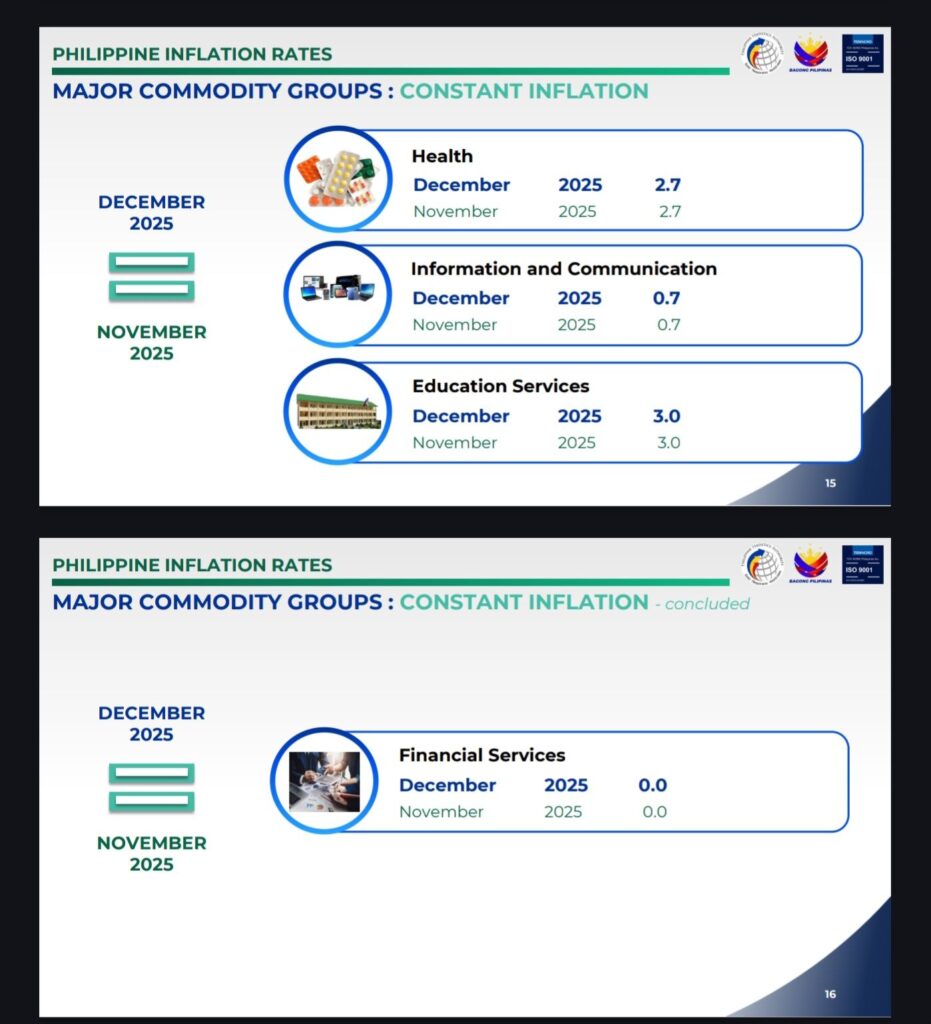
Some sectors had stable prices. Health, information and communication, education, and financial services had steady inflation. Their rates did not change from November.
Three major groups pushed inflation up in December. First was food and non-alcoholic beverages. It contributed 31.0 percent or 0.6 percentage points. Second was housing, water, electricity, and gas. It contributed 27.7 percent or 0.5 points. Third was restaurants and accommodation. It added 12.9 percent or 0.2 points.
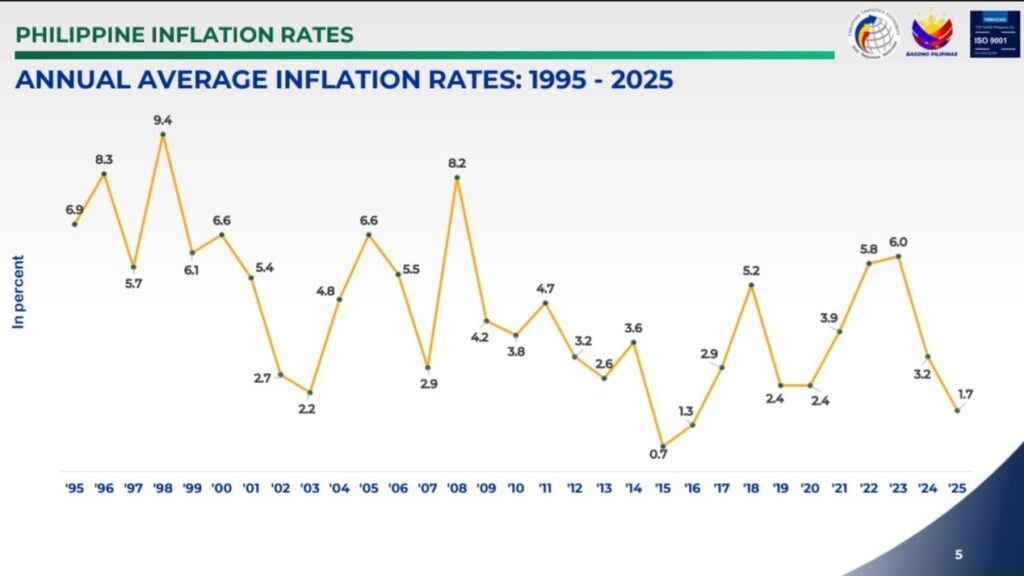
For the whole of 2025, inflation averaged 1.7 percent. This was helped by slower price growth in key areas. Food and non-alcoholic beverages rose just 1.2 percent on average. That’s down from 4.4 percent in 2024. Restaurant and accommodation prices rose 2.4 percent. This is lower than 4.8 percent in 2024.
Other sectors also cooled. Alcoholic drinks and tobacco rose 3.8 percent. This is down from 4.6 percent. Clothing and footwear rose 1.8 percent. This is lower than 3.2 percent. Household equipment rose 2.2 percent. That’s down from 2.9 percent.
Health inflation dropped to 2.6 percent. It was 2.8 percent in 2024. Recreation and culture rose 2.1 percent. This is down from 3.3 percent. Education services rose 3.8 percent. That’s lower than 4.3 percent. Personal care items rose 2.5 percent. This is down from 3.3 percent.
Transport was different. It saw prices fall by 0.4 percent in 2025. In 2024, prices rose 0.9 percent. This helped pull down the average.
For the year, housing had the biggest impact. It contributed 30.8 percent or 0.5 points. Food followed with 27.1 percent or 0.5 points. Restaurants added 13.8 percent or 0.2 points.
Food inflation in December was 1.2 percent. This is up from a 0.3 percent drop in November. In December 2024, it was 3.5 percent. The rise came from slower price drops in rice. Rice prices fell 12.3 percent. This is less steep than November’s 15.4 percent drop.
Vegetables and pulses rose fast. Their prices jumped 11.6 percent. This is up from 4.0 percent. Bread and cereals rose 1.8 percent. This is slightly higher than 1.6 percent. Fish and seafood rose 9.0 percent. This is up from 8.6 percent.
Fruits rose 2.1 percent. This is up from 1.6 percent. Ready-made food rose 2.3 percent. This is up from 2.1 percent. Corn prices rose 7.3 percent. This is a big shift from a 4.1 percent drop.
Some food prices slowed. Meat rose 3.0 percent. This is down from 4.2 percent. Dairy and eggs rose 0.9 percent. This is slightly lower than 1.0 percent. Oils and fats rose 9.5 percent. This is down from 9.7 percent.
Sugar and desserts fell faster. Their prices dropped 0.5 percent. This is down from a 0.3 percent fall.
Food inflation added 24.5 percent or 0.4 points to December’s total. The top contributors were fish, vegetables, and meat. Fish added 1.5 percentage points. Vegetables added 1.1 points. Meat added 0.6 points.
The 2025 average food inflation was 1.0 percent. This is much lower than 2024’s 4.5 percent.
Core inflation, which excludes food and energy, held at 2.4 percent in December. It was 2.8 percent in December 2024. The 2025 average core rate was 2.4 percent. This is down from 3.0 percent in 2024.
In Metro Manila, inflation was 2.3 percent in December. This is down from 2.8 percent. Areas outside Metro Manila followed the national trend.
Consumers saw some relief in 2025. But rising food and clothing costs may still affect spending. The PSA data shows mixed signals. Overall prices are growing slower. But key items are getting more expensive.