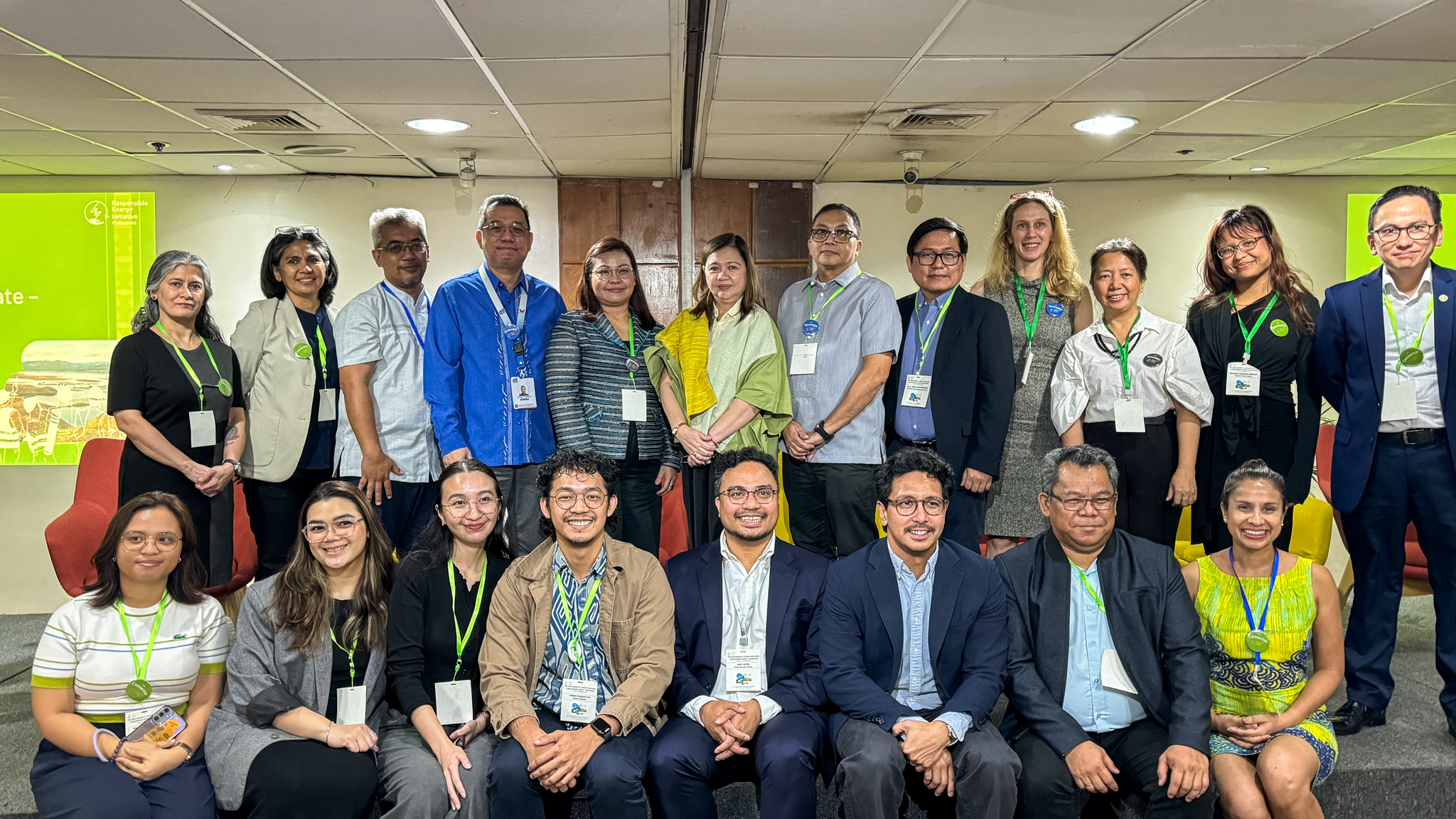
The Responsible Energy Initiative Philippines (REI Philippines) rolled out six new interventions on March 19. The launch took place at the AIM Conference Centre in Makati. About 120 guests from industry, finance, civil society and government attended.
The prototypes aim to clear hidden barriers to the country’s renewable‑energy transition. They target land‑use conflicts, community trust gaps, capital shortages, data blind spots and the lack of circular‑economy thinking.
The six tools are:
RE Compass – a digital map that layers renewable‑energy potential with ecological and social risk data.
RE Hub – an innovation platform that models multi‑use land and sea spaces for energy, agriculture, fisheries and ecosystem restoration.
Co‑Own – a testbed for legal and financial structures that let host communities own a stake in projects.
Capital Orchestrator – a system that coordinates funding for ecologically safe, socially just renewable projects.
Rural Bank Mentorship – a program that trains rural banks to factor ESG risks into loans.
Circular RE Futures – a participatory process that helps policymakers design rules for the full life‑cycle of renewable‑energy technologies.
Undersecretary Analiza Rebuelta‑Teh of the Department of Environment and Natural Resources said, “A successful energy transition must recognize people’s importance while boosting productivity and reducing emissions.” She added, “It is as much a social and economic challenge as an environmental one.” Rebuelta‑Teh also noted, “For the Philippines, a just transition is a transformative, people‑centered shift to a low‑carbon, climate‑resilient and energy‑secure economy that prioritizes equity, inclusivity, and balance throughout the process without compromising environmental integrity.” She praised RE Compass, RE Hub and Circular RE Futures, saying, “Potential areas of cooperation are worthwhile to be pursued.”
A panel that included DOE Director Michael Sinocruz, DTI Undersecretary Ceferino Rodolfo and MinDA Assistant Secretary Romeo Montenegro discussed how to operationalize the six workstreams. All panelists voiced support for the Co‑Own and Circular RE Futures models.
Sumi Dhanarajan, managing director of Forum for the Future Southeast Asia, said, “When creating foundational norms for how a complex system behaves, it is critical to have all the key actors involved.” She added, “The collaborative action platform established by REI Philippines has uniquely brought together renewable‑energy developers, financiers, procurers, manufacturers, policy‑makers and civil‑society actors to identify where we need to act and how we can act to create an environmentally and socially responsible renewable‑energy system for the Philippines.”
Maris Cardenas, executive director of the Center for Empowerment, Innovation and Training on Renewable Energy, warned, “The oil supply crisis shows how vulnerable the Philippines remains to global shocks.” She said, “We urgently need energy that is local, affordable, and sustainable.” Cardenas noted, “REI Philippines helps fill an important gap in moving that transition forward by forging partnerships and collaborative initiatives advancing responsible, resilient, equitable, and democratic renewable energy systems.”
The Philippines aims for renewable energy to reach 35 % of its power mix by 2030 and 50 % by 2040. REI Philippines, the second country to join the global Responsible Energy Initiative, is now in its third year. It will develop the prototypes through the fourth quarter of 2026 before testing them for scale.
The steering committee behind REI Philippines includes seven think tanks and NGOs such as the Business and Human Rights Centre, CentRE, Friedrich‑Ebert‑Stiftung Philippines, Forum for the Future, Institute for Climate and Sustainable Cities, Ocean Energy Pathway and Oxfam Philippines. The initiative launched on Jan. 26 2024 with a Case‑for‑Action report and released its Vision and Principles on Jan. 26 2026.
Philippines Unveils Six Tools for a Fair, Green Energy Shift