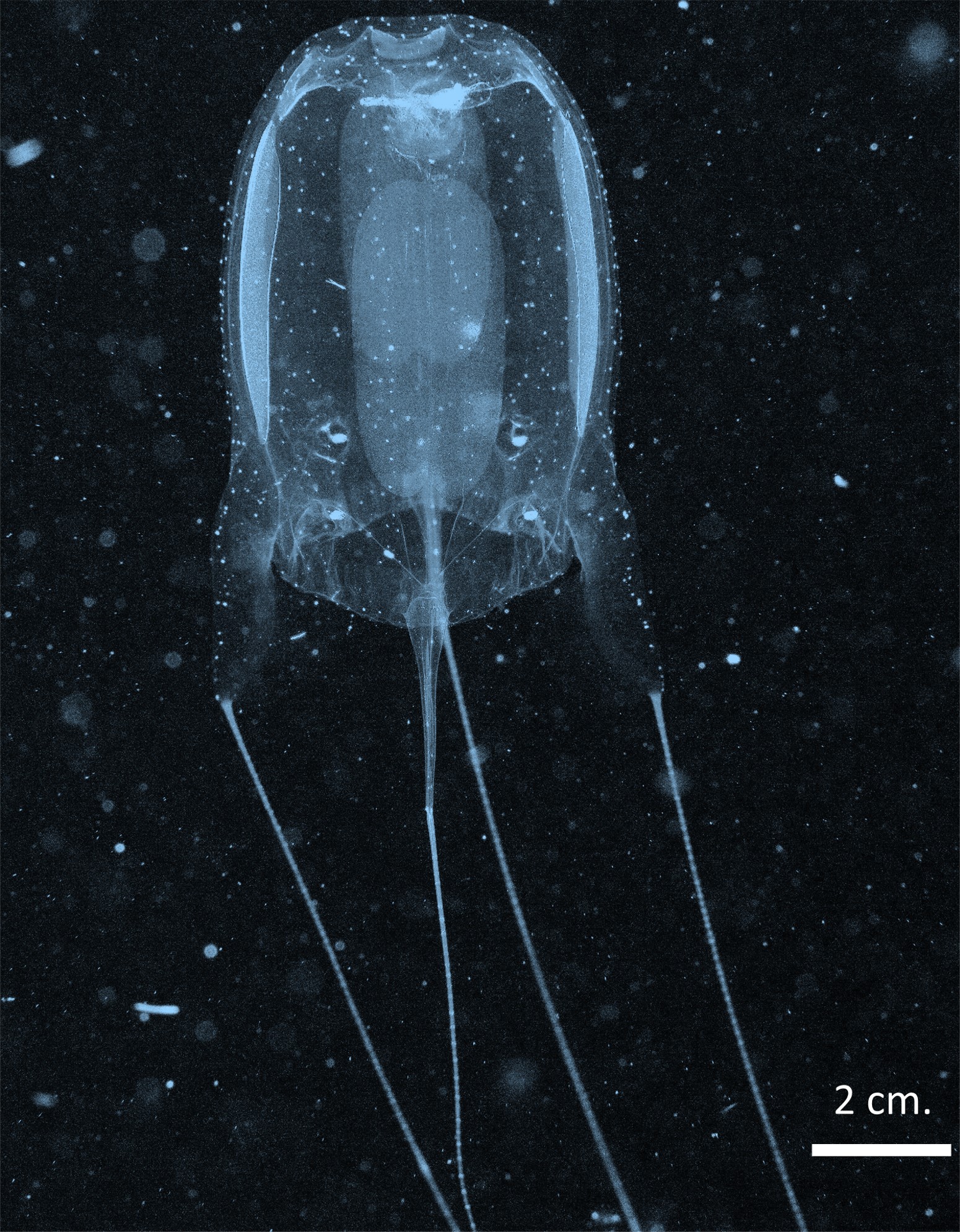
A new box jellyfish species wants to be discovered. A team of Filipino marine researchers attempts to study these new species in their natural habitat. These species live in hard-to-reach places that pose a challenge to everyone. Studying them, Filipinos will know their potential risk, the marine ecosystem health, and further scientific discovery. You can help the marine researchers as citizen scientists. Accurate data determines the success of the study in order to save lives and benefit the Filipino people.
A new species of box jellyfish lurks in the waters of the Philippines. Marine researchers found at least seven new species. They found five carybdeid box jellyfish in the Coral Triangle. The five species found are the Alatina alata, Carybdea cuboides, Malo sp., and Morbakka virulenta. The researchers confirmed two new records. They named them Copula sivickisi and Malo filipina.
The team of researchers is part of the Philippine Jellyfish Stings Project. Dr. Sheldon Rey Boco and Christine Gloria Grace Capidos preceded this project. Along with Russel Christine Corcino, and Dr. Lemnuel Aragones from the University of the Philippines – Diliman College of Science’s Institute of Environmental Science and Meteorology (UPD-CS IESM). Joined with Dr. Phuping Sucharitakul of the Batavia Coast Maritime Institute in Western Australia, Ram Yoro of RY Photography, Dennis Corpuz of Anilao Critters Studio, and Scott Tuason of Squires Sports Philippines.
The Challenge to Observe
The Philippine Jellyfish Stings Project team is faced with a challenge. The carybdeid box jellyfish’s natural habitat provides poor documentation. They live in hard-to-reach areas in the Coral Triangle, which the Philippines belongs to. Some dwell 100 meters offshore and at depths of 20 to 30 meters. The team wants to focus on observing the adult medusa stage. Data gathering is possible at this jellyfish’s visible swimming form.
The Philippines can benefit from this research for three reasons. Dr. Boco gives the three reasons: “They’re part of the marine food chain, and their presence or absence can indicate the condition of marine ecosystems. They eat smaller creatures and are food for bigger ones, helping keep everything in check. And many carybdeids have venom strong enough to send people to the hospital. Figuring out how that venom works could lead to better treatments and save lives.”
The Crucial Data Gathering
It is important to gather data through on-site observations. The project scientists observe the new species with the help of Filipino citizens. The use of high-resolution underwater photography and video can provide more data. The project team verifies the citizen science initiatives through digital authentication. This initiative strengthens the team’s documentation of the newly recorded box jellyfish species. A critical move for public safety, the marine ecosystem’s health, and further scientific advancement.
The marine researchers conducted several open water dives. A night dive with specialized scuba certification and carefully prepared trips. The team planned logistics, checked environmental conditions, and calculated the air supply for every dive. Safety is the team’s top priority, which is why they review every safety protocol. They already gathered data in 2017, 2021, and 2024 from each blackwater dive.
Utilize Citizen Science Gathering
The lead scientists want to improve data gathering through citizen science. A participation from several divers to digitally capture the box jellyfish. The team examined every picture and footage for authenticity. They check metadata, anatomical details, and water conditions.
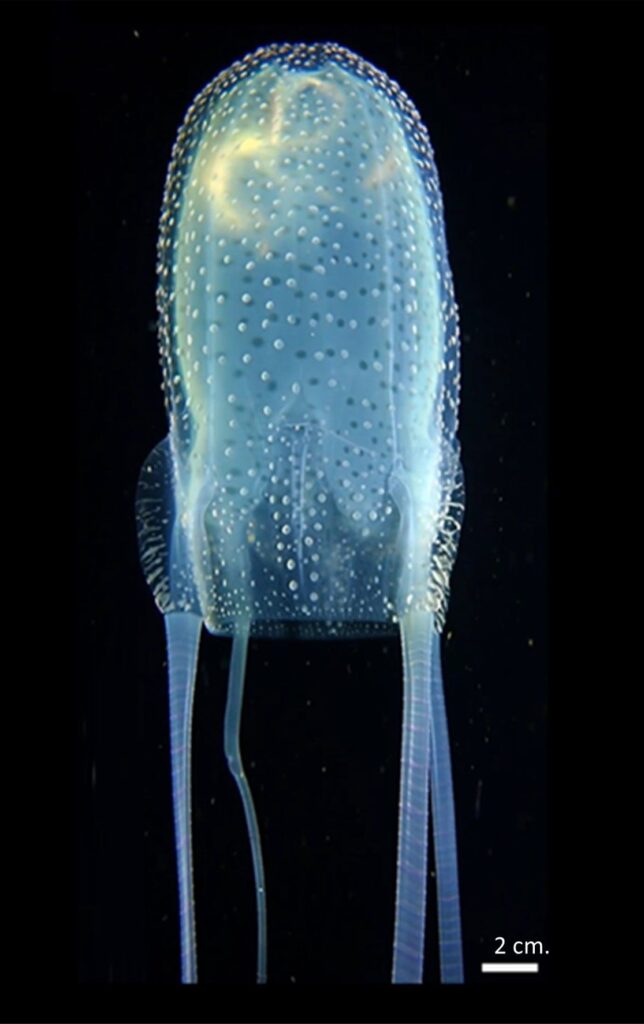
Dr. Boco shares, “We also gathered photos and videos from recreational divers through citizen science. This approach introduced a new hurdle: proving the images were genuine. With artificial intelligence now capable of creating convincing fake jellyfish pictures, we treated each submission like evidence in an investigation.”
Reliable research with accuracy is important for Dr. Boco and his team. It requires time and patience to produce reliable research. They are watchful of fakes and AI-generated images for successful research.
Collecting accurate data predicts where these jellyfish can appear. Their behavior can prevent catastrophic events. A massive smack of jellyfish caused the 1999 blackout of Luzon, which we want to prevent. More accurate data can lead to more discoveries that benefit the Filipino people.
You can find their research published in Thalassas: An International Journal of Marine Sciences. You can inquire more information from the College of Science at the University of the Philippines in Diliman. Contact them through their online contact form below.
UPD-CS Science Communications
📧 media@science.upd.edu.ph
📞 (+632)8981-8500 loc. 3805
🌐 science.upd.edu.ph