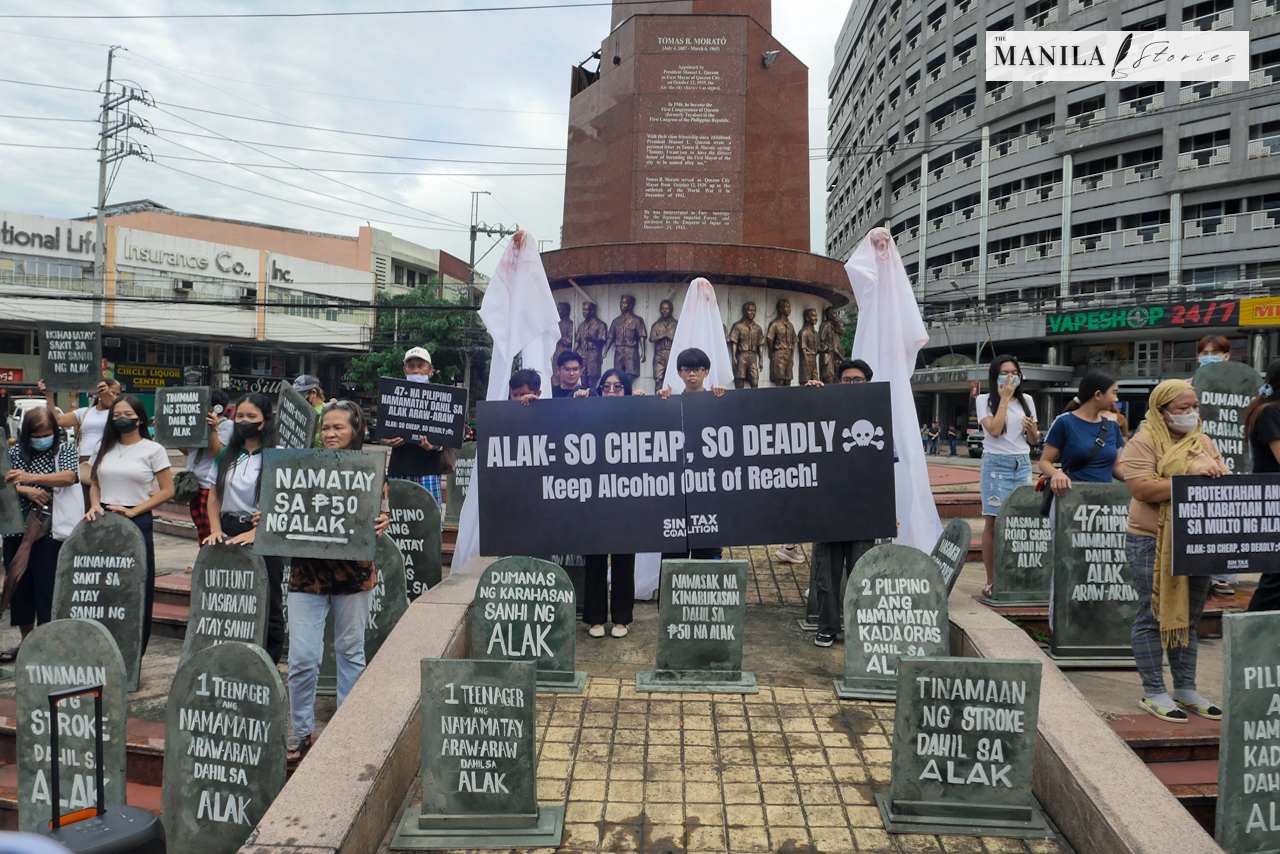
Quezon City’s bustling Boy Scout Circle became a chilling memorial on Tuesday, October 28. Nearly 100 young activists staged a Halloween-themed protest. They protested against soaring alcohol-related deaths. The youth gathered around a stark installation of mock tombstones. Each stone represented lives lost to alcohol consumption in the Philippines. Their urgent message? Raise alcohol taxes now. Under the banner “So Cheap, So Deadly: Reduce Alcohol’s Reach,” they demanded lawmakers act to curb the crisis. They call it a silent epidemic that is stealing their generation. The protest, timed for Halloween, changed the holiday’s spooky spirit. It became a confrontation with a truly terrifying reality: alcohol’s low cost leading to preventable deaths.
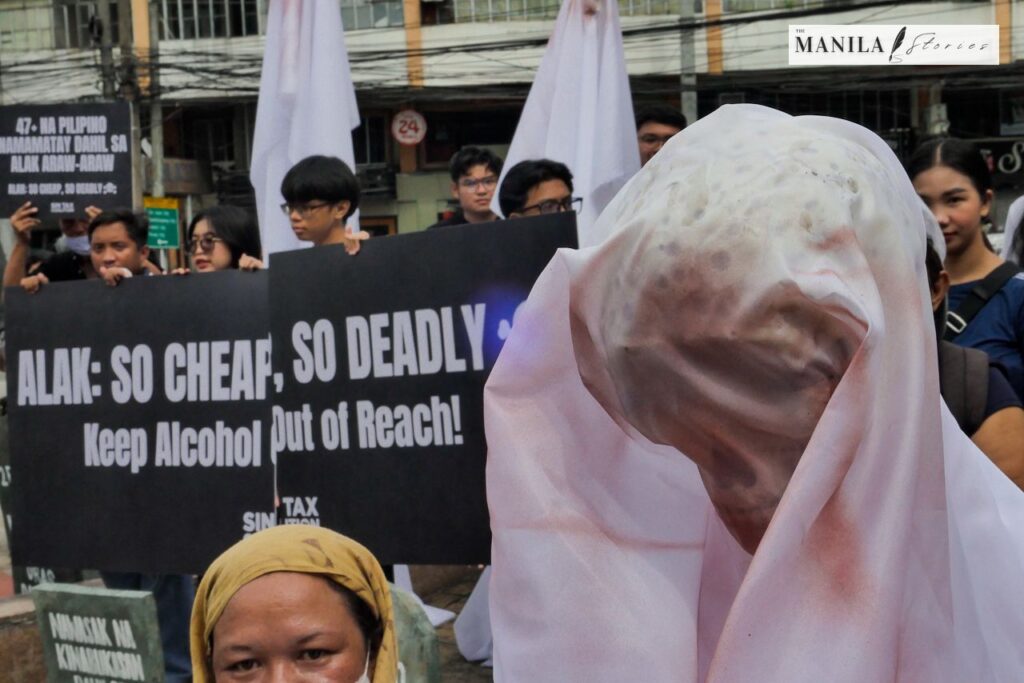
The haunting scene at Tomas Morato Avenue’s traffic circle unfolded precisely at 9:00 AM. Student organizers from groups like UP Economics Towards Consciousness participated. The broader Sin Tax Coalition set up dozens of faux tombstones. Each bore a cause of death and chillingly young ages. Nearby, protesters held “ghosts” figures with skulls on the pole as “alcohol industry profits,” silently circling the mourners. Youth leader Gwyneth Barra addressed the crowd, her voice cutting through the city’s noise. “Nakakakilabot na araw-araw, may namamatay na 47 na mga Pinoy dahil sa alcohol,” she stated. This translates to a terrifying reality: 47 Filipino lives end daily because of alcohol. She stressed how affordability is the killer. “Our ate, kuya, even our youngest siblings are victims. Alcohol is too cheap. It is too easy to get.” Her words reflected a grim truth shown by advocates. The number of Filipino teens drinking has doubled in just two years. This surge, they insist, is directly tied to rock-bottom prices. Doctors’ groups present, including the Philippine Addiction Specialists Society (PASS), declared the situation a full-blown health emergency. Dr. Allandale Nacino delivered a solidarity message that hammered home the scale. “Every year, over 17,000 Filipinos die from alcohol,” he said. He painted a visceral picture: “Visit a cemetery on Undas. See two new graves added every hour. Some hold our youth.” He demanded immediate action. “The medical community is urging it. We must protect young people and our future.”
The protest targeted a specific legislative solution: significantly higher alcohol excise taxes. Advocates pointed to global evidence proving this works. Higher taxes reduce overall alcohol harm. They delay young people from starting to drink. They also generate vital funds for health services. Yet, in the Philippines, alcohol taxes remain stagnant. This neglect continues despite alcohol being a top cause of preventable disease and death. Rep. Tony Roman III of Bataan’s 1st District, a supporter present at the event, reinforced the policy call. “Alcohol misuse is a serious public health crisis,” he stated. He emphasized its heavy toll on young Filipinos. “Raising taxes is practical. It’s proven,” he argued. It reduces harmful drinking. It discourages early use. Crucially, it pumps funds into strengthening the broken health system. “These reforms are about prevention,” Roman stressed. “Not punishment. They ensure our youth grow up healthy.” Data from Action for Economic Reforms (AER) bolstered this argument. Paul Andrei B. Roset, AER’s Legislative Officer, explained the fiscal potential. Higher taxes could generate tens of billions of pesos annually. These funds would expand hospitals. They would fund critical preventive care programs. Instead, the nation currently pays for the consequences through tragedy. Preventable harm costs lives and resources.
This creative action united diverse voices under the Sin Tax Coalition’s umbrella. Students, health professionals, economists, and lawmakers stood shoulder-to-shoulder. Their shared advocacy links alcohol pricing directly to community safety. They connected it to rising violence. They linked it to mental health struggles. They tied it to devastating road crashes. The tombstones weren’t abstract symbols. They represented sisters, brothers, and friends lost too soon. The Halloween theme was deliberate. It turned ghouls and ghosts into representations of the alcohol industry’s grip on youth. It transformed a night of pretend fear into a spotlight on real, daily carnage. AER and coalition members noted a critical gap: while tobacco taxes fund vital Universal Health Care programs, alcohol taxes languish. This imbalance lets alcohol harm proliferate unchecked, especially among minors. The protest’s timing—weeks before the end of the congressional session—was strategic. It aimed to pressure lawmakers into prioritizing House Bill 8812 and similar measures before adjournment. As the rally concluded, participants lit candles beside the tombstones. The flickering lights against the gray morning sky embodied both mourning and hope. They sent a clear, unified plea: stop making alcohol a killer commodity. Make it costly to buy. Make health the priority. Before the next tombstone bears the name of someone they knew. The fight, they vowed, would continue long after Halloween ended. Their generation’s survival depends on it.