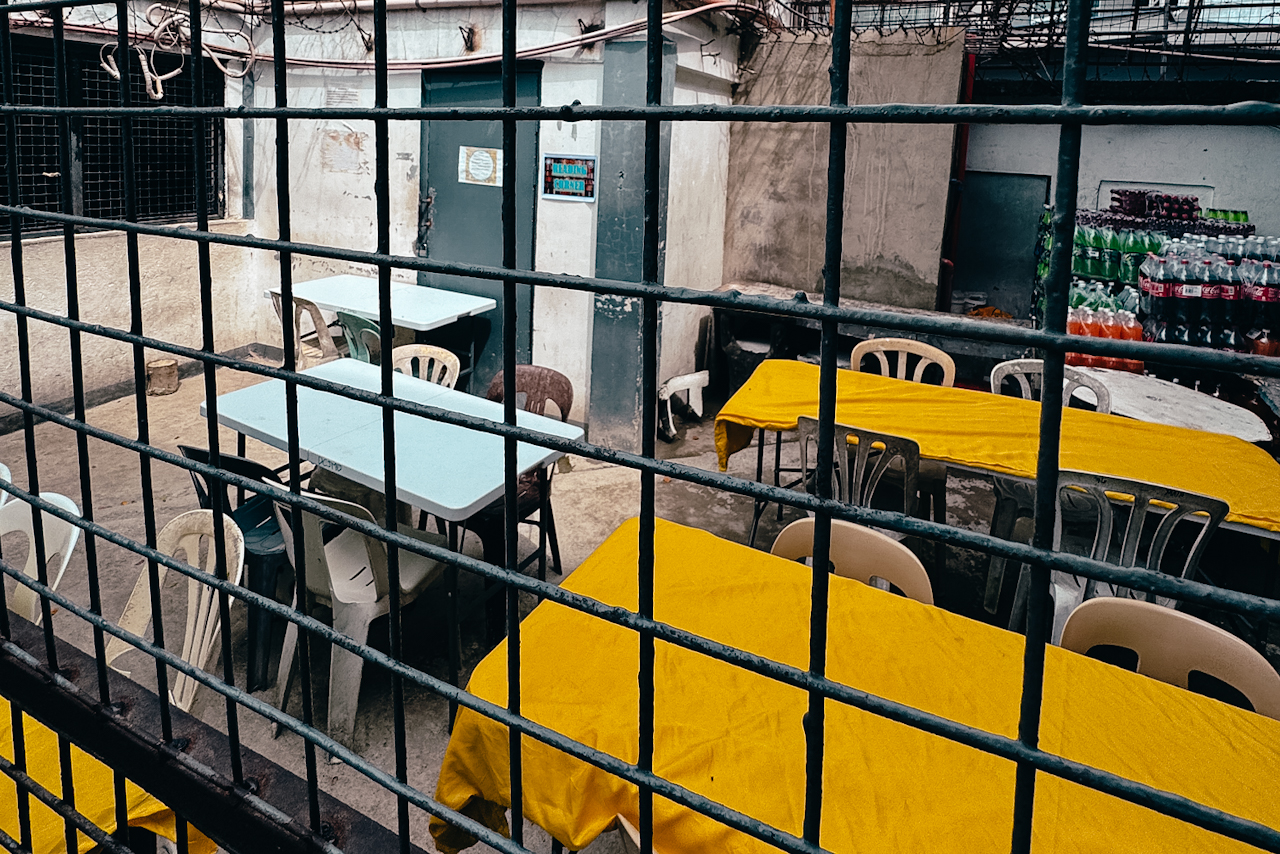
A new study from Ateneo de Manila University pulls back the curtain on daily violence in Philippine prisons. The research shows that overcrowding, neglect and routine abuse create a hidden crisis. The author, Dwayne Antojado, says the harm is felt through every sense. He calls it “silent violence.”
The study moves beyond statistics. It looks at how cramped cells affect sight, sound, touch and smell. It shows how these sensory pressures become a form of punishment. Antojado spent time in an Australian jail for insurance fraud. His own experience shaped his work with inmates in Davao and Zamboanga City jails.
He found that the air inside cells is oppressive. Poor ventilation traps the smell of sweat, urine, and stale food. Cleaning chemicals add a harsh odor. The smell lingers on clothes and skin. Fans only circulate warm, foul air. Heat fills every cell.
Noise adds to the strain. Gates clang. Shouts echo. Fans whirr. TVs blare. Officials receive synchronized greetings. Quiet is almost impossible.
The visual environment is also crushing. Jails were once schools or offices. They now hold makeshift bunks, plywood, and cardboard. Shelves cram walls. Clotheslines hang from bars. Belongings fill every gap.
Despite the pressure, inmates create small signs of dignity. They paint murals. They hang religious icons. They display family photos. They write slogans. These acts claim ownership of space.
The public often sees harsh jail conditions as normal. Recent calls for former Senator Bong Revilla to “feel it” illustrate this view. Antojado says the calls reflect frustration with elite impunity, not a desire for suffering.
“The insistence that he should ‘feel it’ functions as a moral argument about anti‑impunity and equality before the law, not simply as retributive sentiment,” he said.
The research ties its ethics to the Philippine Constitution. It also references international standards that ban cruel, degrading or inhuman punishment. The study asks who should suffer. It asks how overcrowding and sensory deprivation affect justice.
Antojado urges reforms that address the full spectrum of harm. He says policy must look at smell, heat, sound, touch and the micropolitics of space. He argues that these factors link rights‑based duties to everyday life.
“By foregrounding smell, heat, sound, touch, and the micropolitics of space, this work offers an evidentiary bridge between rights‑based obligations and daily experience. It invites policymakers, practitioners, and the public to attend to the sensory infrastructures of confinement where human flourishing is either quietly sustained or steadily eroded, and to craft reforms that answer to those embodied realities now,” he adds.
The paper, titled “Embodied Overcrowding and Sensory Tensions: A Carceral Autoethnography of Philippine Jails,” appeared in the International Journal of Law, Crime and Justice in December 2025.
The study provides a human face to the numbers. It shows that cells built for 50 people often hold 200 or more. It reveals that facilities operate at 300‑400 percent beyond capacity. The research suggests that these conditions erode the moral health of the nation.
Human rights groups have welcomed the findings. They say the study gives concrete evidence for legal challenges. Prison officials have not yet responded.
The Ateneo de Manila University hopes the work will spark policy change. The university’s Research Communications office released the press statement on the study.
The study adds a new lens to the debate on crime, punishment and justice in the Philippines. It urges the nation to look beyond headlines. It urges leaders to see the silent suffering that millions endure daily behind prison walls. You can read this study at the Ateneo Archium repository.
For more information, contact Ateneo de Manila University at info@ateneo.edu. Data‑privacy concerns can be sent to info.udpo@ateneo.edu.
Silent Suffering: Inside Philippine Jails
Hidden crisis found in Philippine jail’s through research that is overlooked.