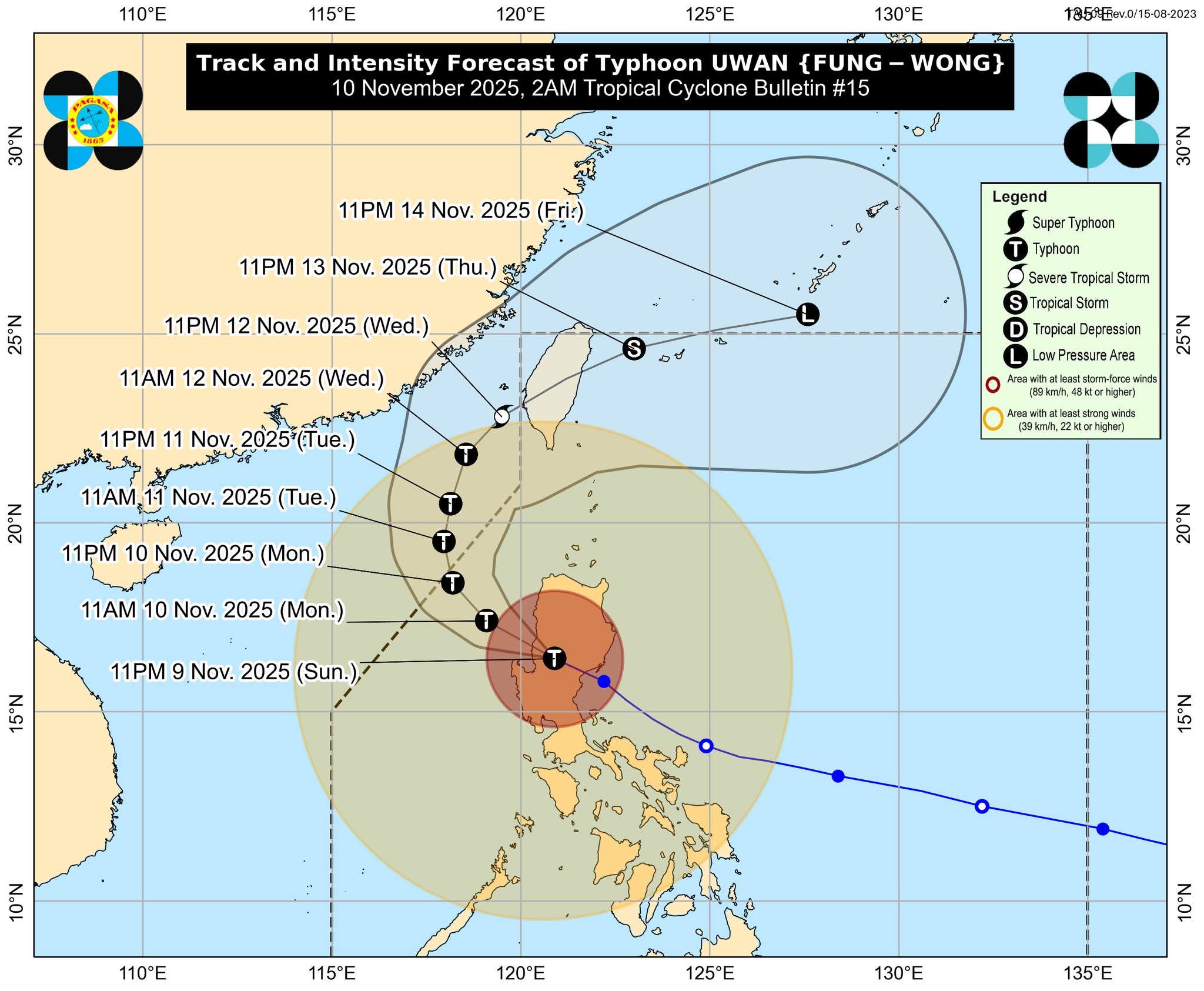
Typhoon Fung-Wong, known locally as Uwan, unleashed its catastrophic force across Luzon. After the storm made landfall on Sunday, 9 November 2025. Carrying ferocious winds over than 200 km/h. The super typhoon brought widespread devastation, destroying infrastructure, isolating communities, and causing extensive damage to property and agriculture. The Sierra Madre mountain range disrupted the powerful storm’s eye. While its initial impact has left a deep scar on several provinces, particularly on the eastern seaboard of the island.

The Philippine Atmospheric, Geophysical and Astronomical Services Administration (PAGASA) reported that Typhoon Fung-Wong made landfall in the vicinity of Casiguran, Aurora, in the early hours of Sunday morning. At its peak, the storm packed sustained winds of 205 kph near the center, with gusts reaching up to 250 kph. This placed it firmly in the super typhoon category. It prompted the highest levels of storm warnings across a vast portion of Luzon. The initial onslaught brought torrential rains and violent winds. It toppled trees, downed power lines, and left millions without electricity.
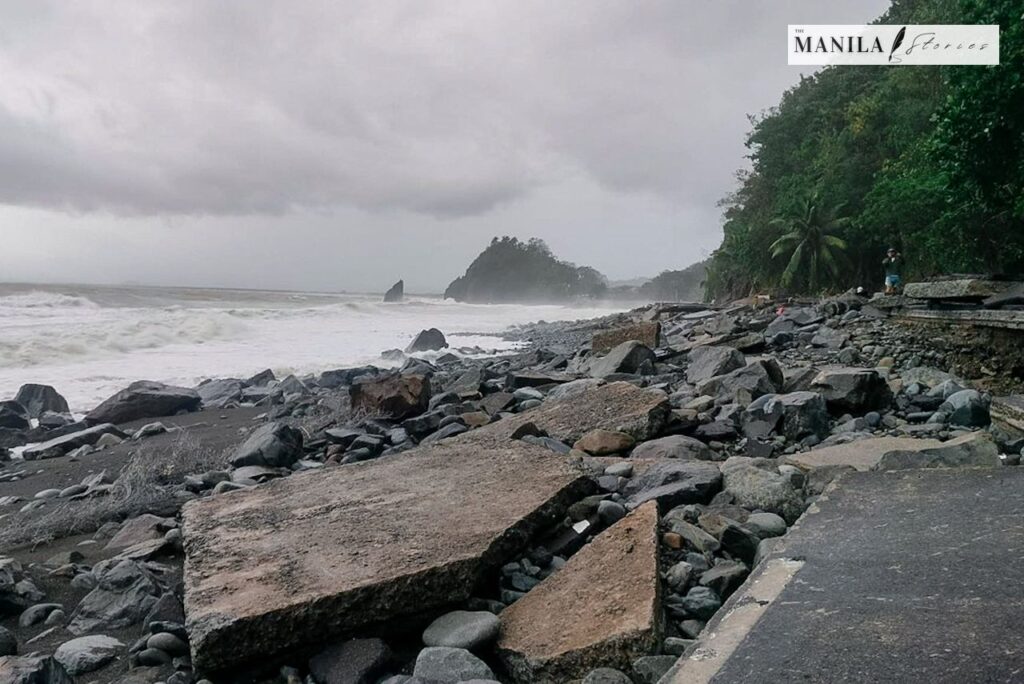
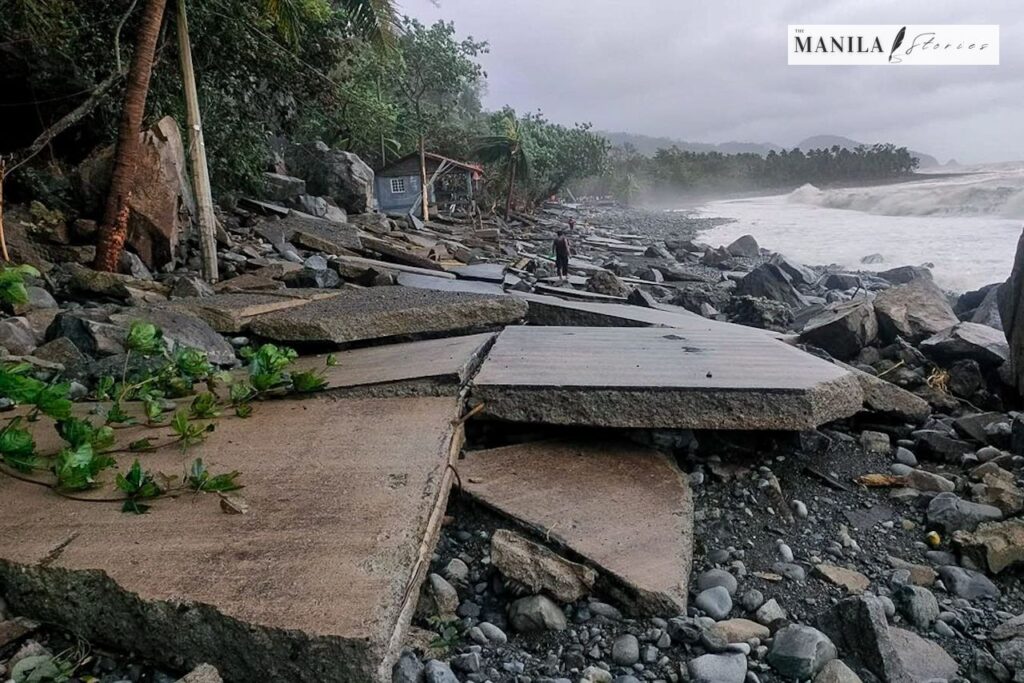
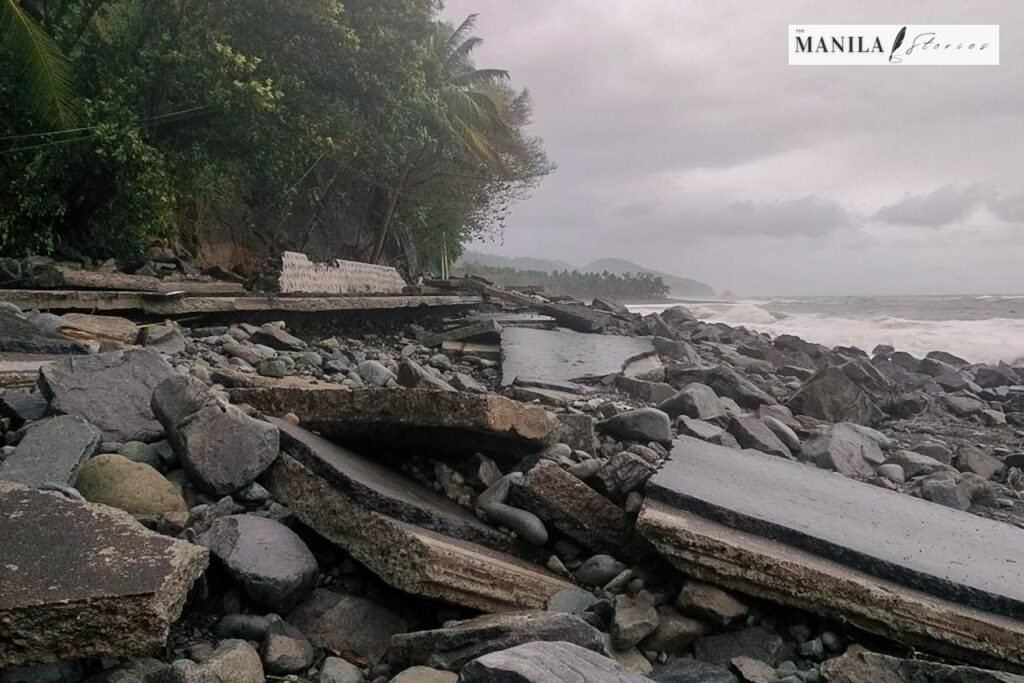
One of the most significant reports of destruction came from the province of Aurora. Overnight, strong sea waves generated by the typhoon’s storm surge completely destroyed a critical section of the Baler-Casiguran Road. The washed-out portion is located at Amper Beach in the municipality of Dipaculao. This road is the only land connection for the northern Aurora towns of Dinalungan, Casiguran, and Dipaculao. It links them to the provincial capital of Baler and the rest of the province. Thousands of residents are now completely isolated.

The Department of Public Works and Highways (DPWH) Aurora District Engineering Office immediately dispatched assessment teams to the site. An initial report indicates the damage is severe. Huge sections of asphalt and concrete were swept away by the sea. “Our immediate priority is a clearing operation,” said a DPWH field engineer. “We are now working to remove the big chunks of road concrete that are littering the area. The safety of our crew is paramount.” The DPWH confirmed they are formulating a plan for the road’s reconstruction. They acknowledged it would take time. This leaves the three towns cut off from ground transportation for the foreseeable future.
The typhoon’s destructive path was not limited to Aurora. The Cagayan Valley region is grappling with severe flooding as major rivers overflow their banks. In the Cordillera Administrative Region, authorities are on high alert for potential landslides due to the saturated soil. Central Luzon, the country’s rice granary, is expected to report massive agricultural losses. Vast tracts of farmland are submerged in floodwater. Reports of torn-off roofs, shattered windows, and destroyed homes are emerging from provinces like Isabela, Nueva Ecija, and Quirino.
In Metro Manila, while spared from a direct hit, the typhoon’s peripheral effects were strongly felt. The capital experienced powerful wind surges and intermittent heavy rainfall throughout Sunday. As a precautionary measure, local government units advised business establishments that opened on Sunday to close early. Most major malls and restaurants complied by sending their employees home by late afternoon. They did this to avoid the worsening conditions. This ensured their safety.

Weather analysts at PAGASA observed a crucial development as the storm moved inland. The typhoon’s well-defined eye structure began to break apart when it passed over upper North Luzon at 11:00 PM.
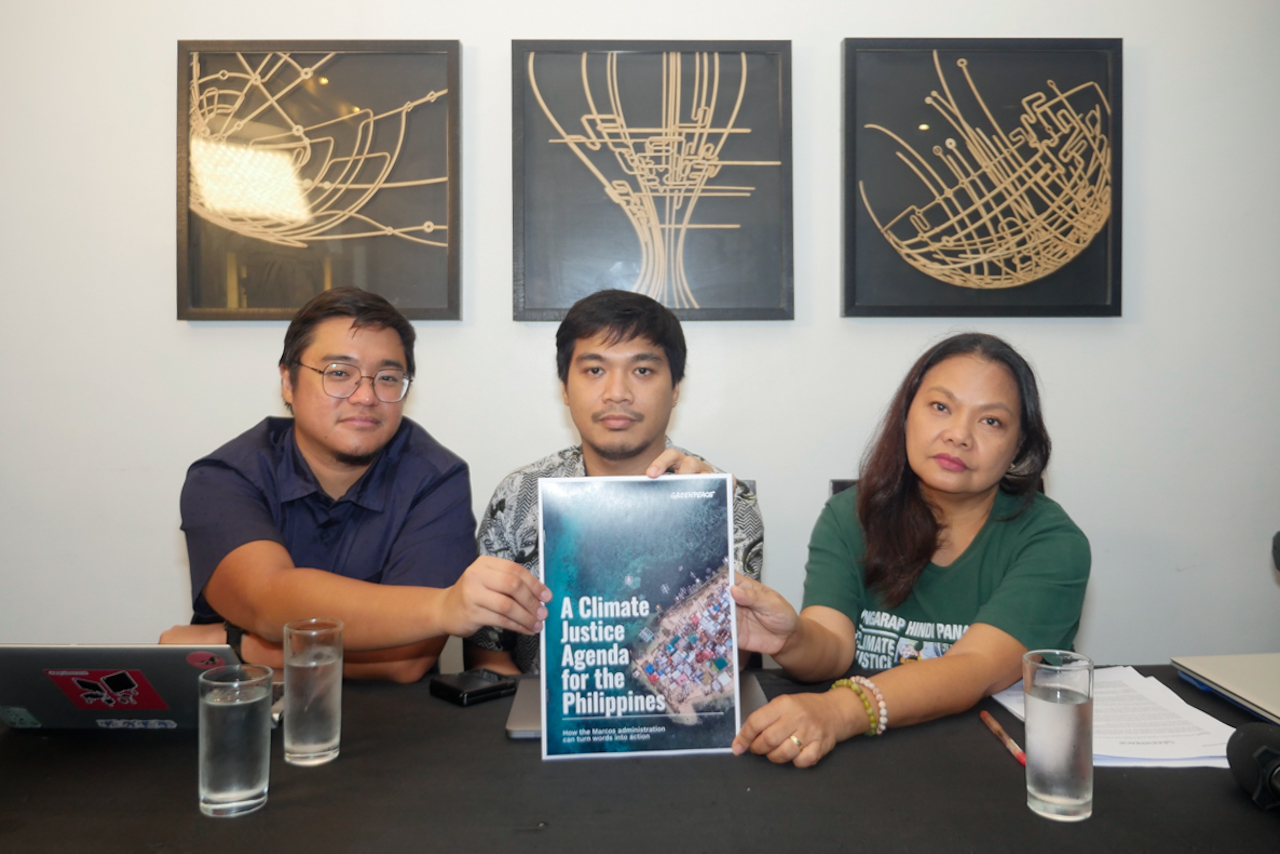
As Typhoon Fung-Wong continues to move westward across the country, government agencies are now focusing on search operations. They are also focusing on rescue and relief operations. Local government units are also preparing for these tasks. The event serves as a stark and powerful reminder of the nation’s vulnerability to extreme weather events. It has reignited calls from environmental groups. They urge the government to intensify its efforts to protect the country’s natural resources. The crucial role of the Sierra Madre in mitigating the typhoon’s impact is crucial. It shows that preserving these natural barriers is not just environmental advocacy. It is a critical component of national disaster defense.