The Claret Samal Foundation Inc. (CSFI) and the Yellow Boat of Hope Foundation (YBH) opened the Sama‑Bajau Weaving and Cultural Center on Monday. The center is in Sitio Teheman, Maluso. It aims to lift Sama‑Bajau women weavers. It also seeks to protect the community’s heritage.
The center gives weavers a place to prepare materials, create, display, and sell pandan‑woven crafts called tepo. It also hosts skills training, heritage lessons, and workshops. The programs are meant for the younger generation.
CSFI has worked in Sitio Teheman for more than 30 years. The local government named it caretaker of the community and its mangrove forests. CSFI partners with the Rural Health Unit, DSWD, DENR, and the Ministry of Agriculture, Fisheries, and Agrarian Reform. YBH has supported the area for over a decade. Since 2013 the foundation has improved education for Sama‑Bajau children. In 2018 YBH helped launch the CSFI Yellow School of Hope – a floating school for preschool to Grade 5. The school is linked to a feeding program, teacher training, book donations, skills training, and a bridge called the Yellow Bridge of Hope. YBH also provided over 200 yellow boats for school and livelihood travel.
“At the Yellow Boat of Hope Foundation, our dream has always been to sail communities toward brighter futures—empowering them with education and the tools to preserve their heritage while weaving sustainable livelihoods,” said Dr. Anton Lim, co‑founder, CEO, and president of YBH. “The Sama‑Bajau Weaving and Cultural Center is a symbol of hope and empowerment for the Sama‑Bajau community of Maluso, Basilan. It serves as a place to preserve their rich weaving heritage, strengthen livelihoods, celebrate their culture and traditions, and remind current generations of their proud identity while inspiring future generations to learn. We are deeply grateful to our generous donors, steadfast partners like Claret Samal Foundation Inc., and dedicated hope paddlers who made this dream possible.”
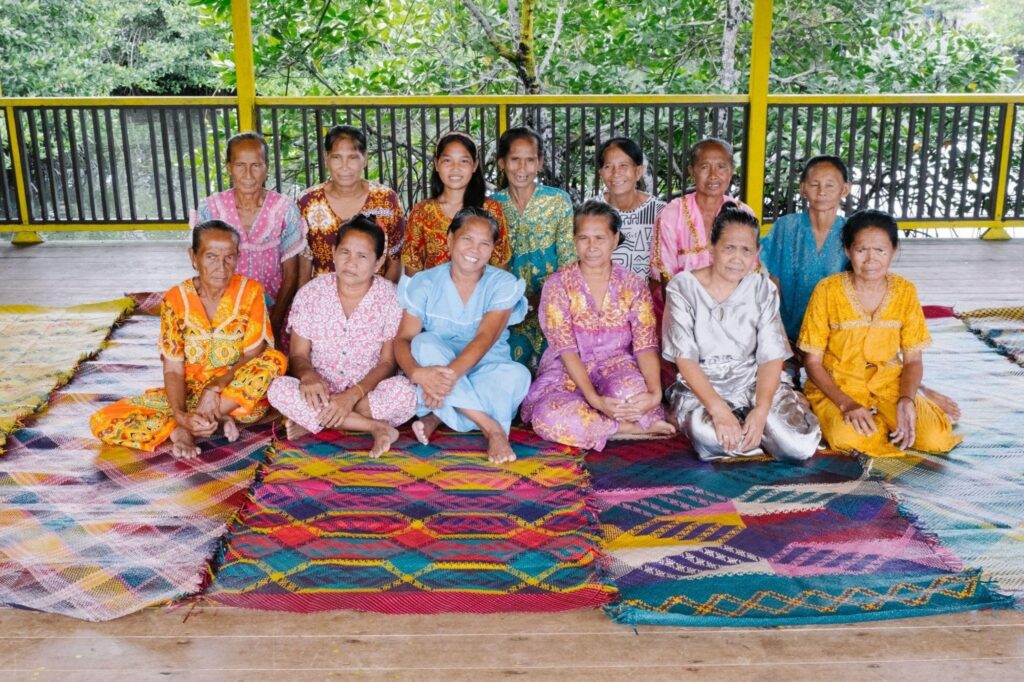
The center answers long‑standing poverty and market challenges in Sitio Teheman. It offers dedicated weaving spaces, a product‑development lab, an exhibition gallery, and a souvenir shop. Weavers now produce mats, hats, pouches, and bags for sale. The new income streams help families earn stable wages.
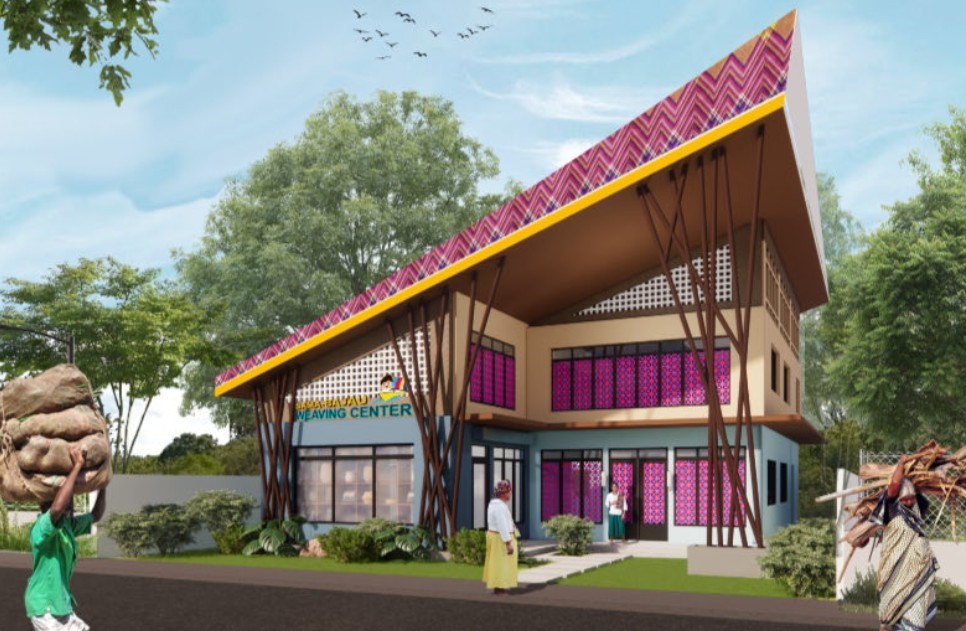
The building was designed by architect Peach Buencamino. Its shape echoes the stilts of traditional Sama‑Bajau houses. The façade mimics interlaced pandan strips. A mural by artist AG Saño decorates the top of the exterior. The mural shows unfolding dreams, hope, growth, and collective resilience.
The first exhibition is curated by Janine Cabato. It displays eleven indigenous weaving patterns. The patterns tell stories of the community’s environment, kinship, memory, and daily life. The exhibition highlights the work of ten local weavers, including Peresina Abduhasi and Sibiya Bahali.
A video installation by Game Night Production and Co. adds depth to the exhibit. The film, sponsored by YBH USA, shows each step of tepo making. It covers leaf harvesting, cleaning, boiling, drying, dyeing, and hand‑weaving. The video helps visitors see the skill and patience behind every piece.
The project was funded by many donors. Support came from AEB (Asia Pacific) Singapore, Boysen, Bundi and Cherry Ang, C.C. Buencamino Architect, Francis Capinpin, Grace & Mercy Foundation Asia, Javier and Vivian Teo, Monde par la main / Give a Hand, the National Commission for Culture and the Arts, Pamulaan Center for IP Education, Panasonic, PayPal Community Impact, the Philippine Chamber of Business and Professionals Shanghai, Tzu Chi Foundation Philippines, #WeAreTogether International Prize, and Yellow Boat of Hope USA.
The Sama‑Bajau Weaving and Cultural Center is open Monday to Friday. Hours are 8:00 a.m.–11:00 a.m. and 1:30 p.m.–4:00 p.m. The center is near the main highway and the Maluso town center. Visitors can see the crafts, learn the weaving process, and support the local economy.