
Heart disease is rising among young adults aged 20 to 29. The World Health Organization links this trend to growing metabolic conditions. These include obesity, hypertension, hyperlipidemia, and diabetes.
Advanced heart assessments help with early detection and treatment. However, they usually require high-tech diagnostic equipment. This specialized care is often available only in major hospitals in big cities.
Detailed heart monitoring remains difficult for at-risk individuals. Researchers are now exploring how artificial intelligence can overcome these barriers.
An international team of scientists has built a new AI model. Patricia Angela R. Abu of the Ateneo de Manila University Department of Information Systems and Computer Science led the group.
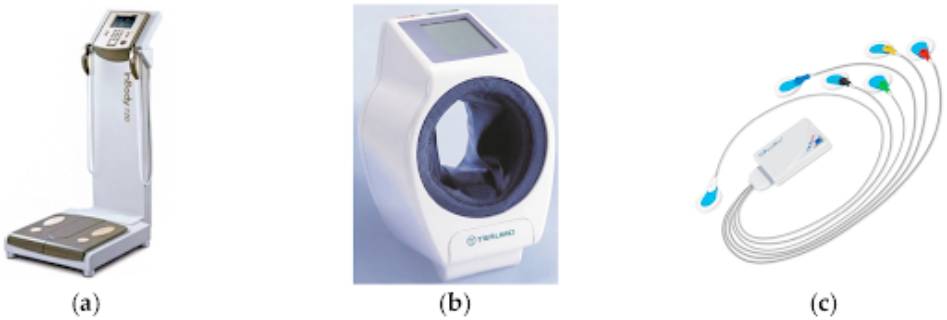
TERUMO ES-P2000 blood pressure monitor, and (c) PhysioFlow blood flow analyzer. Image: Chang,
2026.
The AI model accurately predicts how effectively the heart pumps blood. Clinicians call this metric the cardiac index. The index includes vital physiological indicators. These features are heart rate, stroke volume index, and cardiac output. Clinicians use the cardiac index to evaluate heart function and guide treatment decisions.
The new AI model functions like an artificial brain. It considers physiological indicators from non-invasive sensor stickers placed on a patient’s skin. The system achieved a classification accuracy of 97.78%. This high accuracy shows the potential for a simpler approach to monitoring heart health.
This innovative use of AI offers a promising alternative. Conventional monitoring procedures require specialized hemodynamic analyzers. They also need controlled clinical settings and specialized healthcare professionals.
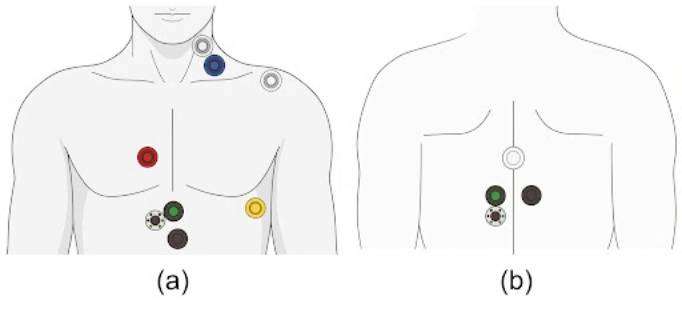
demonstrating a more patient-friendly approach to assessing heart function: (a) Sensor placement and (b)
Sensor stickers. Image: Chang , 2026.
Adhesive sensor stickers placed on a patient’s back collected the physiological measurements used in the study. This setup demonstrates a more patient-friendly approach to assessing heart function.
Modern algorithms analyze basic health data collected from non-invasive sensors. The AI researchers are helping make advanced monitoring more practical. These tools will soon be widely available in healthcare settings that lack specialized equipment and expertise.
These findings point to a new future. Advanced cardiovascular assessment will no longer stay confined to the walls of large hospitals and specialized clinics.
The model’s strong performance with fewer inputs shows promising results. Reliable cardiovascular assessment may not always require complex or resource-intensive procedures.
The researchers plan to validate the approach in more diverse populations. They are also looking into further reducing the number of measurements required.
Chih-Hao Chang, Mei-Ling Chan, Yu-Hung Fang, Po-Lin Huang, Tsung-Yi Chen, Tsun-Kuang Chi, I Elizabeth Cha, Tzong-Rong Ger, Kuo-Chen Li, Shih-Lun Chen, Liang-Hung Wang, Jia-Ching Wang, and Patricia Angela R. Abu authored the study. They published their research titled “Robust Non-Invasive Cardiac Index Prediction via Feature Integration and Data-Augmented Neural Networks” in the April 2026 issue of the MDPI Bioengineering journal.