
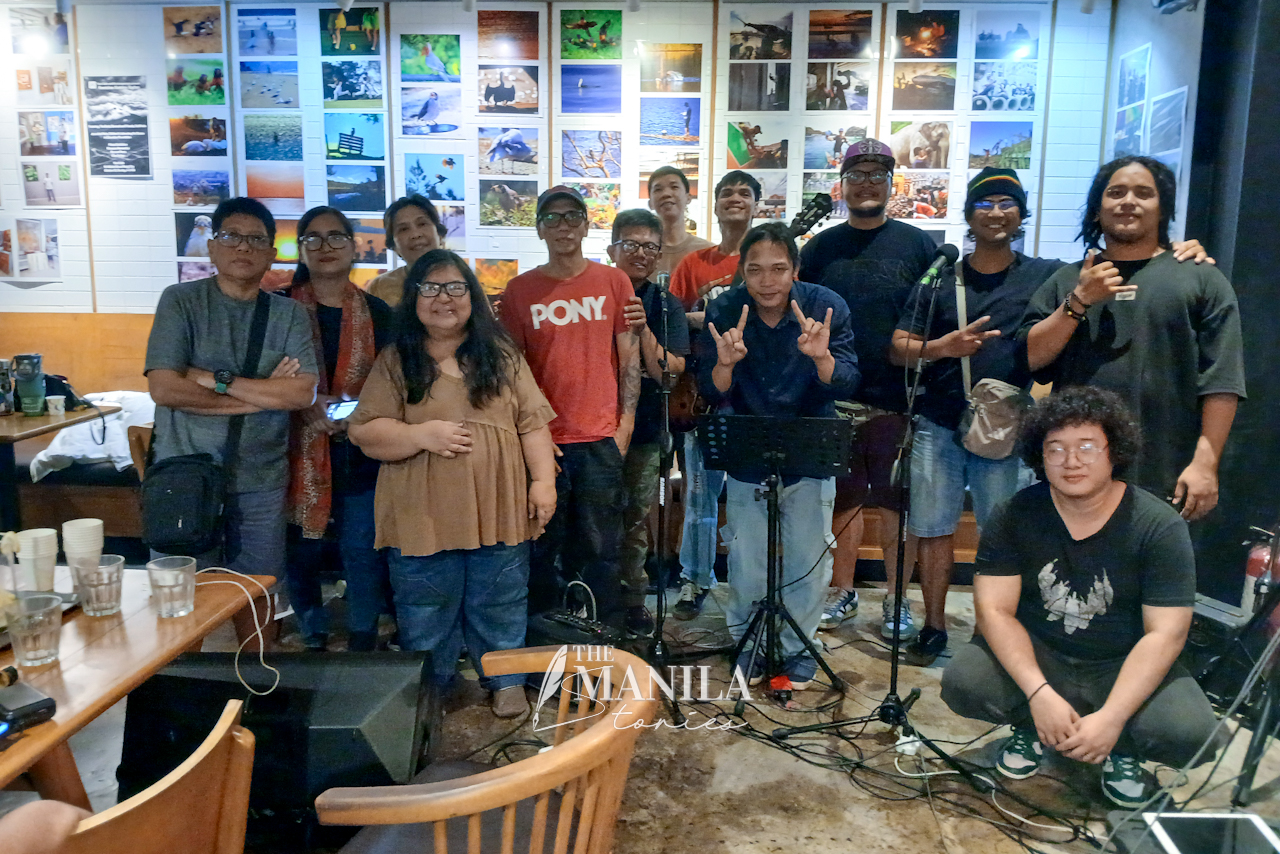
Music has a way of bringing people together. It may be over a cup of your favorite coffee blend, a conversation shared among friends, or a listening session featuring original compositions by independent artists of different persuasions and genres – indie pa sila, sikat (not yet famous).
A photograph can freeze a moment. A song can send a chill down your spine, while a conversation allows two souls to interact and helps the story continue.
At Yani Cafe, located at 9 A. Mabini Street in Pasig City, these different forms of expression come together through Kwentuhan, Kantahan, Kapihan (Chat, Chorus , Coffee), a gathering that brings local musicians and photographers into the same creative space.
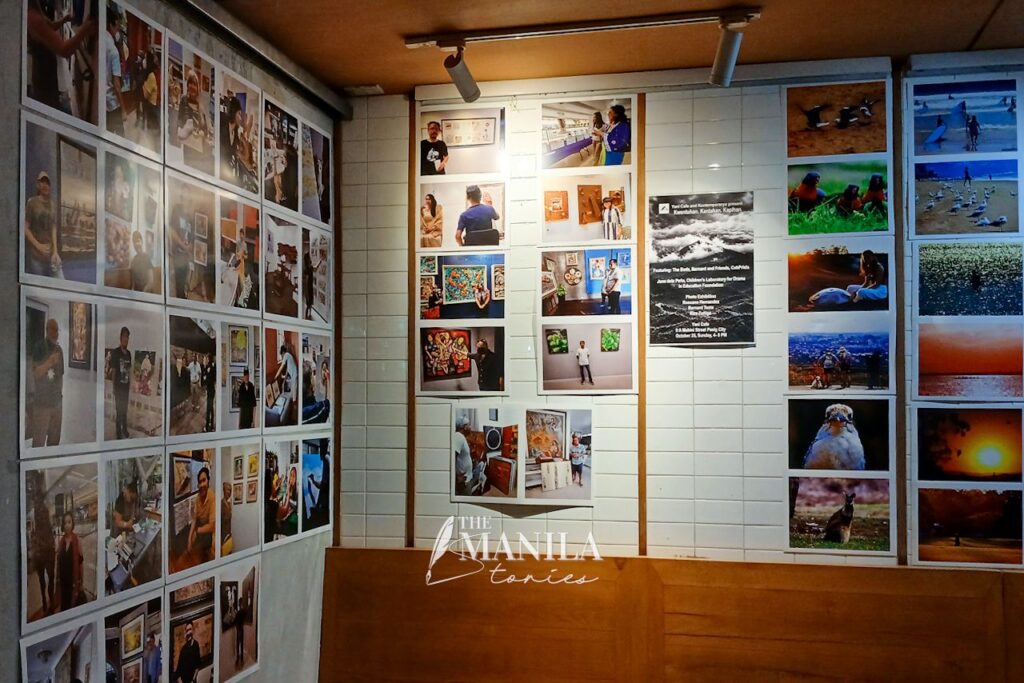
Alongside the musical performances is Fusion Unveiled 3, a photo exhibition featuring the works of three photographers: Rossano O. Hernandez, Bernard P. Testa, and Riza R. Zuñiga.
On the afternoon of October 25, a seemingly ordinary Sunday, the exhibition presented three distinct approaches to visual storytelling, from the lives of people and the natural world to the experiences of Filipino artists and the events that shape public memory.
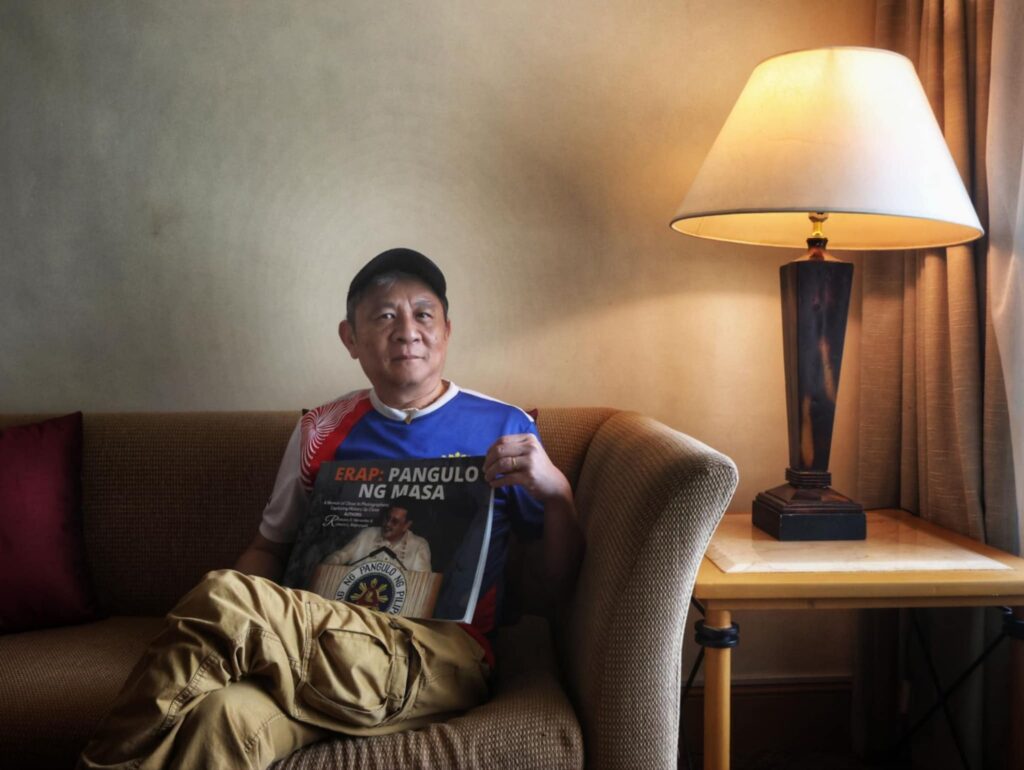
Hernandez, who served as chief presidential photographer for former presidents Fidel V. Ramos and Joseph “Erap” Estrada, brings a documentary eye to human activities, landscapes, birds, and animals. His work also includes a visual memoir, Erap: Pangulo Ng Masa, released in May 2025, as well as his experience as a photojournalist for Abante.
Testa, a photojournalist with Business Mirror who has worked in local media and abroad, presents Behind the Deadline, a retrospective look at events and incidents captured through his work. His photographs reflect the demands of documenting news as it unfolds, preserving moments that might otherwise disappear into the daily flow of headlines.
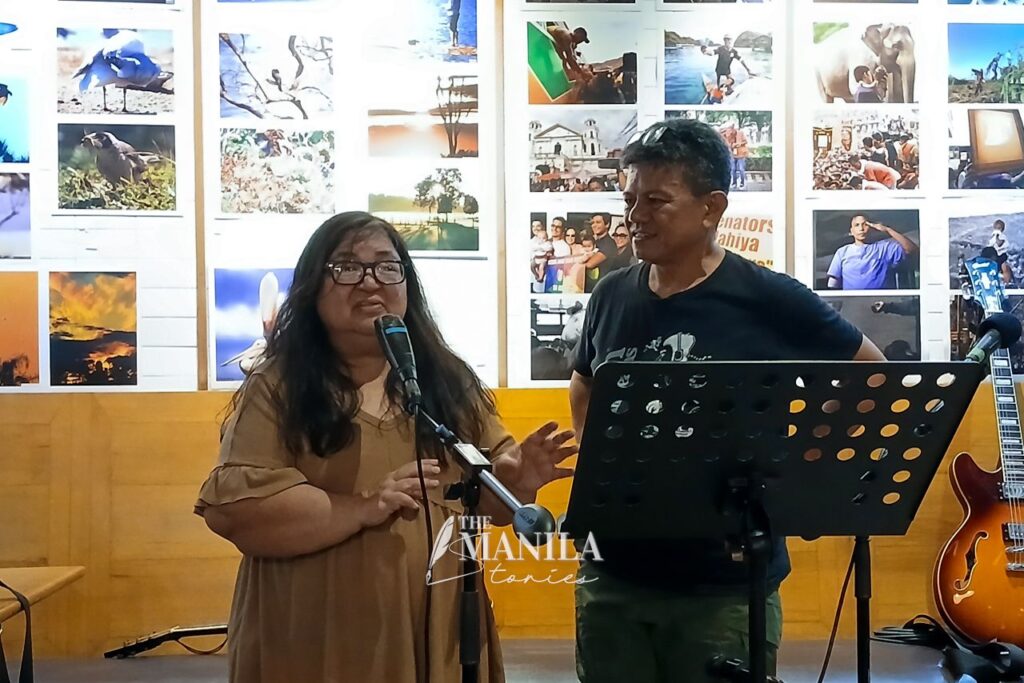
Zuñiga, a journalist with Pilipino Mirror and an artist, turns her lens toward Filipino artists and their creations in Behind the Canvas. Her photographs seek to document not only the finished works but also the people and creative processes behind them, preserving glimpses of artistic life for future audiences.
Together, the three bodies of work suggest that photography is more than the act of recording what is in front of the lens. It is also an attempt to understand people, places, and experiences—and to recognize the stories that ordinary moments can hold. A fraction of a second can defy gravity, capture ambiguity, and ground us in life, blending truth with magic.


The same impulse to tell stories runs through the musical performances. Among the featured acts is Cobpriela, the performing name of independent Filipino singer-songwriter Jacob Priela, whose music draws from acoustic, alternative, R&B, rap acoustic, trap, and indie gospel influences. His self-described “rapcoustic” approach brings together sounds that cross conventional genre boundaries.
Reymart “El Kapitan” Titong, a singer-songwriter from Cainta, also takes the stage with his narrative-driven songwriting.
Meanwhile, Budz, a local reggae band formed in May 2025, traces its beginnings to a simple question between friends: “Magbuo kaya tayo ng banda?” What followed was a shared musical journey built around friendship, original songs, and a love for reggae. It is life as it should be—happily sharing the experience with kindred souls.
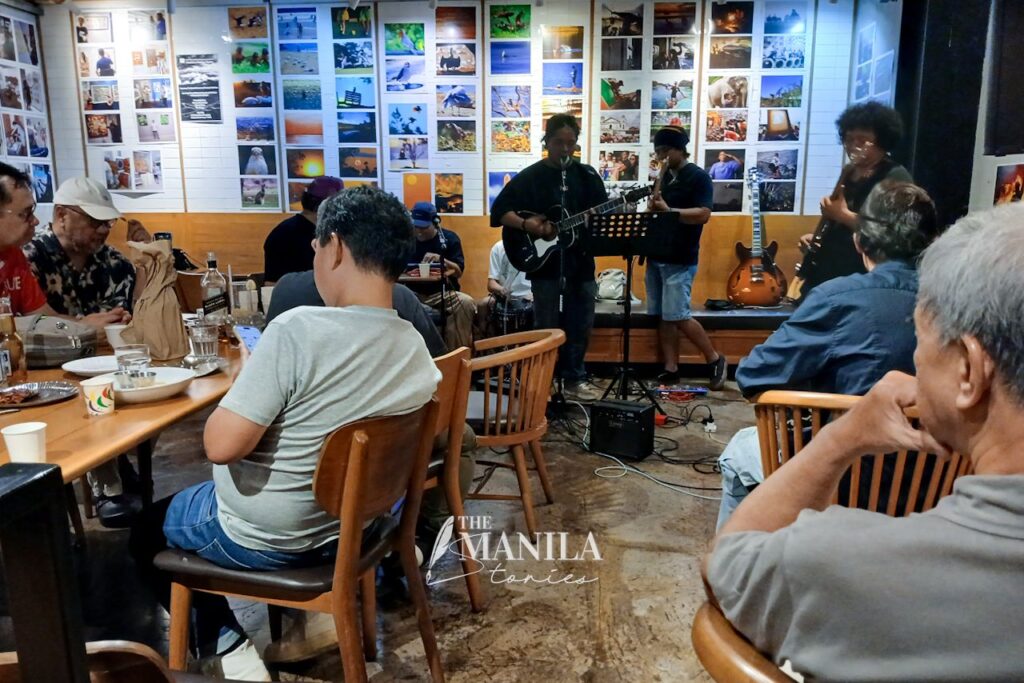
Although photography and music use different languages, both depend on the artist’s ability to find meaning in experience and communicate it to others. A photograph may preserve a fleeting gesture or a defining public moment; a song may give voice to an emotion or an idea. Both invite audiences to look, listen, and discover something beyond the immediate encounter.
At Yani Cafe, the meeting of these creative forms offers a glimpse of what a community art space can become—not merely a place to display photographs or perform songs, but a venue where artists encounter one another, audiences discover new works, and stories find room to be shared.
In the end, the promise of Kwentuhan, Kantahan, Kapihan lies in its simple premise: art thrives when people gather around it, whether to look at a photograph, listen to a song, or stay a little longer for a conversation over coffee.
This is what humanity should be about.