
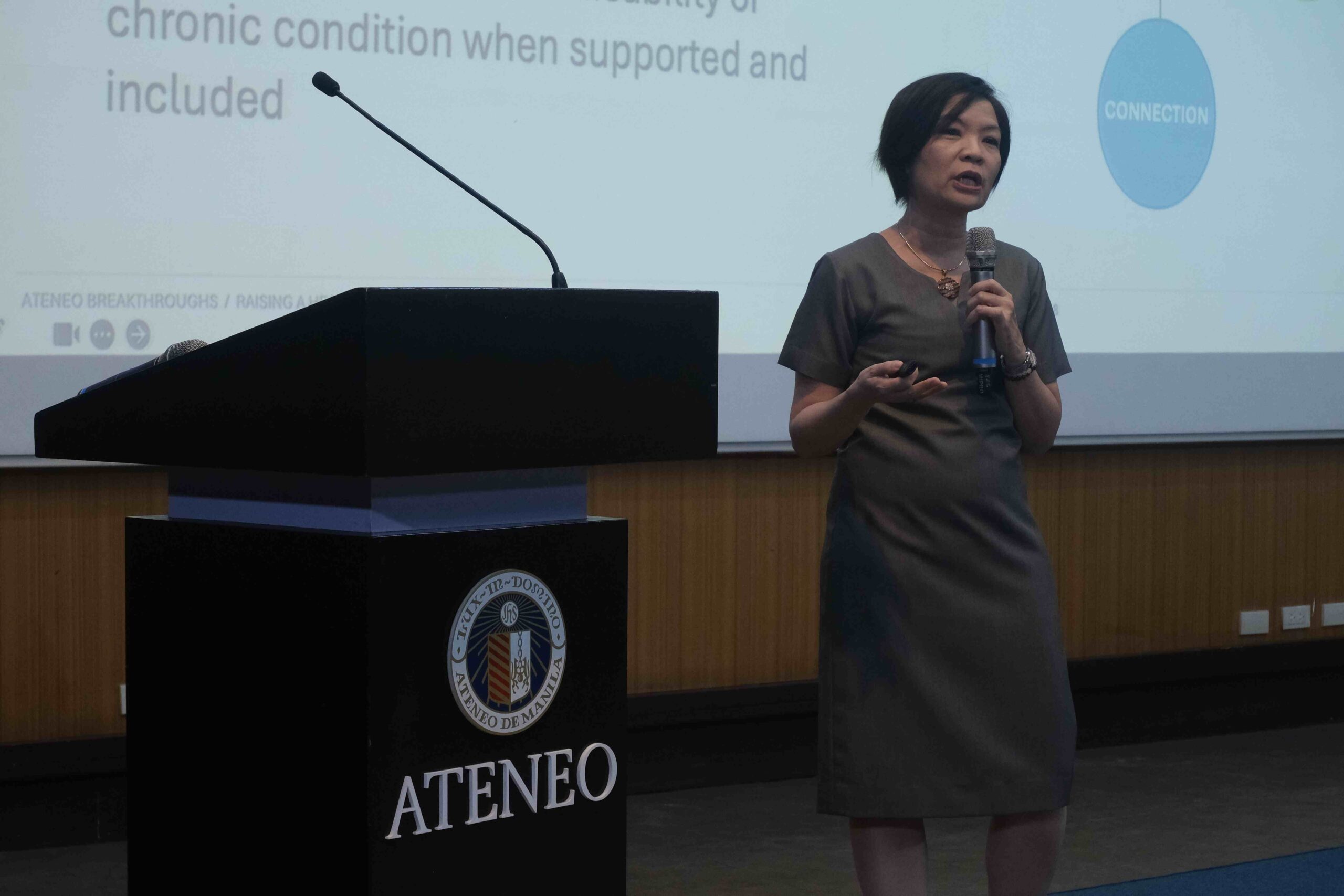
A child’s health depends on more than just good genes. Family life and daily surroundings play a big role in childhood growth. A medical expert shared this message during a recent lecture.
Dr. Lourdes Sumpaico-Tanchanco spoke on October 21, 2026. Her lecture was titled “Raising a Healthy Child: A Functional Medicine Lens on the Family as an Ecosystem of Health.” The event was part of the Ateneo Breakthroughs lecture series.
Dr. Sumpaico-Tanchanco is a professor at the Ateneo School of Medicine and Public Health. She also directs the Ateneo Center for Research and Innovation. She is a trained developmental-behavioral pediatrician. She holds a master’s degree in clinical epidemiology. She is also certified in functional medicine by the Institute of Functional Medicine.
During her talk, she explained how many factors shape a child. These include family routines, relationships, and cultural practices. Everyday conditions also matter. Long commutes and early school schedules affect how children grow.
Genetics do not tell the whole story. “Our genes do not determine everything about our health,” she said.
Early life conditions impact gene activity. They do this without changing the base DNA sequence. Nutrition and stress during pregnancy matter. Circumstances in early childhood also shape later health risks. However, these early influences do not trap a child’s future.
Children pick up habits as they grow. They learn about food, sleep, and physical activity. They learn how to cope with stress and seek help. Cultural expectations guide these patterns. Household resources also affect what parents can provide.
Children learn through observation. Adults must model good behavior. For example, parents struggle to make kids eat vegetables if parents avoid them too. Setting screen limits is also hard when adults stare at their own devices.
Extended family plays a role in the Philippines. Grandparents and relatives help shape daily routines. This support is vital for households with overseas Filipino workers.
The wider community creates challenges. Dr. Sumpaico-Tanchanco questioned early school schedules. Many children must wake up at 4 or 5 a.m. She noted that bedrooms often lack total darkness for good sleep. Heavy screen use cuts into rest and active play. It also reduces family interaction.
Doctors must look at the whole picture. Attention and behavior issues need careful study. Clinicians should examine sleep and nutrition. They must check for physical discomfort and stress. Family and school experiences are also crucial.
“The benefit of seeing the whole child is that a valid diagnosis becomes the beginning of an individualized plan and not just the end of our curiosity,” she said.
Functional medicine helps organize these influences. It works alongside proper diagnosis and treatment. Suspected health links need real medical assessment. Broad testing and restrictive diets require a solid clinical basis.
Families can start with small steps. Practical advice includes setting a consistent bedtime. Parents can introduce new foods slowly. They can also plan activities for play in urban spaces like condominiums.
Parents cannot carry this burden alone. Communities must share the work. Affordable food and accessible healthcare are necessary. Safe neighborhoods help children thrive. Supportive schools and work policies make healthy routines possible.
“A healthier future begins in the everyday life of a child nurtured by a family and supported by a community,” she said.