
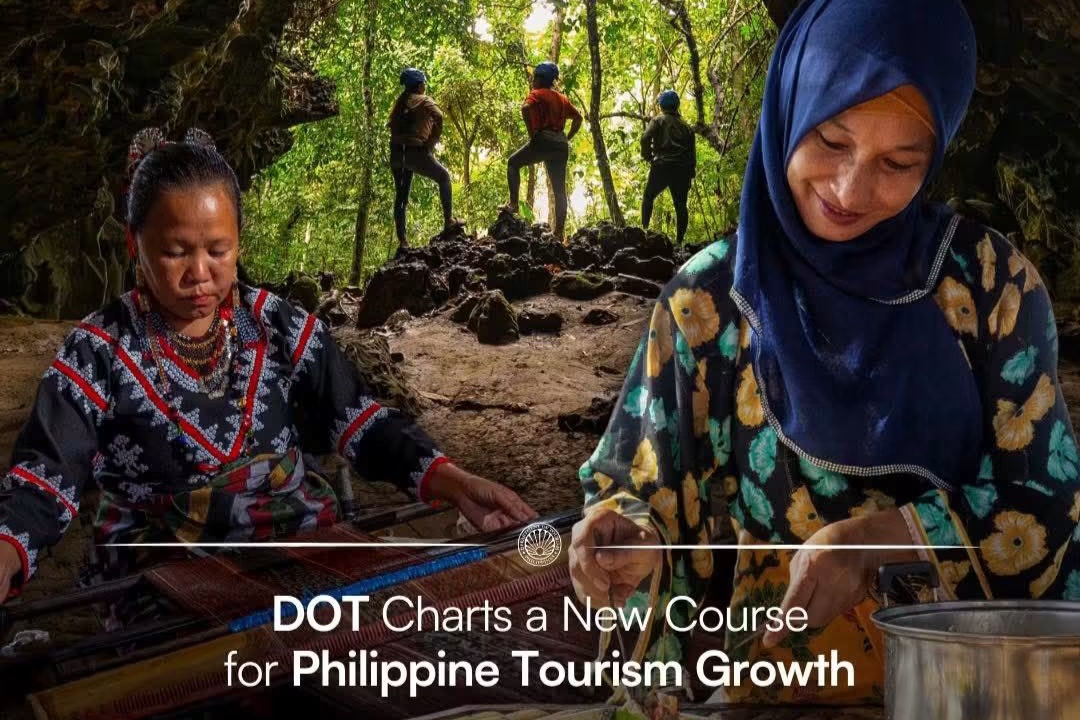
The Department of Tourism is charting a new course for Philippine tourism growth.
Tourism Secretary Dita Angara-Mathay outlined the strategy during World Tourism Day. She emphasized a shift toward business development, strategic partnerships, and improved air connectivity.
The strategy focuses on expanding physical access, easing visa policies, and securing foreign investments.
Expanding Air and Sea Linkages
The department is working with public and private stakeholders to improve gateways. It is collaborating with the Department of Transportation.
The goal is to improve airport gateways, add flights, and open new air and sea routes. These efforts target strategic and emerging markets. They also focus on secondary cities.
Between Jan. 1 and May 19, 2026, the Philippines logged 7,779,012 international air seats for inbound flights. This figure represents an 8.31% increase compared to the same period in 2025.
Emerging markets are driving this growth. China recorded 310,000 arrivals, according to eTravel data. This total marks a 69.15% increase year-over-year.
New and resumed flight routes now connect Manila and Cebu to San Francisco, Seattle, Vancouver, and Paris. Expanded Asian routes connect the country with Japan, South Korea, Taiwan, Hong Kong, Vietnam, Singapore, and Thailand.
These flights operate through Cebu, Clark, Iloilo, Bohol, Kalibo, Caticlan, and Davao.
The agency also secured an air service agreement with Türkiye. The deal expands Manila-Istanbul flights from seven to 14 weekly. It also grants unlimited frequency rights for secondary gateways like Cebu, Clark, and Davao.
The agreement strengthens links to Europe and the Middle East through Istanbul.
Targeting Priority Markets and Visa Reforms
The agency is working with the Department of Foreign Affairs on visa reforms. The reforms aim to encourage travelers to visit and extend their stays.
The department is pushing to extend visa-free privileges for Chinese travelers. The policy will target additional ports of entry. These ports include Kalibo, Caticlan, Tagbilaran, Clark, Puerto Princesa, and Davao.
Visitors from Taiwan currently enjoy a 14-day visa-free entry policy. This policy reciprocates Taiwan’s entry policy for Filipino travelers. China and Taiwan rank fourth and seventh among top source markets for tourist arrivals.
The tourism department is also strengthening bilateral tourism cooperation agreements. It signed agreements with Vietnam in Manila on June 1, 2026. It signed with Colombia in Bogotá on June 18, 2026. It signed with Canada in Vancouver on July 2, 2026.
These agreements widen the network of tourism partnerships. They open new source markets for local communities.
Driving Investment in Tourism
Secretary Angara-Mathay brings experience as a former trade diplomat to her role. She expressed commitment to attracting more tourism investments.
The agency is pivoting to business development initiatives. These initiatives include the Tourism Investment Accountability Program, which aims to maximize tourism potential.
The agency is collaborating with major Japanese commercial brands. Partnerships include Uniqlo, a public holding company, and Nitori, Japan’s largest furniture retail chain.
These collaborations are part of a broader strategy with Japan. Japan is the first market where the department is testing direct investment development.
The strategy follows a Tokyo business roundtable held in May during President Marcos’ State Visit. Following that event, the department formed a Japan Tourism Investment and Business Development Team.
The team has engaged companies like Marubeni for a specialty medical clinic. It has engaged Sojitz to expand telecom infrastructure in underserved destinations.
The department plans to replicate this model in other priority markets. The agency aims to share industry growth with local stakeholders who need it most.