
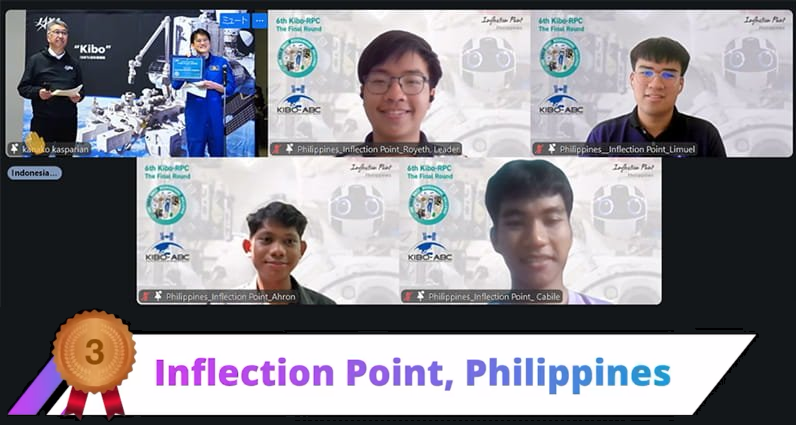
Filipino students have secured third place in an international space programming competition. Team Inflection Point from Batangas State University (BatStateU) competed in the sixth Kibo Robot Programming Challenge (Kibo-RPC).
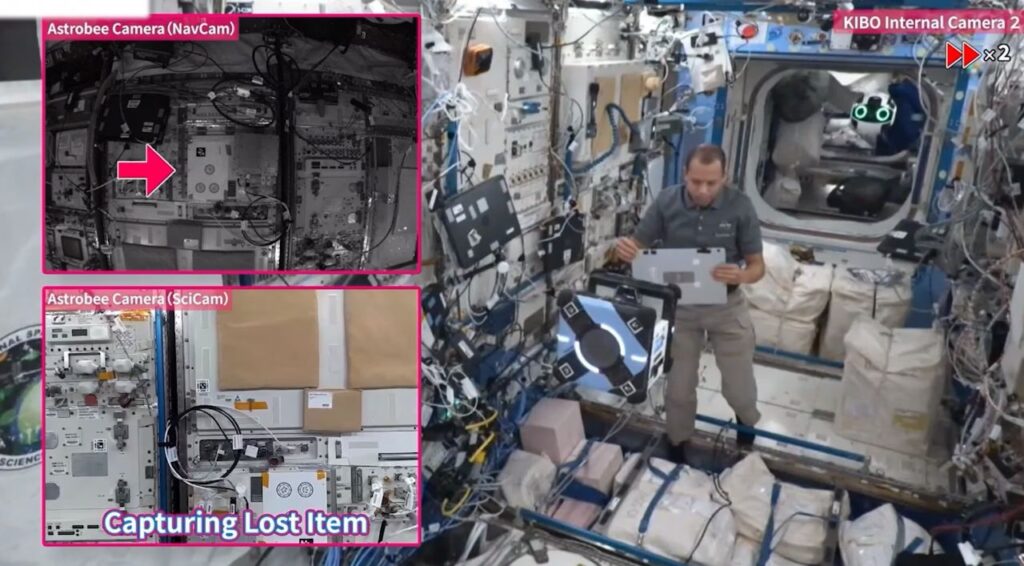
The team commanded NASA’s Astrobee robot aboard the International Space Station (ISS). They operated the robot within the Japanese “Kibo” module. Their program competed against entries from around the world. The contest judged teams on image recognition accuracy and mission speed.
The team consists of third-year aerospace engineering students. The members are Howell Dela Cruz, John Royeth Samson, Ahron Martinez, Benedict Lontok, Andrew Cabile, and Amer Panganiban.
This marks a major achievement for the Philippines. This same team finished in second place last year. They were the first Filipino team to participate and win in the history of the Kibo-RPC.
A total of 738 teams from 37 countries participated this year. Team Inflection Point outperformed 27 other Philippine teams in the preliminary round to qualify for the in-orbit finals.
NASA astronaut Christopher Williams conducted the live event on Feb. 28, 2026. He executed the programs using the Astrobee robot on the ISS. He evaluated each team on task completion, accuracy, and speed.
Team Inflection Point completed four out of five assigned tasks. They finished with a total score of 216.8 out of 300 points.
Their performance in the “Oasis Zone” proved vital to their final result. This new feature offered bonus points but required careful strategy. Certain routes included time penalties, forcing teams to balance speed with precision.
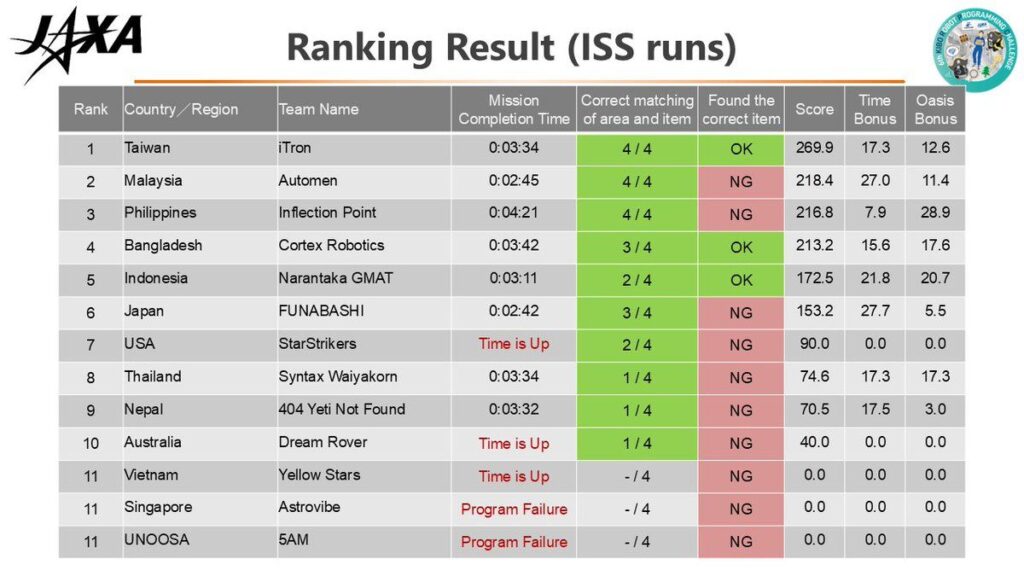
The competition was tight. Team iTron of Taiwan took first place with a score of 269.9. Team Automen of Malaysia placed second with 218.4 points. The Filipino team finished only 1.6 points behind the second-place winners.
The Japan Aerospace Exploration Agency (JAXA) organized the event in cooperation with NASA. The contest is open to student teams across the Asia-Pacific region.
Robots like the Astrobee help support astronauts on the ISS. They may assist in future emergencies in space. The Kibo-RPC trains the next generation to program robots for swift and precise operation. It tests their ability to predict motion in microgravity conditions.
The Philippine Space Agency (PhilSA) supported the local search for participants. They received 27 applications from March to May 2025.
The Kibo-RPC is part of the Kibo-ABC program. This initiative promotes the use of the Japanese “Kibo” module. It seeks to foster collaborative space projects between Japan and member nations.
The seventh Kibo-RPC is scheduled to begin in July 2026. Fans can watch Team Inflection Point’s program run online. The official results and full recording of the final round are available through JAXA’s digital platforms.