
Toxic lead still pollutes the air in Metro Manila. This persists despite a global ban on leaded gasoline over 20 years ago. An international research team studied aerosol data from 2018 and 2019. The team included experts from Ateneo de Manila University and the Manila Observatory.
Researchers used lead isotope fingerprinting to track the pollution. They found that lead now comes from new sources. These sources include industrial activities, fossil fuel combustion, and legacy pollution.
“While the data was collected in 2018 and 2019, the conclusions remain relevant today. This research highlights the importance of monitoring atmospheric lead to ensure that we do not undo the gains from phasing out leaded gasoline,” said Dr. Maria Obiminda L. Cambaliza. She is a physics professor at Ateneo de Manila University.
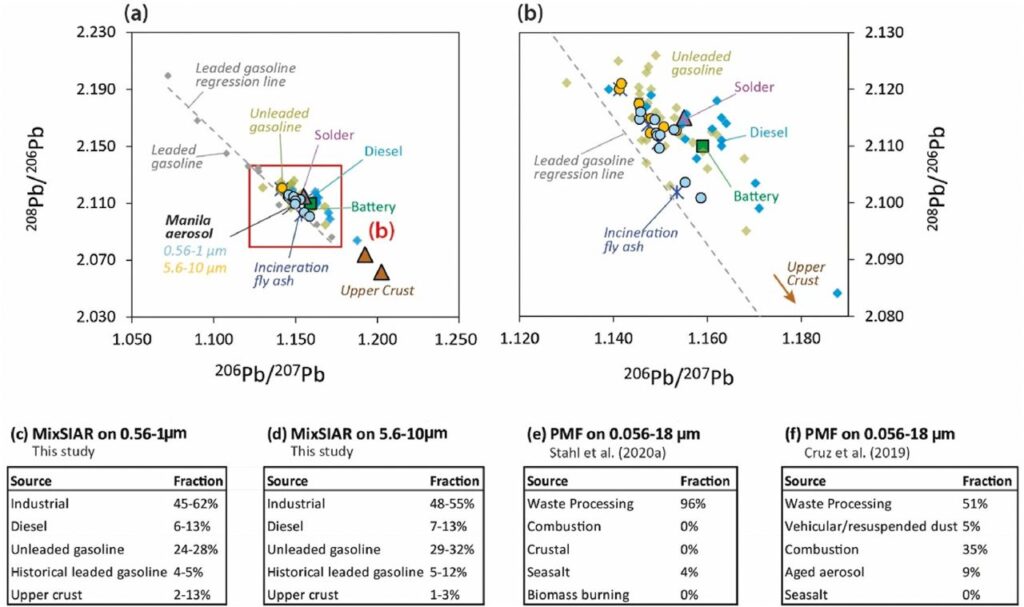
Industrial processes like e-waste recycling and smelting cause 45% to 62% of the lead pollution. Fossil fuel use accounts for another 30% to 45%. This includes diesel and trace elements in unleaded gasoline.
“There are now contemporary sources of lead, mainly from industrial activities such as e-waste processing, and fossil fuel combustion such as from diesel use and unleaded gasoline combustion. Indeed, trace amounts of lead may still come from unleaded gasoline,” Cambaliza said.
Metro Manila’s pollution comes mostly from local sources. It stays in the air year-round. Rising global oil prices may slow the shift to clean energy. This situation may also discourage vehicle maintenance. These factors increase public exposure to toxic air.
Lead gathers in fine particles. People inhale these particles deep into their lungs. The lead then enters the bloodstream. This creates severe health risks. Children are especially vulnerable to developmental and neurological damage.
The Philippines has not updated its national lead monitoring in nearly 20 years. Experts say continued vigilance is necessary to protect public health.