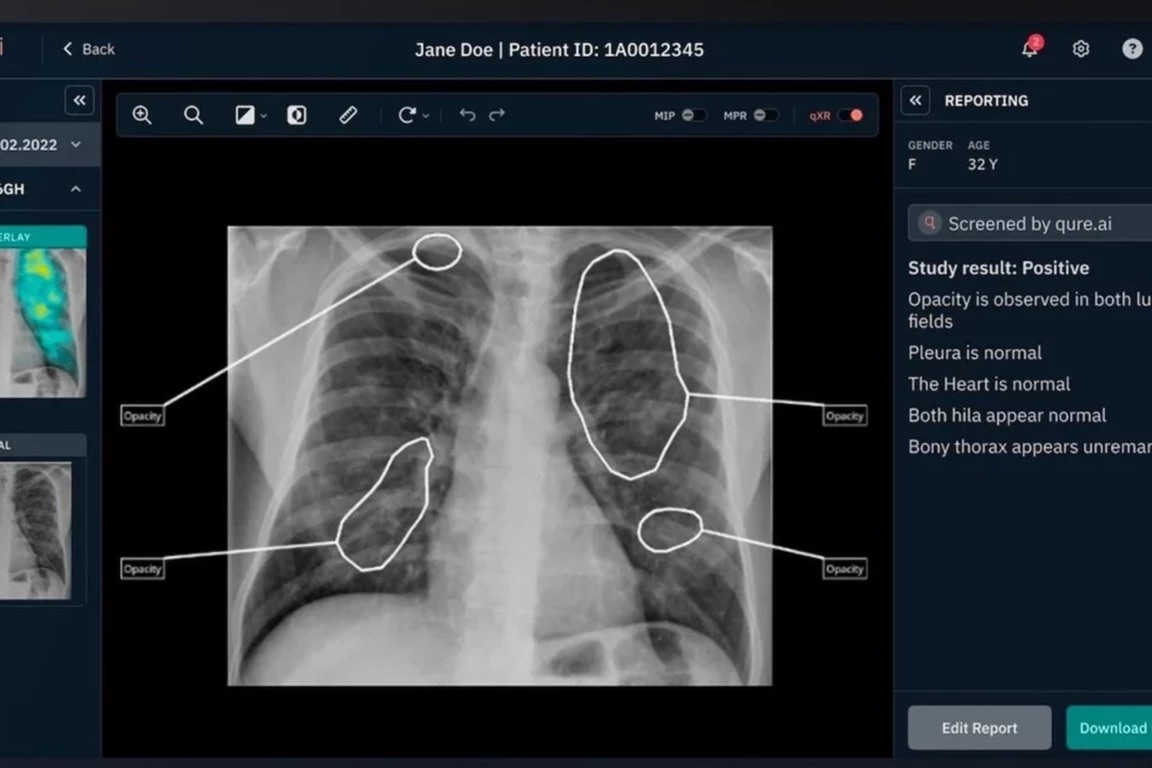
Artificial intelligence could transform public healthcare in the Philippines. A new study shows that AI can help bridge the public health gap. Public healthcare remains inaccessible to many people. High costs create barriers. Limited availability of medical experts causes major delays.
Researchers from Ateneo explored these issues. They looked at the cost-effectiveness of AI-assisted chest radiograph interpretation. X-ray interpretation is vital for tuberculosis patients. Finding the disease early prevents severe damage. Early care stops irreversible health problems.
The World Health Organization released new data. An estimated 739,000 people in the Philippines developed tuberculosis in 2024. This number accounts for 6.8 percent of all global cases. The world saw 10.8 million TB cases that year. Early detection remains essential for survival.
Geographically isolated communities face major hurdles. Rural health units struggle with basic resources. Patients might get an X-ray taken. However, waiting for a radiologist takes a long time. Teleradiology services also experience heavy delays.
This wait causes serious problems. Patients must make another trip to a health facility. This creates additional expenses. Patients lose valuable time away from work. Many face a missed opportunity for continued care.
Dr. Harold Chiu, Dr. Bryan Lao, and Dr. Gloanne Adolor tackled this problem. They developed a decision-analytic model. The model used a theoretical annual cohort of 1,000 presumptive TB patients. These patients undergo chest radiography in rural health units.
The analysis covered costs and outcomes over five years. It included AI software and operating expenses. It factored in radiologist reading fees. It also included confirmatory GeneXpert testing costs.
The study produced clear projections. The AI-assisted strategy entails an estimated annual cost of 877,330 pesos. Manual interpretation costs 1.14 million pesos. Researchers divided these totals across the 1,000 individuals screened.
AI-assisted interpretation costs about 877 pesos per person. Manual interpretation costs about 1,142 pesos per person. The use of artificial intelligence proved to be economical.
The significance of AI goes beyond efficiency. AI does more than read an X-ray quickly.
“For resource-constrained communities, the most important question is therefore not whether AI can outperform or assist an expert reader, but whether it can extend expert-level support to places where expertise is scarce in a way that is affordable, sustainable, and equitable,” the researchers said.
Proper integration is key. Health programs must use portable digital X-rays. Systems must operate with limited connectivity. AI can then bring TB screening closer to underserved communities.
The goal is clear. Officials should not just introduce another high-tech tool. The true goal is to narrow existing geographic disparities.
Local conditions matter greatly. The findings highlight this reality. Researchers tested lower manual or teleradiology reading fees. They also applied diagnostic performance estimates from local scenarios. AI remained more effective in these tests. However, it was no longer necessarily cost-saving.
The study relies on a theoretical cohort. It uses specific assumptions about costs. It assumes certain levels of diagnostic accuracy. AI-assisted findings still require confirmatory testing.
Immediate nationwide adoption is not the answer. Researchers recommend a careful approach. They suggest targeted pilot implementation in underserved rural health units.
This rollout needs local validation. It requires strict quality assurance. It demands careful monitoring. Budget assessment is also critical.
The Philippines carries a significant share of the global tuberculosis burden. The nation struggles to provide universal healthcare to its citizens.
The ultimate question is simple. It is not about bringing the newest technology into healthcare. It is about where that technology can help. It must deliver expertise to meet the realities of people. It must help those with the least access to medical care.