
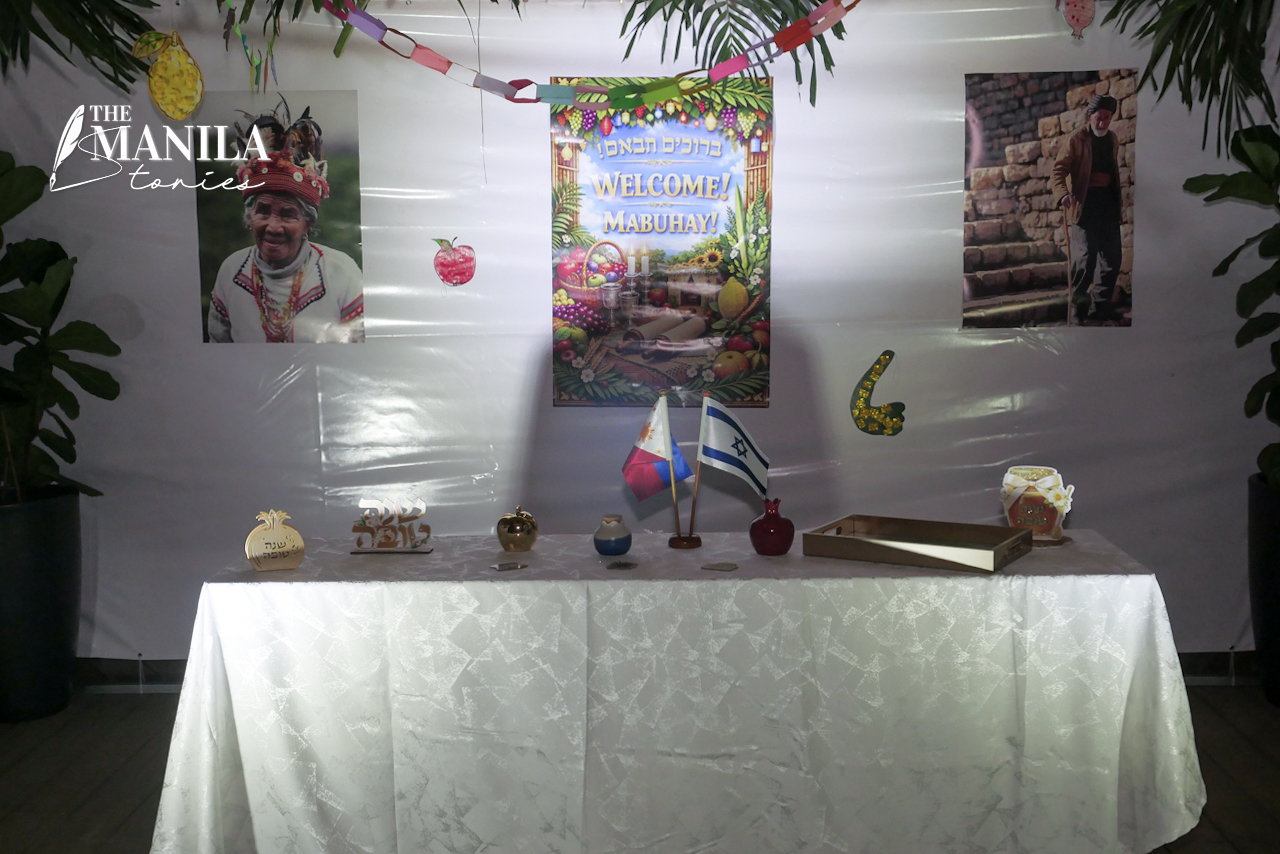
Amid the soaring concrete skyscrapers and modern glass facades of Bonifacio Global City (BGC) stood a tabernacle. A traditional structure built of wood and palm leaves stood gracefully on the rooftop of Seda BGC. It bridged centuries-old ancient heritage with warm Filipino hospitality.
The Embassy of Israel in Manila hosted a special celebration of Sukkot. It brought diplomats, government officials, and cultural leaders together under one roof—and, quite literally, under the open night sky.
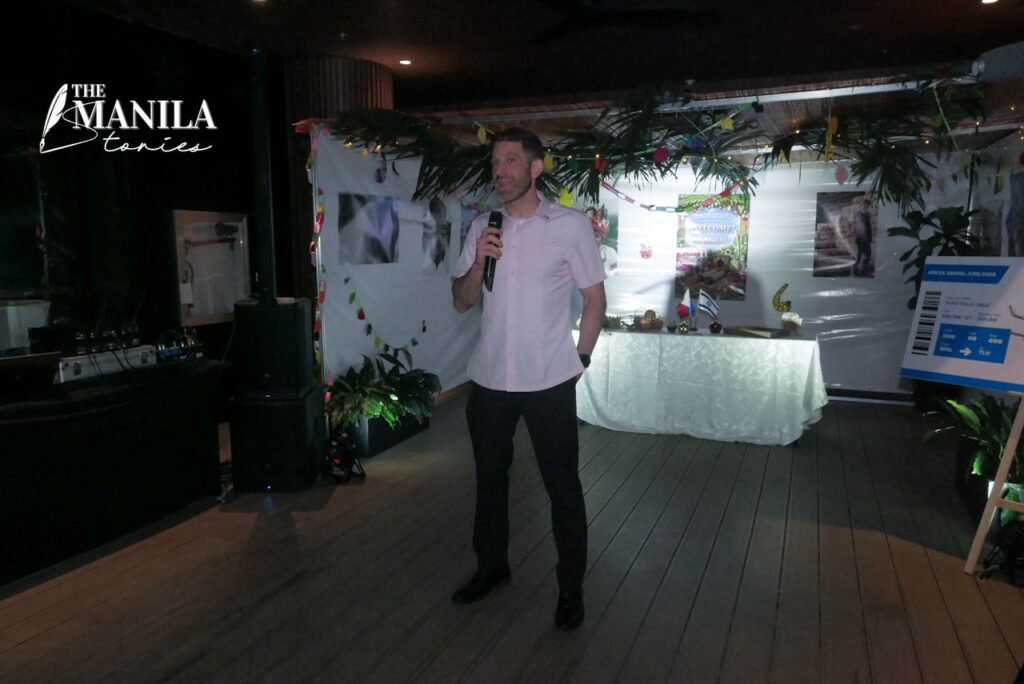
At the heart of the venue was a custom-crafted, makeshift Sukkah (temporary booth). To Filipino eyes, the dwelling resembled the traditional bahay kubo. A Filipino hut woven with rustic bamboo supports and palm thatch. Yet, following sacred tradition, its rooftop (schach) was flat, left sparse and partially open. Allowing it to look directly upward and catch a glimpse of the evening stars.
Understanding the Feast of Tabernacles
Sukkot, commonly known as the Feast of Tabernacles or the Festival of Ingathering, is a central seven-day Jewish holiday celebrated during the autumn harvest season (typically falling between late September and October on the Hebrew calendar).
The festival serves two primary purposes:
- Historical Remembrance: It commemorates the 40-year journey of the Israelites, during which they temporarily lived in the desert following the Exodus from Egypt, protected by divine grace.
- Agricultural Thanksgiving: It marks the end of the agricultural year and expresses gratitude for nature’s harvest and abundant yield.
Throughout the week, families gather to share meals. They host guests and recite blessings with the Arba’at HaMinim. The Four Species embody unity and gratitude. These are the citron, palm branch, myrtle, and willow.
Echoes of Similar Cultural Feasts
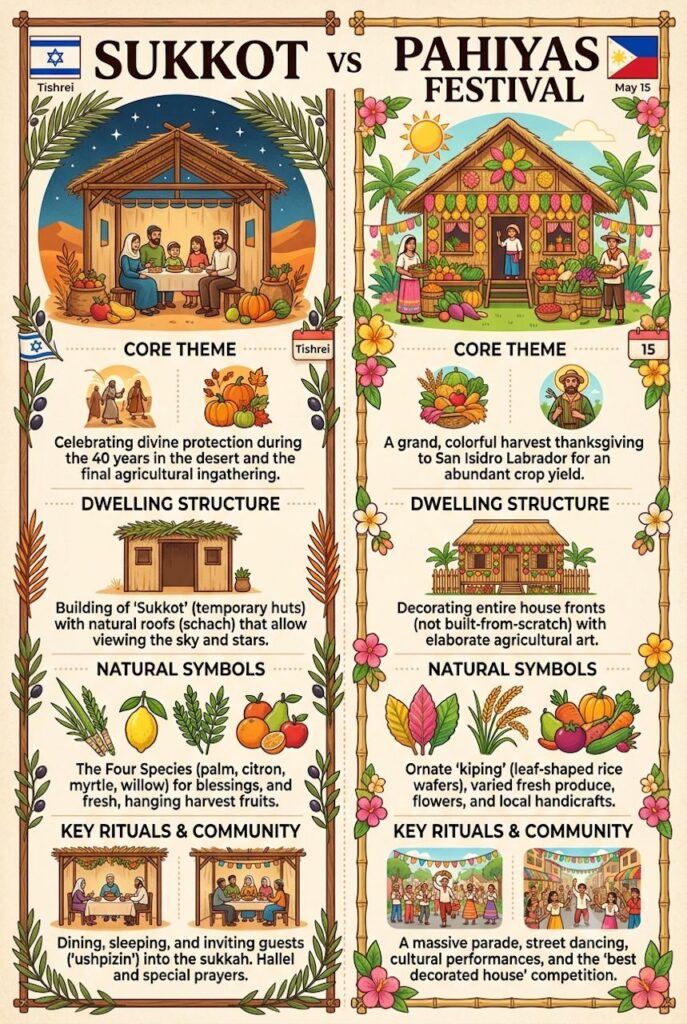
The spirit of Sukkot felt remarkably familiar to Filipinos attendees. The holiday shares cultural and thematic likeness with the famous Pahiyas Festival celebrated in Lucban, Quezon.
Both traditions transform ordinary living spaces into vibrant and organic displays of thanksgiving. Both use raw agricultural materials, palm fronds (palaspas), and seasonal fruits. Crucially, both honor an unshakeable commitment to communal warmth and open-door hospitality.
Milestone in the Air
Adding to the evening’s festivities was a major milestone in the air. Announcing the long-awaited direct flight from Manila to Tel Aviv via Arkia Israel Airlines. A continuous Philippine-Israeli bilateral relationship.
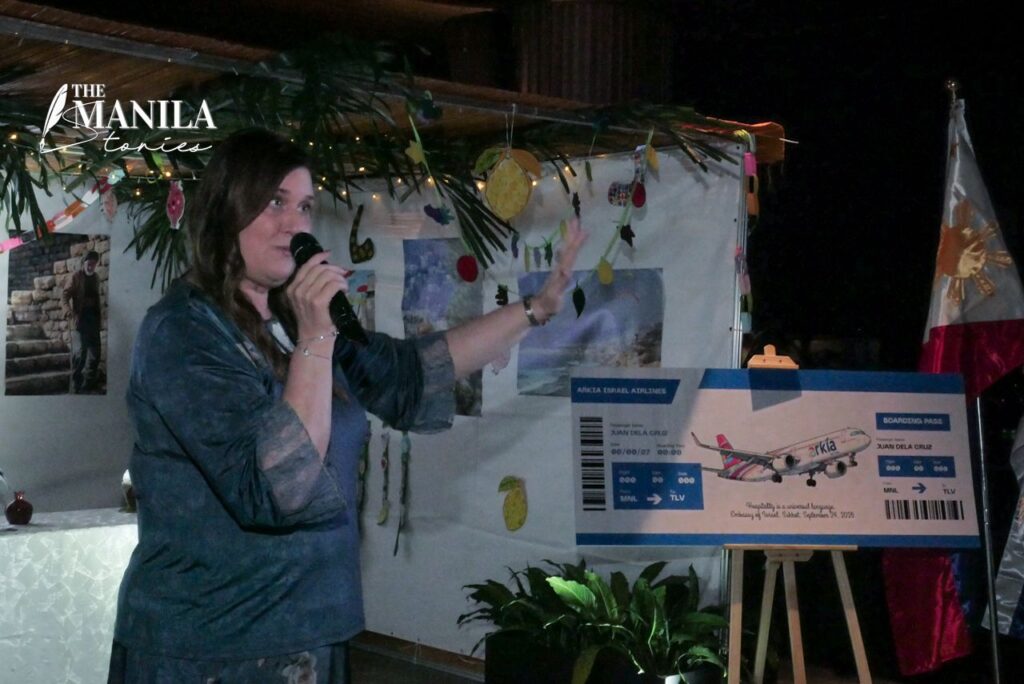
It will mark the first direct air link between the two nations in nearly seven decades. Airline representatives and diplomatic officials shared key details of the upcoming service:
- First Flight Launch: January 3, 2027 (operating weekly seasonal flights on Sundays from Tel Aviv, returning Mondays from Manila through April).
- Aircraft: A state-of-the-art wide-body Airbus A330, offering full Business Class and Economy Class configurations.
- Flight Duration: Direct non-stop flight lasting approximately 11 hours from Tel Aviv to Manila, and 12 hours and 20 minutes on the return leg.
- Airfare: Introductory single-way fares start at $750 for Economy Class and $1,800 for Business Class.
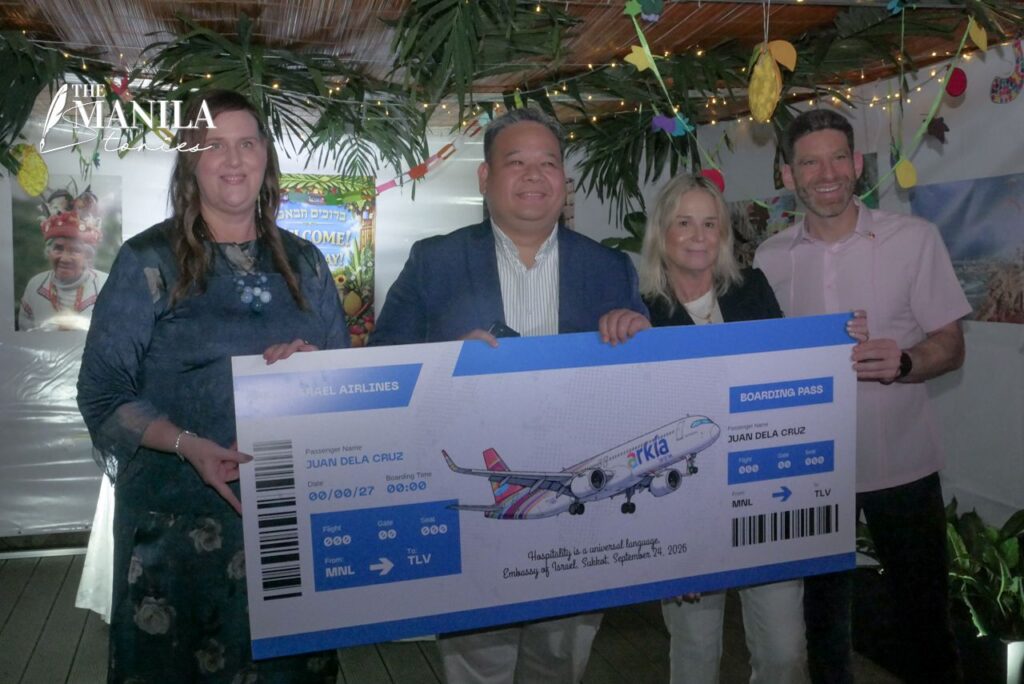
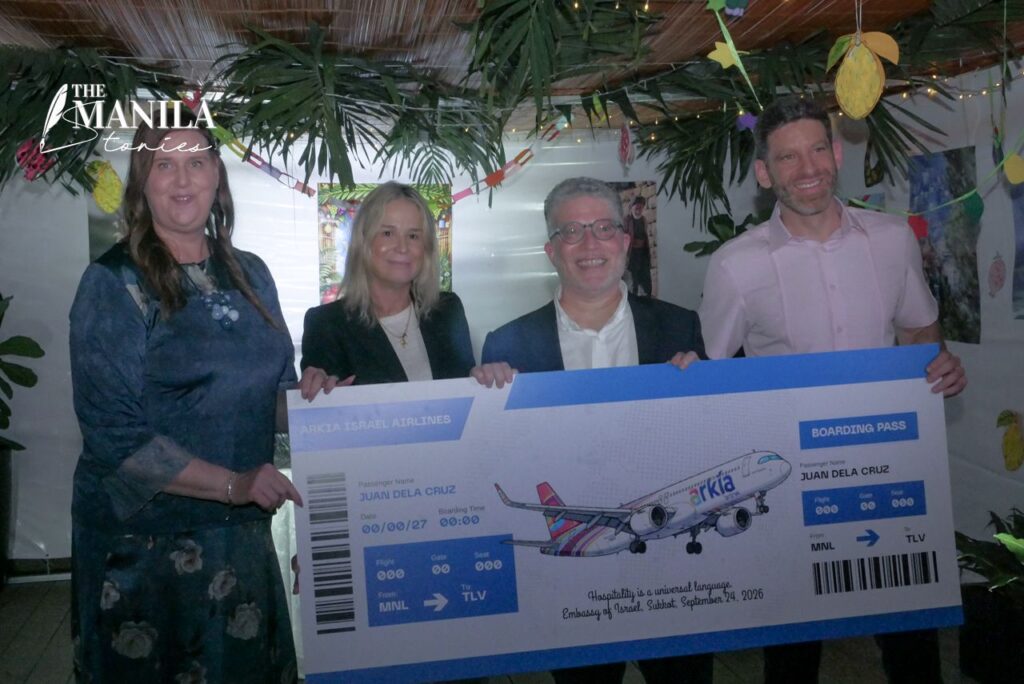
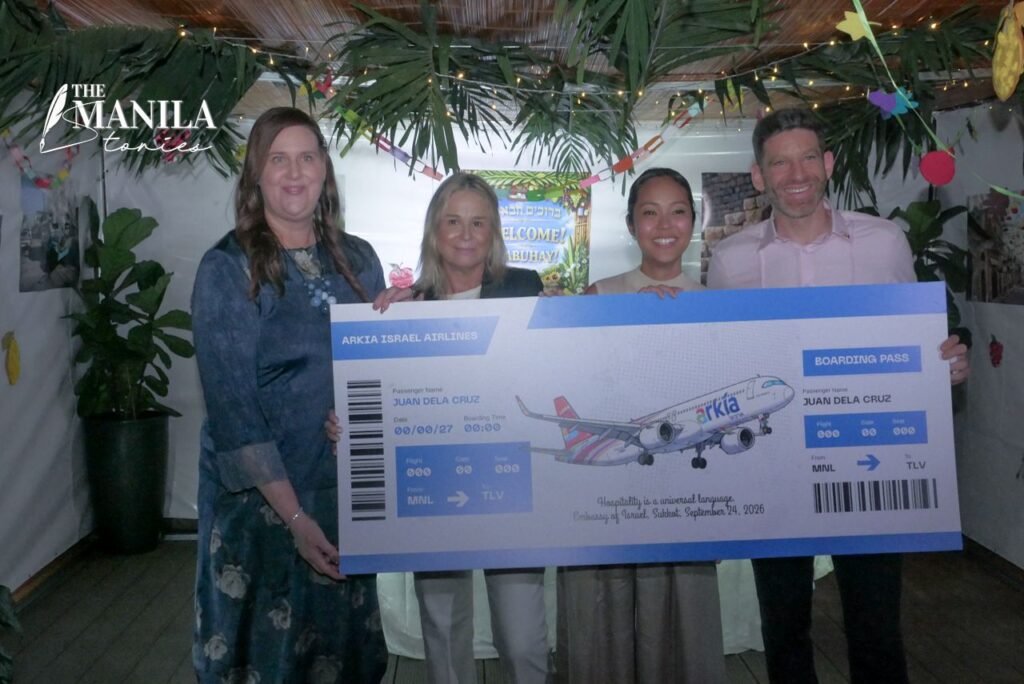
The strategic non-stop connection is set to boost religious pilgrimage, business exchange, and tourism between the Philippines and Israel. It offers a seamless flight experience that bypasses connecting flights and flight layovers.